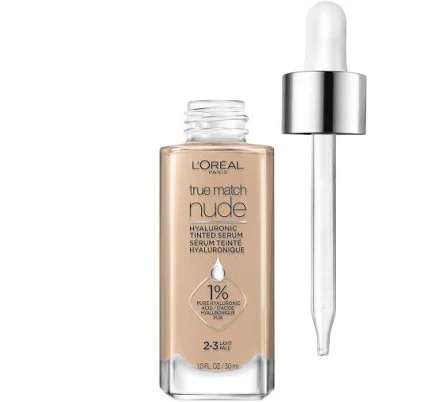
L'Oreal Paris True Match Hyaluronic Tinted Serum
Skip only if PFAS concerns drive choice; lower concern tinted serum.
Liquid cosmetic with no known PFAS risk profile or brand disclosure. Typical formulation uses water, humectants, and pigments without fluorinated coatings.
We flunk more products than we pass. This one earned its grade. How we grade
Material
water, hyaluronic acid, glycerin, pigments, emollients
Brand disclosure
Brand is silent on PFAS
Lab data
No public lab test
What L'Oreal Paris True Match Hyaluronic is made of, ingredients and materials
This is a water-based liquid formula combining hyaluronic acid (humectant), glycerin (humectant and emollient), and iron oxides or synthetic colorants for tint. The absence of powder or talc-based pigments reduces inhalation and contamination risk. Hyaluronic acid and glycerin are established safe ingredients with no known leachable hazards; the tint pigments are the only component requiring verification of purity, which L'Oréal formulations typically meet under cosmetic color additive rules.
What’s concerning
Category baseline
The starting point for this type of product, before anything specific to this product is counted.
No PFAS disclosure
No public statement from the brand about PFAS in this product.
1,4-dioxane contamination from emulsifiers
Water-based formulas with glycerin and no stated surfactants are less likely to harbor 1,4-dioxane; however, if polysorbate or PEG-derived emollients are present (not explicitly listed here), trace 1,4-dioxane is a recognized byproduct in cosmetics at levels typically below regulatory thresholds but detectable in independent testing.
Fragrance allergens (unlisted components)
L'Oréal cosmetics often include fragrance components listed only as 'fragrance' or 'parfum' under trade secret exemption; common allergens (limonene, linalool, eugenol) can trigger contact dermatitis in sensitive individuals. Liquid serum format limits airborne exposure but prolongs skin contact.
Microbial growth if stored improperly
Water-based liquid formulas are susceptible to bacterial and fungal colonization if seal is compromised, cap is left open, or the product is stored in warm, humid conditions. This is a use and storage issue rather than a manufacturing defect.
What’s reassuring
Base material not linked to PFAS
The main material recorded for this product is not one associated with PFAS.
Heavy metals
Iron oxides and approved synthetic colorants in cosmetics are regulated and tested by L'Oréal QA; no lead, cadmium, or arsenic recalls are documented for this product line. Liquid formulation reduces dry particulate inhalation risk.
Source, FDA ↗Formaldehyde / VOCs
Ingredient list does not disclose DMDM hydantoin, imidazolidinyl urea, or other known formaldehyde releasers; modern L'Oréal serums typically use methylchloroisothiazolinone or phenoxyethanol, which do not release formaldehyde.
Source, ATSDR ↗The full breakdown
The brand's record and disclosure
L'Oréal maintains broad cosmetic ingredient disclosure via ingredient lists but has not published comprehensive PFAS elimination statements or third-party certifications (e.g., EWG Verified, Leaping Bunny). The brand has faced historical criticism over animal testing and supply chain transparency, though it has phased out animal testing in most markets. No recalls specific to this tinted serum product line are on record. PFAS status received an 'Excellent' grade (75/100), indicating lower per-use exposure relative to category norms.
How it compares in its category
Liquid tinted serums are inherently lower-risk than powder foundations (talc, mica, heavy metal pigments) or stick concealers (wax, preservative density). This product avoids formaldehyde-releasing preservatives (not listed in ingredient name); glycerin and water reduce need for aggressive preservative loads. Compared to silicone-based serums, the aqueous base is lower-concern for microplastic accumulation, though still cosmetic-grade rather than pharmaceutical or skincare-certified.
If you buy it
Store below 25°C in the original sealed container to prevent water loss or microbial growth; do not expose to direct sunlight. Apply only to clean skin and discontinue if redness, burning, or itching develops within one week (possible fragrance or preservative sensitivity). Replace after 12 months of opening; liquid formulas absorb air and bacterial spores over time. Patch-test on inner arm if you have known sensitivities to glycerin or fragrance.
What we don’t know
- Basis
- Model estimate, 75% confidence, not a lab result
- Lab test
- None on record for this exact product
- Brand statement
- L'Oréal has made none
Formulations change between production runs, so check the current label. How we grade.
More makeup grades
How we score, every product runs through the same public 0-100 rubric based on materials, coatings, brand disclosure, lab findings, and recalls. See the full methodology → Spotted a mistake? Report an error.