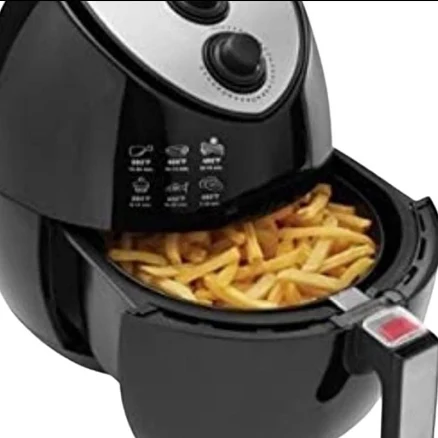
Farberware Air Fryer
Wait for Farberware to disclose nonstick coating chemistry or offer PFAS-free design.
Farberware's nonstick-coated basket lacks any public disclosure of whether it contains Teflon-type coating or PFAS alternatives. You cannot determine the real risk without manufacturer transparency or lab testing.
The better-graded swap
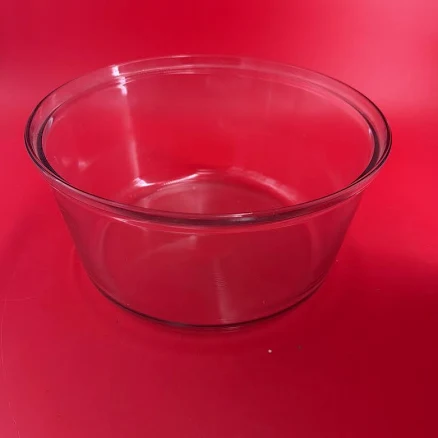
Big Boss
Big Boss Oil Less Fryer Air Fryer 16 Quart Replacement Clear Glass
75/100 safety
Same rubric that flunked this product. The swap earned Excellent.
Still want this one anyway? Check the price on Amazon. We’d swap it.
Material
nonstick-coated cooking basket (type unspecified)
Lab data
No public lab test
You may also be interested in
Top-graded picks in the categories readers replace first, every one scored on the same rubric.

- polypropylene filter housing, carbon/sediment cartridge
- We found no PFAS statement from the brand
- Bacterial growth in spent cartridges
3 hazards checked on this product, all on its full breakdown.

Aquasure
Premier Series 75 GPD Under Sink Reverse Osmosis Water Filtration System
- RO membrane, carbon filters, stainless steel housing
- We found no PFAS statement from the brand
- Bacterial and microbial growth in housing and filters
4 hazards checked on this product, all on its full breakdown.

Avocado
Vegan Mattress
- organic cotton, natural latex, coconut coir, recycled steel coils
- The brand calls it PFAS-free, which we have not verified
- Heavy metals
2 hazards checked on this product, all on its full breakdown.
What Farberware Air Fryer is made of, ingredients and materials
The Farberware Air Fryer features a nonstick-coated cooking basket, but Farberware has not publicly specified whether the coating is Teflon-type coating (Teflon), ceramic, silicone, or another polymer. The heating element reaches 400F+ during operation, which is within the range where some nonstick coatings can degrade or emit volatile compounds if scratched or overheated. Without clear material disclosure, assessing leaching risk and fume safety is impossible from public information alone.
What’s concerning
Category baseline
The starting point for this type of product, before anything specific to this product is counted.
No PFAS disclosure
No public statement from the brand about PFAS in this product.
Non-stick, chemistry undisclosed
Marketed as non-stick without stating the coating chemistry.
Teflon-type coating fume inhalation risk (thermal degradation)
If the nonstick coating is Teflon-type coating-based, temperatures above 500F can trigger polymer fume fever. Air fryers typically operate at 350-400F, which is below the acute risk threshold, but localized hotspots or malfunction could exceed that temperature range. Farberware's silence on coating composition prevents confirmation of this risk.
Coating degradation and microparticle shedding
Repeated thermal cycling and contact with acidic or oily foods can degrade nonstick coatings over time. Visible flaking or peeling of the basket coating indicates material breakdown; inhaled or ingested particles are a documented concern in cookware, though long-term health data is limited.
Aluminum or substrate leaching from damaged coating
If the basket is aluminum underneath (common in air fryers), a compromised nonstick layer could allow direct contact between acidic foods and aluminum. Aluminum leaching into food is debated in toxicology, but the FDA monitors this risk. Coating integrity is the key control.
What’s reassuring
Heating element and housing off-gassing (plastic components)
Air fryer housings typically include plastic handles and control panels. No specific recalls or reports of volatile organic compound (VOC) release from Farberware air fryers are on record, but new plastic odor during initial use is common and generally harmless, though ventilation is advisable.
Burn and thermal injury risk (design-related)
The basket reaches high temperatures during operation. No design defects or unusual burn injury reports are documented for this model, but standard caution and use of tongs or silicone-tipped utensils is essential, as with all air fryers.
How is this PFAS grade calculated?
The brand's record and disclosure
Farberware (owned by Groupe SEB, a major cookware manufacturer) does not prominently disclose nonstick coating chemistry or PFAS content on product pages or safety documentation. The brand has not published certifications (such as GREENGUARD or third-party nonstick safety standards) or committed to PFAS phase-out commitments that some competitors have announced. This silence is notable given industry movement toward transparency on PFAS and fluorinated coatings.
How it compares in its category
Most air fryers under $100-150 use unspecified nonstick coatings similar to this model. Higher-end competitors (Cosori, Ninja Pro) sometimes disclose Teflon-type coating-free or ceramic alternatives, though many do not. Basket durability and coating longevity vary widely across brands; Farberware's reputation for cookware is solid, but air fryer-specific coating performance data is sparse in independent reviews.
If you buy it
Avoid scratching the basket with metal utensils or abrasive sponges; hand-wash gently or use silicone tools. Do not exceed the recommended temperature setting, and avoid prolonged heating when the basket is empty or exposed to direct heating elements. Inspect the coating monthly for chips, peeling, or discoloration; if degradation is visible, discontinue use. Replace the basket if the manufacturer offers a spare part, rather than continuing to use a compromised coating.
What is not known about PFAS in this product?
- Basis
- Model estimate, 35% confidence, not a lab result
- Lab test
- None on record for this exact product
- Brand statement
- Farberware has made a specific claim
Formulations change between production runs, so check the current label. How we grade.
What are the PFAS-free alternatives to Farberware Air Fryer?
- borosilicate glass, bare uncoated
- We found no PFAS statement from the brand
- Thermal shock and fracture
2 hazards checked on this product, all on its full breakdown.
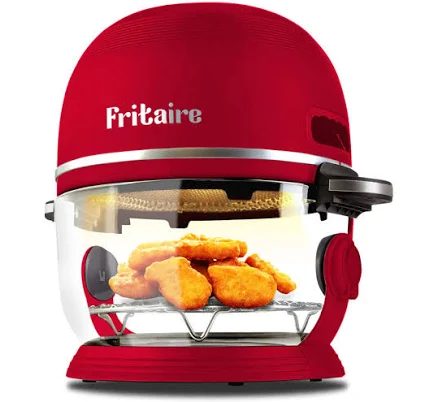
- borosilicate glass
- We found no PFAS statement from the brand
- Aluminum leaching from base/housing
4 hazards checked on this product, all on its full breakdown.
Find an alternative on Amazon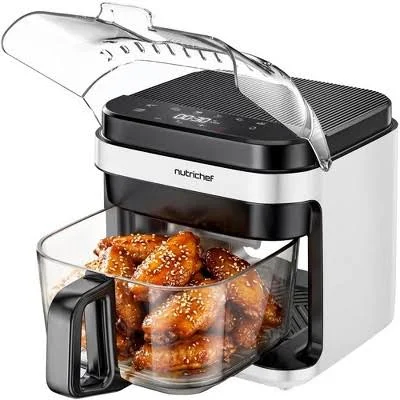
- glass bowl, stainless steel exterior
- We found no PFAS statement from the brand
- Thermal stress and glass breakage
2 hazards checked on this product, all on its full breakdown.
Find an alternative on AmazonMore air fryers grades
How we score, every product runs through the same public 0-100 rubric based on materials, coatings, brand disclosure, lab findings, and recalls. See the full methodology → Spotted a mistake? Report an error.