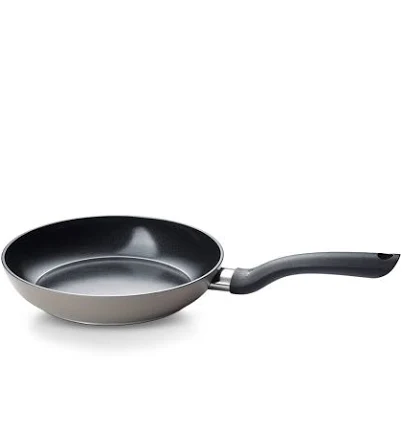
Fissler Essential Frying Pan, Is It Non-Toxic?
Nonstick coating is not disclosed. Brand is silent on PFAS. Avoid.
Fissler keeps the nonstick coating formula private and hasn't addressed PFAS. Nonstick cookware poses a moderate PFAS risk without brand honesty.
The better-graded swap
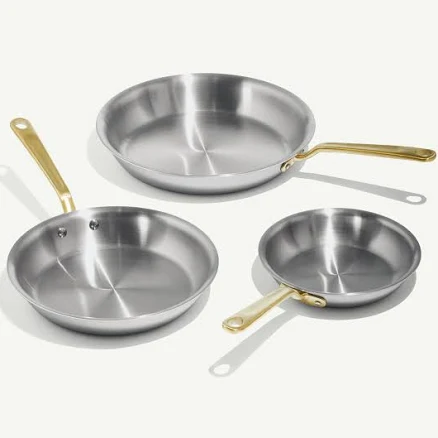
Made In
Made In Stainless Clad Frying Pan Set 3-Piece Professional-Grade 5-Layer Metal Construction
100/100 safety
Same rubric that flunked this product. The swap earned Excellent.
Still want this one anyway? Check the price on Amazon. We’d swap it.
Material
Unspecified nonstick coating over steel base
Brand disclosure
Brand is silent on PFAS
Lab data
No public lab test
You may also be interested in
Top-graded picks in the categories readers replace first, every one scored on the same rubric.

- polypropylene filter housing, carbon/sediment cartridge
- We found no PFAS statement from the brand
- Bacterial growth in spent cartridges
3 hazards checked on this product, all on its full breakdown.

Aquasure
Premier Series 75 GPD Under Sink Reverse Osmosis Water Filtration System
- RO membrane, carbon filters, stainless steel housing
- We found no PFAS statement from the brand
- Bacterial and microbial growth in housing and filters
4 hazards checked on this product, all on its full breakdown.

Avocado
Vegan Mattress
- organic cotton, natural latex, coconut coir, recycled steel coils
- The brand calls it PFAS-free, which we have not verified
- Heavy metals
2 hazards checked on this product, all on its full breakdown.
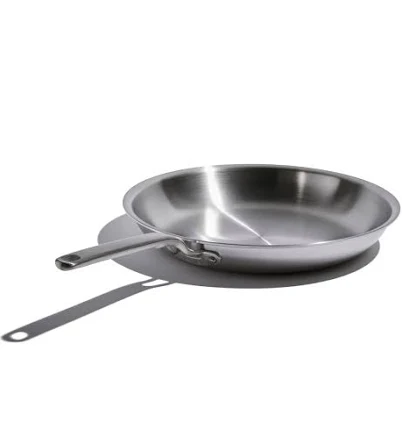
Is Fissler Essential Frying Pan non-toxic? What it is made of
The Fissler Essential uses an unspecified nonstick coating over a steel base. Fissler does not publicly disclose the chemistry of this coating, leaving PFAS status unclear, critical because many nonstick formulas still rely on fluorinated compounds despite newer alternatives. Steel itself is not a material linked to PFAS; the hazard sits entirely in the coating's composition, durability, and potential degradation at high heat.
What’s concerning
Category baseline
The starting point for this type of product, before anything specific to this product is counted.
No PFAS disclosure
No public statement from the brand about PFAS in this product.
Non-stick, chemistry undisclosed
Marketed as non-stick without stating the coating chemistry.
Teflon-type coating/Teflon-family coating fume risk (nonstick coating unspecified)
Fissler does not disclose whether the nonstick coating is Teflon-type coating, Teflon-type coating-free, or contains other fluorinated compounds. If Teflon-type coating-based and overheated above 500 degrees F, risk of polymer fume fever exists; unspecified chemistry prevents definitive risk grading.
Coating degradation and particulate shedding
Any nonstick coating degrades with age and mechanical wear. Fissler Essential pans are reported in consumer forums to show coating wear after 2-3 years of regular use; actual risk of ingesting coating particles is low but increases with damage.
Heat-stability of unspecified coating
Without published thermal stability data, safe upper-temperature limits for this coating are unclear. User assumption that 'nonstick' equals Teflon-type coating may lead to overheating; Fissler should specify recommended maximum temperature.
Manufacturing or migration testing disclosure gaps
No publicly available migration testing data or third-party certification (BPA-free, PFOA-free) is evident for this line. Absence of disclosure does not prove unsafety but limits informed decision-making compared to competitors with transparent test reports.
What’s reassuring
Steel substrate leaching (if coating breaches)
Steel itself does not leach harmful metals at typical cooking temperatures. However, if nonstick coating becomes extensively damaged, exposure to the steel base is cosmetic and safety-neutral; no lead or cadmium concerns in modern steel cookware of this type.
How is this PFAS grade calculated?
The brand's record and disclosure
Fissler is a respected German cookware manufacturer with a long history, but public material safety disclosures are minimal. The brand does not prominently advertise PFAS-free or PFOA-free claims for the Essential line, nor does it publish coating chemistry or migration testing data. This silence is common among European cookware makers but creates a transparency gap for consumers seeking detailed safety assurance.
How it compares in its category
Mid-range nonstick cookware like this typically sits between budget brands (often Teflon-type coating-based) and premium eco-lines (often ceramic or PFAS-free alternatives). Fissler's reputation for durability is solid, but the lack of explicit PFAS declaration puts it behind transparently marketed competitors like GreenPan or Caraway. Steel construction is standard and widely used; differentiation hinges on coating specification and brand honesty.
If you buy it
Avoid continuous high-heat cooking; keep temperatures below 400 degrees Fahrenheit to reduce coating stress and potential off-gassing. Hand wash rather than dishwash to extend coating life and minimize mechanical wear that exposes underlying steel. Inspect regularly for scratches, peeling, or discoloration; replace if coating damage is visible. Contact Fissler directly to request coating material specifications and any PFAS testing data before purchase if this is a deciding factor.
What is not known about PFAS in this product?
- Basis
- Model estimate, 35% confidence, not a lab result
- Lab test
- None on record for this exact product
- Brand statement
- Fissler has made none
Formulations change between production runs, so check the current label. How we grade.
What are the PFAS-free alternatives to Fissler Essential Frying Pan?
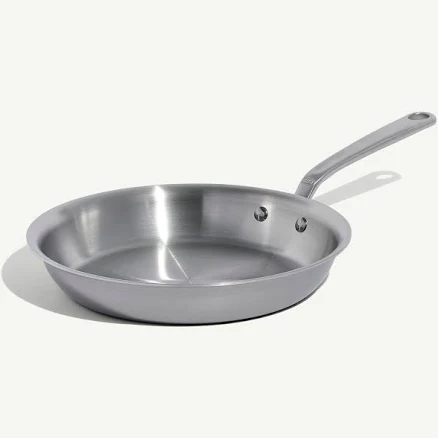
- Stainless steel clad construction, no nonstick coating
- The brand calls it PFAS-free, which we have not verified
- Clad separation or delamination over time
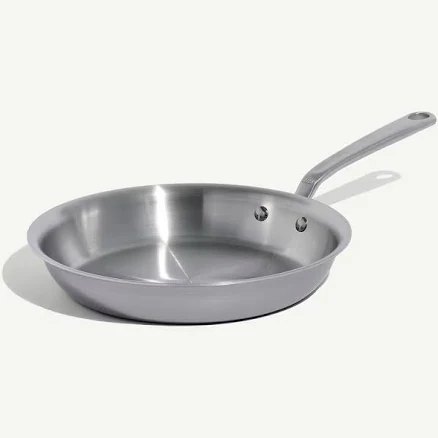
- stainless steel clad construction, no nonstick coating
- The brand calls it PFAS-free, which we have not verified
- Nickel leaching from stainless steel
3 hazards checked on this product, all on its full breakdown.
- Clad stainless steel, no coating
- The brand calls it PFAS-free, which we have not verified
- Metal ion release during cooking (iron, nickel, chromium)
More cookware grades
How we score, every product runs through the same public 0-100 rubric based on materials, coatings, brand disclosure, lab findings, and recalls. See the full methodology → Spotted a mistake? Report an error.