Gap · Stain-Resistant Professional Workwear
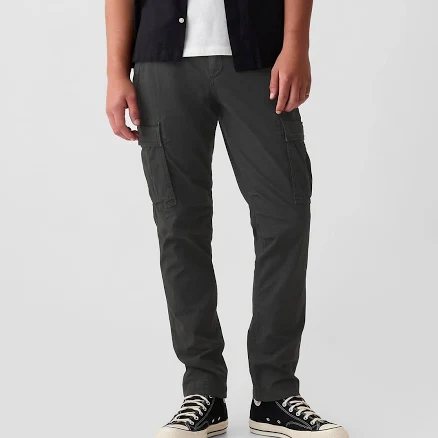
Gap Men's Cargo Pants
Basic cargo pants, lower PFAS concern without water-repellent coating.
These appear to be untreated cotton-blend cargo pants without water-resistant finishes. Standard apparel without disclosed PFAS-containing treatments carries lower risk despite Gap's silence on PFAS practices.
Still want this one anyway? Check the price on Amazon. We’d swap it.
Material
cotton/cotton-blend twill
Brand disclosure
Brand is silent on PFAS
Lab data
No public lab test
What Gap Men's Cargo Pants is made of, ingredients and materials
Gap Men's Cargo Pants are constructed from cotton/cotton-blend twill, a durable plain-weave fabric that is inherently low-risk for chemical leaching. Twill's tight weave and natural fiber base mean it does not require the heavy synthetic coatings or plasticizers common in performance fabrics. Cotton itself is inert against skin contact; any chemical risk is confined to dyes and finishing resins applied during manufacturing, not the fiber itself.
What’s concerning
Category baseline
The starting point for this type of product, before anything specific to this product is counted.
No PFAS disclosure
No public statement from the brand about PFAS in this product.
Azo dyes and colorfast issues
Cotton twill cargo pants rely on synthetic azo dyes for color. While regulated azo dyes pose low hazard, non-colorfast dyes can bleed and irritate skin or stain other garments. Gap does not publicly disclose dye standards; pre-wash mitigates this risk substantially.
Formaldehyde / VOCs
Cotton twill may be treated with formaldehyde resins to enhance crease resistance or hand-feel. No recalls or reports specific to Gap cargo pants; low concentration in finished fabric and off-gassing typically ceases after one wash cycle.
Source, ATSDR ↗What’s reassuring
Base material not linked to PFAS
The main material recorded for this product is not one associated with PFAS.
Heavy metals
No established reports of heavy metal contamination in Gap apparel. Cotton fabric dyed with standard reactive or vat dyes does not typically accumulate lead, cadmium, or chromium; risk is minimal without novelty pigments.
Source, FDA ↗Flame retardants
Adult cargo pants are not subject to flame retardant mandates (only children's sleepwear in the US). Gap's standard twill cargo does not list flame retardant additives and would not require them.
Source, EPA ↗Antimony in polyester (if present)
If blend includes polyester, antimony trioxide is a possible catalyst residue. Gap does not market these as anti-microbial or treated; antimony risk in standard polyester blends is very low and not documented in Gap apparel complaints.
The full breakdown
The brand's record and disclosure
Gap Inc. has not published detailed chemical disclosure or restricted substance lists as of recent public records, and the company maintains a largely silent stance on PFAS and other textile hazards. The brand has faced historical labor and environmental scrutiny but no major recalls tied to chemical contamination in finished apparel. Gap is neither a leader in transparency nor flagged as a persistent offender in independent textile safety reports.
How it compares in its category
Standard cotton cargo pants sit in the low-risk segment of apparel; they lack the flame retardant coatings, antimicrobial finishes, or water-resistant treatments that elevate hazard profiles in performance wear or children's sleepwear. Compared to synthetic blends or heavily finished chinos, plain cotton twill carries minimal chemical burden. This product offers no material advantage over competitor basics (e.g., Levi's, J.Crew) but also no known disadvantage.
If you buy it
Wash before first wear in warm water to remove residual dyes and finishes; this is standard textile safety practice. Use non-chlorine detergent if concerned about dye stability. Inspect seams and stitching annually for degradation; well-made twill typically lasts 2-3 years with normal rotation and care. Avoid prolonged heat (high-temperature dryer) to extend fabric life and minimize any thermal off-gassing of finish resins.
What we don’t know
- Basis
- Model estimate, 72% confidence, not a lab result
- Lab test
- None on record for this exact product
- Brand statement
- Gap has made none
Formulations change between production runs, so check the current label. How we grade.
More stain-resistant professional workwear grades
How we score, every product runs through the same public 0-100 rubric based on materials, coatings, brand disclosure, lab findings, and recalls. See the full methodology → Spotted a mistake? Report an error.