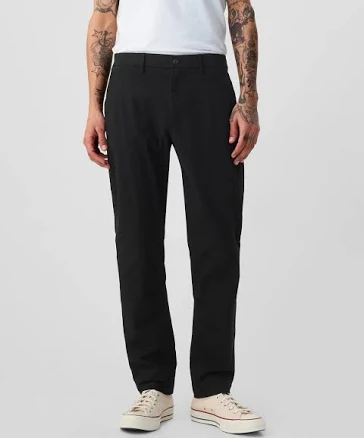
Gap · Stain-Resistant Professional Workwear
Gap Men's Modern Khakis In Athletic Taper
Lower concern. Untreated cotton blend has minimal PFAS risk.
These cotton-blend twill khakis have no waterproof or stain-resistant finishes listed. Untreated woven apparel carries lower inherent risk compared to water-repellent coating treated textiles.
Still want this one anyway? Check the price on Amazon. We’d swap it.
Material
cotton-blend woven twill
Brand disclosure
Brand is silent on PFAS
Lab data
No public lab test
What Gap Men's Modern Khakis In Athletic Taper is made of, ingredients and materials
Gap's Modern Khakis are cotton-blend woven twill, typically 98% cotton / 2% spandex or similar elastane mix. The cotton dominates the fiber profile, reducing chemical treatment burden compared to synthetic-heavy blends. Twill weave (diagonal rib pattern) is inherently durable and requires fewer finishing chemicals than plain weaves to achieve wrinkle resistance or softness. The small spandex component improves stretch and recovery without triggering high-risk processes like vinyl or polyurethane coating.
What’s concerning
Category baseline
The starting point for this type of product, before anything specific to this product is counted.
No PFAS disclosure
No public statement from the brand about PFAS in this product.
Formaldehyde / VOCs
Cotton twill may receive formaldehyde-based wrinkle or shrink-control finishes common in casual pants manufacturing. No specific testing on Gap khakis is on record. Pre-wash is standard mitigation.
Source, ATSDR ↗Heavy metals
Khaki (tan/neutral) colorants typically carry lower azo dye burden than deep reds, blacks, or blues. Compliance with lead/cadmium limits in major markets is likely but unverified by public testing.
Source, FDA ↗Elastane (spandex) degradation and microfiber shedding
The 2% spandex component will degrade with washing and UV exposure, releasing microfibers. This is inherent to stretch blends and not unique to Gap, but a practical durability and environmental consideration.
What’s reassuring
Base material not linked to PFAS
The main material recorded for this product is not one associated with PFAS.
Antimony in polyester (blend component risk)
Spandex (polyurethane elastomer) is the secondary fiber, not polyester; antimony is not a typical concern in spandex. Risk from this hazard is minimal.
Flame retardants
Untreated cotton-blend casual pants are not typically flame-treated unless marketed as sleepwear or workwear. No evidence of flame retardant application on standard Gap khakis.
Source, EPA ↗The full breakdown
The brand's record and disclosure
Gap Inc. has not published detailed chemical disclosure or restricted substance lists specific to this product line as of public record. The company is not known for major formal chemical certifications (e.g., bluesign, GOTS, Cradle to Cradle) on standard basics like khakis. Gap has faced scrutiny on labor and environmental practices but no established recalls or safety alerts on formaldehyde, azo dyes, or heavy metals in their men's basics. Absence of disclosure does not indicate absence of hazard, but reflects industry-standard opacity for mid-market casual wear.
How it compares in its category
Cotton-blend casual pants sit in the lower-risk tier for apparel hazards relative to synthetic activewear, dyed denim, or flame-retardant treated garments. Khakis typically undergo fewer aggressive dye cycles than darker pants, reducing azo dye and heavy metal pigment exposure. Gap's mainstream positioning and scale mean higher likelihood of basic regulatory compliance (no lead, cadmium limits met in most markets) compared to unbranded fast-fashion imports, though certification gaps remain.
If you buy it
Wash before first wear to reduce residual formaldehyde resins and loose dyes. Cold water and mild detergent minimize color bleeding and fiber stress. Spandex content (typically 2%) will degrade after 50-100 wash cycles; expect gradual loss of stretch and shape retention. Store dry and avoid prolonged heat (tumble dry low or air dry) to slow elastane breakdown. No special precautions needed beyond standard garment care.
What we don’t know
- Basis
- Model estimate, 72% confidence, not a lab result
- Lab test
- None on record for this exact product
- Brand statement
- Gap has made none
Formulations change between production runs, so check the current label. How we grade.
More stain-resistant professional workwear grades
How we score, every product runs through the same public 0-100 rubric based on materials, coatings, brand disclosure, lab findings, and recalls. See the full methodology → Spotted a mistake? Report an error.