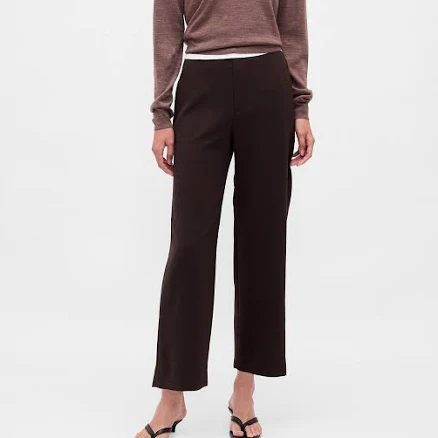
Gap · Stain-Resistant Professional Workwear
Gap Women's High Rise Twill Straight Ankle Pants
Lower concern; untreated twill has minimal PFAS risk.
Standard twill pants with no water-repellent or stain-resistant finish mentioned. Untreated cotton blends typically pose lower PFAS concern than coated or treated textiles.
Still want this one anyway? Check the price on Amazon. We’d swap it.
Material
cotton twill blend
Brand disclosure
Brand is silent on PFAS
Lab data
No public lab test
What Gap Women's High Rise Twill Straight is made of, ingredients and materials
This product is a cotton twill blend, likely cotton with polyester for durability and wrinkle resistance. Twill weave construction is mechanically simple and doesn't rely on complex finishing chemistry. The blend ratio determines fiber dominance, but both cotton and polyester in untreated form carry minimal inherent chemical risk compared to heavily processed synthetics or coated fabrics.
What’s concerning
Category baseline
The starting point for this type of product, before anything specific to this product is counted.
No PFAS disclosure
No public statement from the brand about PFAS in this product.
Formaldehyde / VOCs
If this twill carries a wrinkle-resistant finish, formaldehyde-based resins may be present. Gap does not disclose finishing details. Residual formaldehyde typically off-gasses minimally after first wash, but sensitive individuals should pre-wash.
Source, ATSDR ↗Azo dyes and color-fastness chemicals
Dark twill (common for ankle pants) may use azo dyes, which can release aromatic amines under sweat or friction. No recall or test data exists for this specific product, but the hazard is standard for conventionally dyed cotton-blend apparel without certification.
Formaldehyde / VOCs
Industrial fabric dyeing may use preservatives that release trace formaldehyde. This is routine in mass-market textiles and typically diminishes with washing. Gap has not published testing data for this product line.
Source, ATSDR ↗What’s reassuring
Base material not linked to PFAS
The main material recorded for this product is not one associated with PFAS.
Antimony in polyester component
Antimony is sometimes used as a catalyst in polyester production. Well-established science shows migration from finished polyester fibers is negligible under normal wear. Gap twill blend holds no known reports of antimony contamination.
Phthalates
Plain twill pants with no printed graphics or embellishment carry no documented phthalate risk. Phthalates are primarily a concern in plastisol inks and PVC coatings, neither of which apply here.
Source, ATSDR ↗The full breakdown
The brand's record and disclosure
Gap Inc. has not published detailed chemical disclosure reports or pursued third-party certifications like bluesign or GOTS for mainstream lines. The company has faced historical labor and environmental scrutiny but no documented chemical safety recalls specific to women's basics like this pant. Gap's silence on manufacturing chemistry is typical for fast-fashion retail; it reflects lack of priority rather than active concealment of known problems.
How it compares in its category
Standard cotton-blend twill pants sit in the middle-safety zone for apparel. They carry lower chemical risk than synthetic activewear (often treated with antimicrobial finishes) or heavily printed/dyed garments, but lack the transparency and certifications of organic or Fair Trade alternatives. This product is roughly equivalent to other major retailers' basic twill offerings in chemical profile.
If you buy it
Wash before first wear to remove residual dyes and finishing dust. Use cold water; hot water does not increase chemical leaching from untreated twill but reduces garment lifespan. Dry on low heat or air-dry to prevent synthetic fiber degradation. Replace when seams fray or fabric pills excessively, typically after 50-75 washes for mass-market construction. No special care required beyond standard laundry.
What we don’t know
- Basis
- Model estimate, 72% confidence, not a lab result
- Lab test
- None on record for this exact product
- Brand statement
- Gap has made none
Formulations change between production runs, so check the current label. How we grade.
More stain-resistant professional workwear grades
How we score, every product runs through the same public 0-100 rubric based on materials, coatings, brand disclosure, lab findings, and recalls. See the full methodology → Spotted a mistake? Report an error.