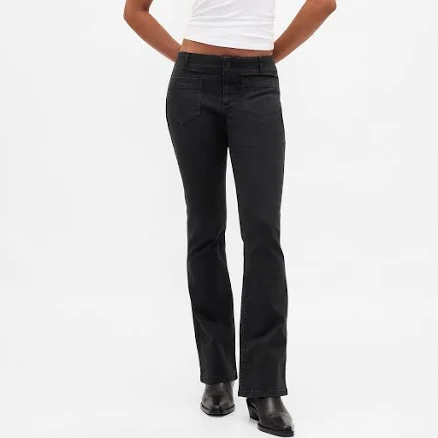
Gap · Stain-Resistant Professional Workwear
Gap Women's Low Rise Long & Lean Twill Pants
Lower concern, but Gap provides no PFAS disclosure.
Standard cotton twill pants with no water or stain resistant finish noted. Gap does not publicly disclose PFAS use or testing for basic apparel like this product.
Still want this one anyway? Check the price on Amazon. We’d swap it.
Material
Cotton twill, standard weave
Brand disclosure
Brand is silent on PFAS
Lab data
No public lab test
What Gap Women's Low Rise Long & Lean Twill is made of, ingredients and materials
Gap's Low & Lean twill is a standard cotton weave, meaning the fiber itself is cellulose with no inherent plastic components. Twill construction (diagonal weave pattern) provides durability without requiring Teflon-family coating coatings or chemical stiffeners typical of some dress pants. The primary chemical exposures come from dyes and finishing treatments applied during manufacturing, not the fiber itself.
What’s concerning
Category baseline
The starting point for this type of product, before anything specific to this product is counted.
No PFAS disclosure
No public statement from the brand about PFAS in this product.
Azo dyes and textile pigments
Cotton twill typically uses azo-based dyes for color fastness. Gap does not disclose dye chemistry or heavy-metal testing in pigments. Risk of skin sensitization or allergic contact dermatitis is low but not zero for sensitive individuals, particularly in first 1-2 washes before residual dyes leach.
Formaldehyde / VOCs
Some twill finishing processes use formaldehyde-based crosslinkers to improve wrinkle resistance or color retention. Gap does not specify finishing treatments. Off-gassing is typically minimal in unwashed garments and dissipates further after laundering; regulatory limits for apparel are not as strict as home textiles.
Source, ATSDR ↗What’s reassuring
Base material not linked to PFAS
The main material recorded for this product is not one associated with PFAS.
Lead
No specific recalls or test data link Gap twill to heavy-metal contamination. Dye suppliers to major brands are increasingly regulated under Restricted Substance Lists, but Gap does not publicly verify compliance.
Source, ATSDR ↗Antimony in polyester blends
This product is described as cotton twill, not polyester-blended. Antimony hazard does not apply unless Gap's sourcing includes undisclosed synthetic content, which is unlikely for a basic twill marketed as cotton.
Flame retardants
Cotton pants are not required or commonly treated with flame retardants unless marketed for sleepwear or industrial use. Gap's Low & Lean is standard apparel and no flame-retardant treatment is expected.
Source, EPA ↗The full breakdown
The brand's record and disclosure
Gap Inc. has not publicly disclosed PFAS usage in textiles and does not publish supply-chain chemical inventories, which aligns with broader apparel-industry silence rather than unique secrecy. The company maintains Social & Labor Convergence Program (SLCP) factory audits focusing on labor conditions, not chemical hazards. No recalls or regulatory violations specific to chemical contamination in Gap womenswear have been reported in public databases. Gap does not pursue third-party certifications like Oeko-Tex or GOTS that would independently verify finishing-chemical safety.
How it compares in its category
Cotton twill pants are among the lower-risk garment types because they require minimal water-repellent or stain-resistant treatment (key sources of PFAS in apparel). Most mainstream brands, Gap, Banana Republic, J.Crew, Dockers, offer untreated or lightly finished cotton twills with similar disclosure gaps. Certified-organic or Oeko-Tex certified alternatives exist but cost 2-3x more and are not mainstream retail. For an unspecialized cotton pant from a major brand, Gap's offering sits at category baseline risk.
If you buy it
Prewash these pants separately in cool water before first wear to reduce residual dyes and finishing chemicals. Machine wash in warm water with standard detergent; twill is durable and does not require special care. Air dry to extend fabric life and avoid heat exposure that could accelerate any coating degradation (unlikely in untreated twill, but standard practice). Replace when seams fray or fabric pills excessively, not due to chemical hazard, longevity typically 2-3 years of regular wear.
What we don’t know
- Basis
- Model estimate, 72% confidence, not a lab result
- Lab test
- None on record for this exact product
- Brand statement
- Gap has made none
Formulations change between production runs, so check the current label. How we grade.
More stain-resistant professional workwear grades
How we score, every product runs through the same public 0-100 rubric based on materials, coatings, brand disclosure, lab findings, and recalls. See the full methodology → Spotted a mistake? Report an error.