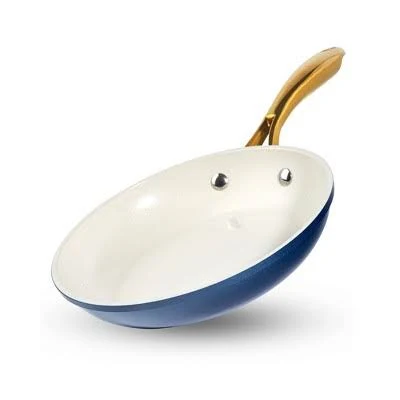
Gotham Steel Natural Fry Pan, Is It Non-Toxic?
Pass until the brand discloses the coating makeup.
Gotham Steel markets this as natural but keeps the coating formula secret. You cannot verify what makes the nonstick surface work without contacting them directly.
The better-graded swap
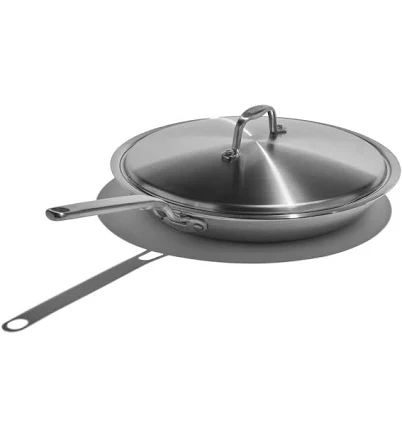
Heritage Steel
Heritage Steel Eater 12" Fry Pan with Lid
100/100 safety
Same rubric that flunked this product. The swap earned Excellent.
Still want this one anyway? Check the price on Amazon. We’d swap it.
Material
Nonstick ceramic or titanium-reinforced coating (unspecified)
Brand disclosure
Brand is silent on PFAS
Lab data
No public lab test
You may also be interested in
Top-graded picks in the categories readers replace first, every one scored on the same rubric.

- polypropylene filter housing, carbon/sediment cartridge
- We found no PFAS statement from the brand
- Bacterial growth in spent cartridges
3 hazards checked on this product, all on its full breakdown.

Aquasure
Premier Series 75 GPD Under Sink Reverse Osmosis Water Filtration System
- RO membrane, carbon filters, stainless steel housing
- We found no PFAS statement from the brand
- Bacterial and microbial growth in housing and filters
4 hazards checked on this product, all on its full breakdown.

Avocado
Vegan Mattress
- organic cotton, natural latex, coconut coir, recycled steel coils
- The brand calls it PFAS-free, which we have not verified
- Heavy metals
2 hazards checked on this product, all on its full breakdown.
Is Gotham Steel Natural Fry Pan non-toxic? What it is made of
Gotham Steel markets this as ceramic or titanium-reinforced nonstick, but the exact coating composition is not publicly specified by the brand. Most ceramic nonstick cookware uses a ceramic-type ceramic topcoat bonded to aluminum or steel; titanium claims often refer to particles mixed into that coating rather than a solid titanium layer. The base material and binder chemistry are what determine whether harmful substances can leach into food during cooking.
What’s concerning
Category baseline
The starting point for this type of product, before anything specific to this product is counted.
Vague safety claims only
Uses vague language ("eco-friendly", "clean") without a specific PFAS statement.
Non-stick, chemistry undisclosed
Marketed as non-stick without stating the coating chemistry.
Ceramic coating degradation and substrate exposure
Ceramic nonstick coatings are prone to chipping and peeling with normal use. Once breached, the underlying aluminum or steel may contact food, risking leaching of aluminum (linked to neurological concerns at high chronic levels) or iron oxidation.
Aluminum leaching from substrate
If the coating degrades, the aluminum base can leach into acidic or salty foods. Gotham Steel does not disclose the type or thickness of the aluminum layer or any non-reactive barrier. Exposure risk is low with intact coating but rises sharply if damaged.
Teflon-type coating or PFOA residue in coating (undisclosed chemistry)
Although marketed as ceramic, some ceramic nonstick coatings historically contain trace Teflon-type coating or PFOA to enhance slip properties. Gotham Steel's silence on exact coating chemistry makes this unconfirmed but not ruled out. PFAS grade of 20/100 reflects this uncertainty.
Thermal degradation fumes (if overheated)
True ceramic coatings are more thermally stable than Teflon-type coating and less prone to fume emissions below 400°F. However, binders and additives in ceramic formulations may off-gas if heated well above the recommended range; Gotham Steel does not specify a safe temperature ceiling.
Lack of third-party verification or certification
No evidence of NSF, GREENGUARD, or FDA pre-approval testing published by Gotham Steel. This is not a defect itself but increases uncertainty about long-term safety claims and invites reliance on brand integrity alone.
How is this PFAS grade calculated?
The brand's record and disclosure
Gotham Steel (owned by Emson, Inc.) does not publicly disclose the complete chemical makeup of its nonstick coatings or provide third-party certification (e.g., GREENGUARD, NSF). The brand has faced no widely documented recalls for leaching or coating failure, but also offers minimal transparency on PFAS use or alternatives. Their marketing emphasizes 'non-toxic' and 'ceramic' positioning without independent substantiation.
How it compares in its category
Ceramic nonstick pans sit between traditional Teflon-type coating (Teflon) and stainless steel in the safety spectrum. Unlike Teflon-type coating, ceramic avoids fume risk from overheating; unlike uncoated aluminum, it resists direct metal leaching. However, ceramic coatings are generally more fragile and degrade faster than Teflon-type coating, potentially exposing underlying substrate sooner. Brands like GreenPan and Our Place disclose their coatings more transparently; Gotham Steel's silence is a relative weakness.
If you buy it
Use only on low to medium heat (ceramic coatings degrade above 400°F); avoid metal utensils and abrasive scouring to extend coating life. Inspect the pan every 6-12 months for flaking, pitting, or visible wear; discard immediately if the coating is damaged to prevent substrate contact with food. Hand wash only; dishwasher use accelerates coating failure. Replace the pan every 2-4 years depending on frequency of use.
What is not known about PFAS in this product?
- Basis
- Model estimate, 35% confidence, not a lab result
- Lab test
- None on record for this exact product
- Brand statement
- Gotham Steel has made none
Formulations change between production runs, so check the current label. How we grade.
What are the PFAS-free alternatives to Gotham Steel Natural Fry Pan?
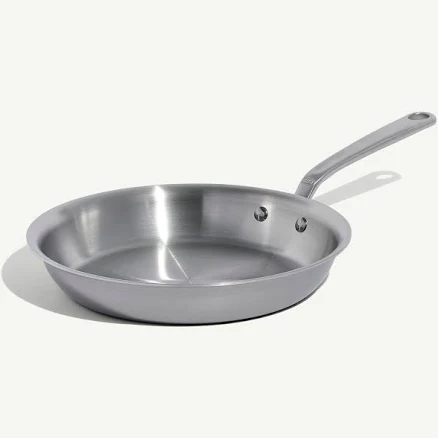
- Stainless steel clad construction, no nonstick coating
- The brand calls it PFAS-free, which we have not verified
- Clad separation or delamination over time
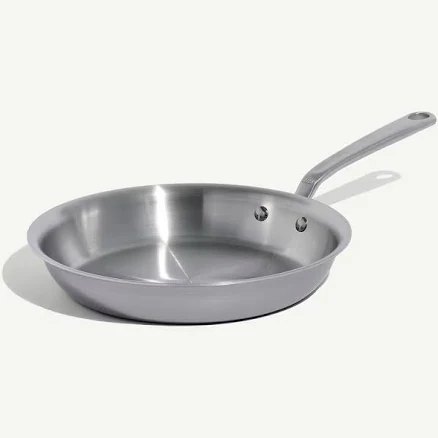
- stainless steel clad construction, no nonstick coating
- The brand calls it PFAS-free, which we have not verified
- Nickel leaching from stainless steel
3 hazards checked on this product, all on its full breakdown.
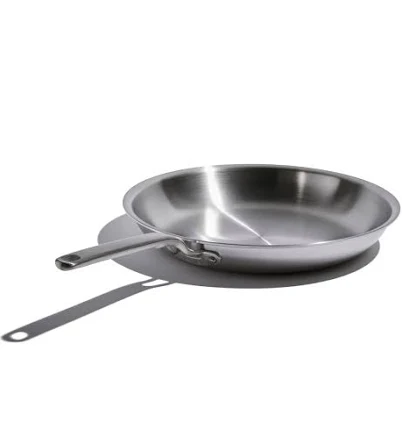
- Clad stainless steel, no coating
- The brand calls it PFAS-free, which we have not verified
- Metal ion release during cooking (iron, nickel, chromium)
More cookware grades
How we score, every product runs through the same public 0-100 rubric based on materials, coatings, brand disclosure, lab findings, and recalls. See the full methodology → Spotted a mistake? Report an error.