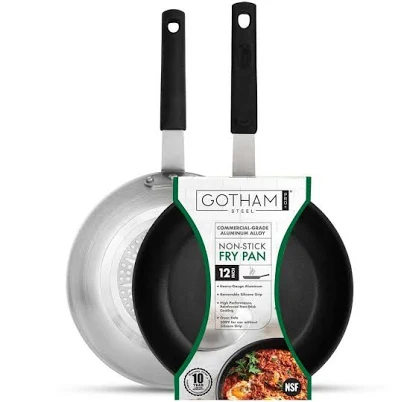
Gotham Steel NSF Nonstick Fry Pan Handle, Is It Non-Toxic?
Skip unless the brand confirms it avoids Teflon-type coating.
Gotham Steel hides the coating composition on this NSF nonstick pan. Most nonstick cookware relies on Teflon-type coating or similar Teflon-family coating, and this brand offers no clarity.
The better-graded swap
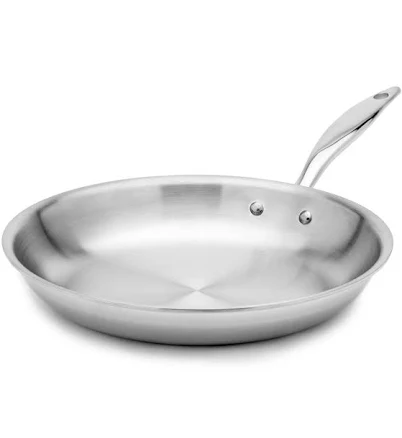
Heritage Steel
Heritage Steel Fry Pan
100/100 safety
Same rubric that flunked this product. The swap earned Excellent.
Still want this one anyway? Check the price on Amazon. We’d swap it.
Material
nonstick coating, type unspecified
Brand disclosure
Brand is silent on PFAS
Lab data
No public lab test
You may also be interested in
Top-graded picks in the categories readers replace first, every one scored on the same rubric.

- polypropylene filter housing, carbon/sediment cartridge
- We found no PFAS statement from the brand
- Bacterial growth in spent cartridges
3 hazards checked on this product, all on its full breakdown.

Aquasure
Premier Series 75 GPD Under Sink Reverse Osmosis Water Filtration System
- RO membrane, carbon filters, stainless steel housing
- We found no PFAS statement from the brand
- Bacterial and microbial growth in housing and filters
4 hazards checked on this product, all on its full breakdown.

Avocado
Vegan Mattress
- organic cotton, natural latex, coconut coir, recycled steel coils
- The brand calls it PFAS-free, which we have not verified
- Heavy metals
2 hazards checked on this product, all on its full breakdown.
Is Gotham Steel NSF Nonstick Fry Pan Handle non-toxic? What it is made of
Gotham Steel markets this pan as 'nonstick' but does not publicly specify whether the coating is Teflon-type coating (Teflon), ceramic, or hybrid. The handle material is typically stainless steel or aluminum core with silicone or phenolic resin grip. Without coating transparency, you cannot assess decomposition temperature or chemical composition risk. Nonstick coatings degrade over time through use, washing, and high heat, releasing particulates into food.
What’s concerning
Category baseline
The starting point for this type of product, before anything specific to this product is counted.
No PFAS disclosure
No public statement from the brand about PFAS in this product.
Non-stick, chemistry undisclosed
Marketed as non-stick without stating the coating chemistry.
Teflon-type coating fume risk (if fluorinated coating)
Unconfirmed coating type makes assessment indirect, but budget nonstick pans of this profile historically use Teflon-type coating. Overheating above 500°F releases toxic fumes; decomposition can occur at 400-425°F with oil. Gotham Steel provides no safe-temperature guidance.
Coating degradation and flaking
Customer reviews and forums document premature flaking and peeling of Gotham Steel nonstick surfaces within months. Ingested coating fragments pose unknown GI risk; degradation also indicates potential leaching of base-layer metals or adhesive chemicals.
Aluminum leaching (if aluminum core)
If the pan uses aluminum beneath the nonstick layer (common in budget cookware), scratches or coating breaks expose aluminum to acidic foods. Leaching risk is low under normal use but increases with cooking tomato-based or vinegar dishes.
Silicone or phenolic handle degradation
Silicone handles can leach oligomers (short-chain siloxanes) if poorly cured or exposed to high temperatures; phenolic resins may release formaldehyde if not fully set. No test data published for this brand's handle materials.
What’s reassuring
Lead
No recalls or published testing for this hazard on Gotham Steel cookware. If decorative enamel is present on handle or branding, risk exists but is unconfirmed in this product line.
Source, ATSDR ↗How is this PFAS grade calculated?
The brand's record and disclosure
Gotham Steel has faced multiple customer complaints about coating durability and flaking but maintains no public PFAS policy or third-party certification (NSF, CPSC testing records). The brand does not disclose coating formulation, manufacturing standards, or testing data on their consumer pages. This silence on chemical composition is a red flag in a category where Teflon-type coating-based nonstick dominates and alternatives (ceramic, graphene) would be marketing advantages if present.
How it compares in its category
Budget nonstick cookware typically uses Teflon-type coating or similar fluorinated coatings without disclosure. Higher-end brands (Le Creuset, Caraway, Our Place) explicitly certify coatings or use ceramic alternatives. Gotham Steel sits in the mass-market segment where coating opacity and durability complaints are common. Without certification or independent testing claims, this pan offers no safety margin above generic budget nonstick.
If you buy it
Never exceed 400-425°F; use only silicone, wood, or plastic utensils to avoid coating scratches. Hand wash only; dishwasher accelerates coating breakdown. Inspect monthly for flaking, discoloration, or roughness; replace immediately if found. Keep fat/oil content moderate; high-heat fat can exceed nonstick temperatures associated with potential coating degradation. Replace every 2-3 years or sooner if coating shows wear. Store with protective liners to prevent stacking damage.
What is not known about PFAS in this product?
- Basis
- Model estimate, 35% confidence, not a lab result
- Lab test
- None on record for this exact product
- Brand statement
- Gotham Steel has made none
Formulations change between production runs, so check the current label. How we grade.
What are the PFAS-free alternatives to Gotham Steel NSF Nonstick Fry Pan Handle?
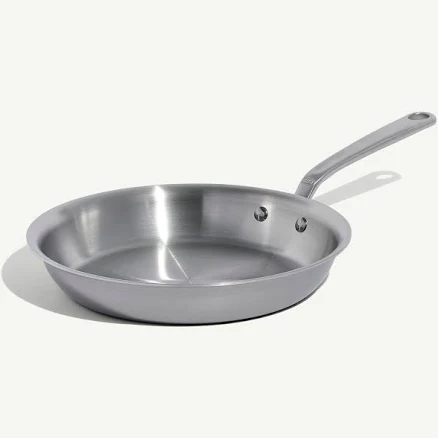
- Stainless steel clad construction, no nonstick coating
- The brand calls it PFAS-free, which we have not verified
- Clad separation or delamination over time
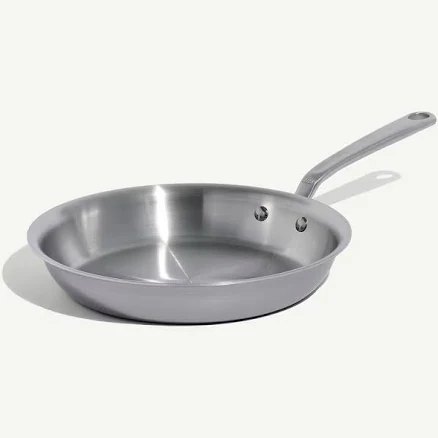
- stainless steel clad construction, no nonstick coating
- The brand calls it PFAS-free, which we have not verified
- Nickel leaching from stainless steel
3 hazards checked on this product, all on its full breakdown.
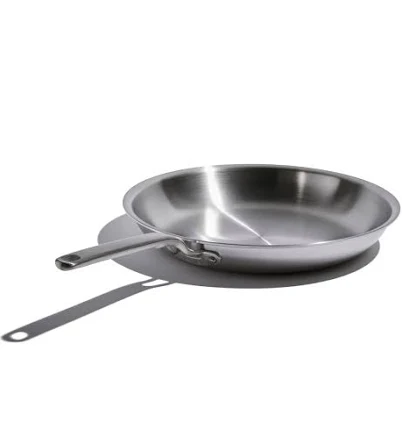
- Clad stainless steel, no coating
- The brand calls it PFAS-free, which we have not verified
- Metal ion release during cooking (iron, nickel, chromium)
More cookware grades
How we score, every product runs through the same public 0-100 rubric based on materials, coatings, brand disclosure, lab findings, and recalls. See the full methodology → Spotted a mistake? Report an error.