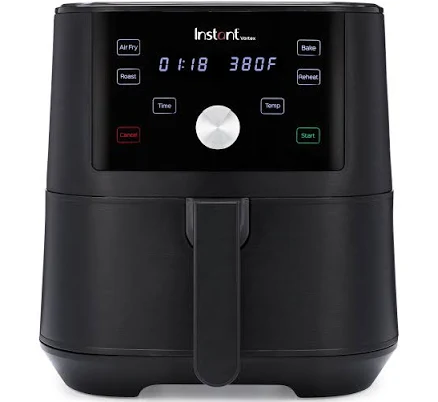
Instant Pot Vortex Air Fryer 6-Qt. 4-in-1
Pass on this model until Instant Pot reveals basket coating details or proves PFAS-free status.
Instant Pot does not reveal what nonstick coating material lines the Vortex basket. You cannot reliably gauge PFAS risk without confirmation that it is Teflon-type coating-free or PFAS-free.
The better-graded swap
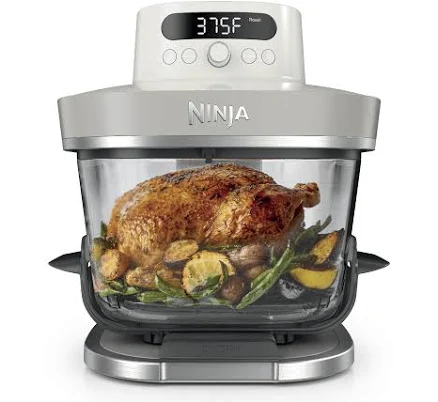
Ninja
Ninja Crispi Pro 6-in-1 Glass Air Fryer
75/100 safety
Same rubric that flunked this product. The swap earned Excellent.
Still want this one anyway? Check the price on Amazon. We’d swap it.
Material
Nonstick-coated cooking basket; composition not publicly disclosed
Brand disclosure
Brand is silent on PFAS
Lab data
No public lab test
You may also be interested in
Top-graded picks in the categories readers replace first, every one scored on the same rubric.

- polypropylene filter housing, carbon/sediment cartridge
- We found no PFAS statement from the brand
- Bacterial growth in spent cartridges
3 hazards checked on this product, all on its full breakdown.

Aquasure
Premier Series 75 GPD Under Sink Reverse Osmosis Water Filtration System
- RO membrane, carbon filters, stainless steel housing
- We found no PFAS statement from the brand
- Bacterial and microbial growth in housing and filters
4 hazards checked on this product, all on its full breakdown.

Avocado
Vegan Mattress
- organic cotton, natural latex, coconut coir, recycled steel coils
- The brand calls it PFAS-free, which we have not verified
- Heavy metals
2 hazards checked on this product, all on its full breakdown.
What Instant Pot Vortex Air Fryer 6-Qt. 4-in-1 is made of, ingredients and materials
The Vortex's cooking basket uses a nonstick coating whose exact chemistry Instant Pot does not publicly disclose. This opacity is the core concern, nonstick coatings are typically either Teflon-type coating-based (which can emit fumes if overheated) or ceramic/silicone hybrids (which have lower concern for fume emission). The basket's aluminum or steel substrate itself is inert when properly coated, but coating integrity and composition determine actual safety. Without material transparency, risk assessment relies on use behavior rather than guaranteed safety.
What’s concerning
Category baseline
The starting point for this type of product, before anything specific to this product is counted.
No PFAS disclosure
No public statement from the brand about PFAS in this product.
Non-stick, chemistry undisclosed
Marketed as non-stick without stating the coating chemistry.
Teflon-type coating fume inhalation risk (overheating)
If the undisclosed coating is Teflon-type coating-based and the basket is heated above ~500F (e.g., malfunction or user error), polymer fume fever symptoms (flu-like) can occur. Instant Pot's lack of disclosure means you cannot verify whether this risk applies to your unit.
Coating degradation and microparticulate ingestion
All nonstick air fryer baskets degrade with use; flaking or peeling coating can introduce particles into food, especially at high temperatures or with sharp utensils. Without knowing the coating type, you cannot assess whether degradation products are inert or bioavailable.
Aluminum leaching (if uncoated substrate exposed)
If the nonstick coating is thin or degrades to expose aluminum substrate, acidic foods (tomato sauce, vinegar) can interact with aluminum, though leaching levels are typically modest. Risk is heightened if coating chips or peels.
Lack of material certification or third-party testing
Instant Pot Vortex carries no NSF, GREENGUARD, or PFAS-free certification visible in public marketing or packaging. This absence is not itself a hazard, but it reflects a lower regulatory or transparency standard compared to category leaders.
What’s reassuring
Heating element or housing off-gassing
No reported VOC or formaldehyde issues specific to Instant Pot Vortex units. The heating chamber is metal-based, not a major off-gassing source like foam or plastic-heavy housing. This is a strength relative to budget air fryers.
How is this PFAS grade calculated?
The brand's record and disclosure
Instant Pot has not published material safety data sheets or PFAS commitments for the Vortex line. The company does not appear on lists of brands with formal PFAS phase-out pledges or third-party certifications (NSF, GREENGUARD, etc.). This silence contrasts with competitors like Cosori and Ninja, which have begun disclosing nonstick coatings as Teflon-type coating-free or ceramic. Instant Pot's lack of proactive transparency suggests either Teflon-type coating use or indifference to consumer pressure on this issue.
How it compares in its category
Mid-to-premium air fryers increasingly market ceramic or Teflon-type coating-free nonstick surfaces; Instant Pot's refusal to specify places it in an older disclosure standard. Comparable 6-quart models from Cosori (marketed as ceramic), Ninja (Teflon-type coating-free marketed), and Phillips Premium have moved toward material transparency. Instant Pot Vortex pricing is competitive ($150-200 range), but the lack of clarity on a key safety feature is a relative weakness. Performance and capacity are on par; safety transparency is not.
If you buy it
Never heat an empty basket or exceed manufacturer temperature limits (typically 400F for nonstick safety); hand-wash the basket rather than dishwashing, which degrades coatings faster. Inspect the basket monthly for scratching, chipping, or discoloration; any coating damage means replacement is necessary (Instant Pot sells aftermarket baskets). Avoid acidic or high-salt foods in direct contact with the coating if possible. Plan on replacing the basket every 2-3 years of regular use, as nonstick coatings degrade predictably; this cost ($40-60) should factor into your purchase decision.
What is not known about PFAS in this product?
- Basis
- Model estimate, 35% confidence, not a lab result
- Lab test
- None on record for this exact product
- Brand statement
- Instant Pot has made none
Formulations change between production runs, so check the current label. How we grade.
What are the PFAS-free alternatives to Instant Pot Vortex Air Fryer 6-Qt. 4-in-1?
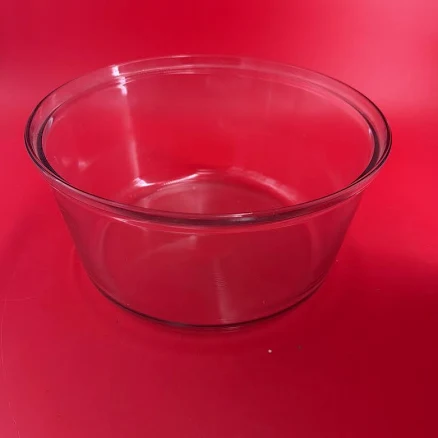
- borosilicate glass, bare uncoated
- We found no PFAS statement from the brand
- Thermal shock and fracture
2 hazards checked on this product, all on its full breakdown.
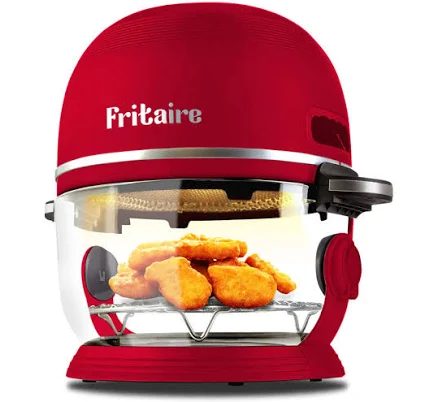
- borosilicate glass
- We found no PFAS statement from the brand
- Aluminum leaching from base/housing
4 hazards checked on this product, all on its full breakdown.
Find an alternative on Amazon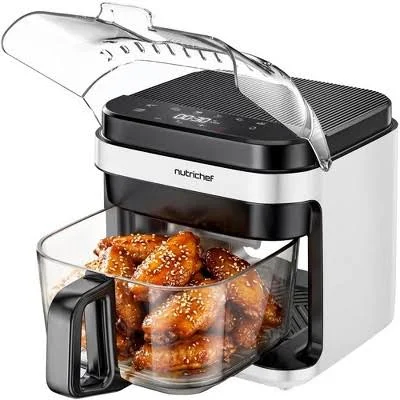
- glass bowl, stainless steel exterior
- We found no PFAS statement from the brand
- Thermal stress and glass breakage
2 hazards checked on this product, all on its full breakdown.
Find an alternative on AmazonMore air fryers grades
How we score, every product runs through the same public 0-100 rubric based on materials, coatings, brand disclosure, lab findings, and recalls. See the full methodology → Spotted a mistake? Report an error.