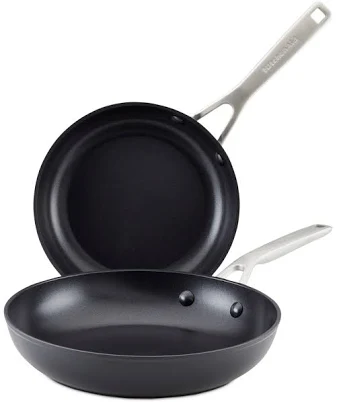
KitchenAid Hard-Anodized Induction Nonstick Frying Pan Set (2-Piece)
Nonstick coating type unknown; KitchenAid provides no PFAS disclosure.
KitchenAid hard-anodized nonstick pans lack any public PFAS information or third-party verification. The coating formulation remains undisclosed, creating uncertainty for PFAS-conscious buyers.
The better-graded swap
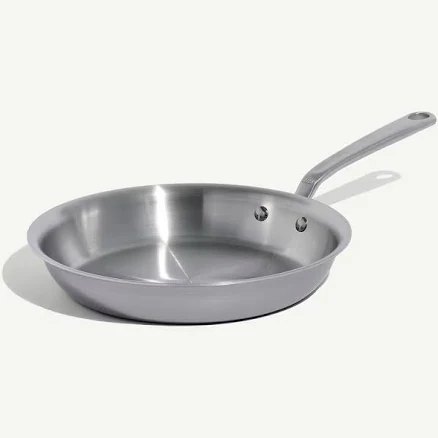
Made In
MADE IN 10' Stainless Clad Frying Pan
100/100 safety
Same rubric that flunked this product. The swap earned Excellent.
Still want this one anyway? Check the price on Amazon. We’d swap it.
Material
Hard-anodized aluminum with nonstick coating, type unspecified
Lab data
No public lab test
Is KitchenAid Hard-Anodized Induction non-toxic? What it is made of
KitchenAid hard-anodized induction nonstick frying pans use electrochemically treated aluminum as the base layer. Hard anodization creates a sealed oxide layer that is more durable than standard anodizing and significantly reduces (but does not eliminate) direct aluminum contact with food. The nonstick coating type is not publicly specified by KitchenAid, which is a significant transparency gap given the PFAS concerns in the nonstick category. This ambiguity matters because Teflon-type coating-based coatings have different thermal stability and off-gassing profiles than newer fluorine-free alternatives.
What’s concerning
Category baseline
The starting point for this type of product, before anything specific to this product is counted.
No PFAS disclosure
No public statement from the brand about PFAS in this product.
Non-stick, chemistry undisclosed
Marketed as non-stick without stating the coating chemistry.
Aluminum leaching from degraded anodized layer
Hard anodization significantly reduces aluminum migration compared to untreated aluminum, but the oxide layer can degrade with acidic foods, salt, and mechanical damage over time. Once the seal is compromised, aluminum can leach into food at higher rates than initial use.
Nonstick coating degradation and particle shedding
KitchenAid does not specify the nonstick coating type, making it impossible to assess durability claims. Hard-anodized nonstick cookware in this price range often shows visible wear within 2-3 years under normal use; coating flaking has been reported by consumers in online reviews, though no formal recall is on record.
Teflon-type coating fume inhalation risk (if Teflon-type coating-based coating)
If the nonstick coating is Teflon-type coating-based (unconfirmed), heating above 500F can release fumes that cause polymer fume fever in humans and acute toxicity in pet birds. Without coating specification, users cannot verify safe temperature limits or confirm the pan uses non-Teflon-type coating alternatives.
What’s reassuring
Manufacturing chemical residues
No documented reports of formaldehyde, heavy metal residues, or other manufacturing byproducts in KitchenAid hard-anodized cookware. However, lack of independent testing data or third-party certification means exposure cannot be ruled out.
Coating incompatibility with induction stovetops
KitchenAid explicitly certifies this pan for induction use, and hard-anodized aluminum with ferromagnetic bases is standard for induction-compatible cookware. No known safety issues with the interaction between coating and electromagnetic heating have been reported.
The full breakdown
The brand's record and disclosure
KitchenAid provides no publicly available breakdown of nonstick coating chemistry, PFAS content, or manufacturing certifications on product pages or safety documentation. The brand has not committed to PFAS phase-out statements or third-party testing claims that are increasingly standard for competitors. No major recalls specifically targeting PFAS or coating failure have been documented for this product line, but the silence on composition is noteworthy in an industry where disclosure has become a baseline competitive expectation.
How it compares in its category
Hard-anodized aluminum with nonstick is a mid-range choice between bare stainless steel (no nonstick, no PFAS) and premium ceramic or Teflon-type coating-certified nonstick alternatives. Many competing brands (All-Clad, Calphalon, GreenPan) now disclose coating type or offer PFAS-free certified options; KitchenAid's silence puts it behind the transparency curve. For the price point, this product occupies a common market position but lacks the reassurance of explicit composition guarantees or third-party certification.
If you buy it
Hand-wash rather than dishwasher to extend coating life and reduce mechanical wear. Avoid temperatures above 500F (check manual) as unknown nonstick coatings may degrade or off-gas at high heat. Inspect the surface every 6-12 months; if the coating shows flaking, pitting, or dark patches, discontinue use to prevent both coating particle ingestion and increased aluminum contact. Use silicone or wood utensils, never metal; replace the pan if the nonstick function visibly deteriorates within 2-3 years of normal use.
What we don’t know
- Basis
- Model estimate, 35% confidence, not a lab result
- Lab test
- None on record for this exact product
- Brand statement
- Kitchenaid has made a specific claim
Formulations change between production runs, so check the current label. How we grade.
Better-graded alternatives in Cookware
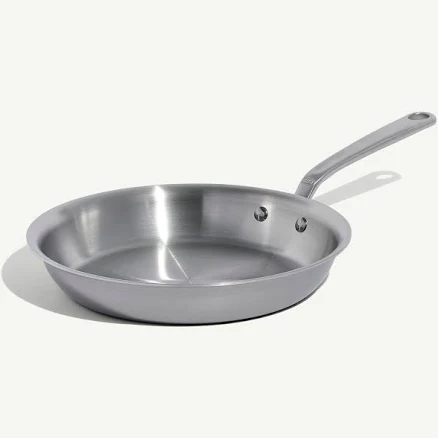
Made In
Stainless Clad Fry Pan
- Stainless steel clad construction, no nonstick coating
- The brand calls it PFAS-free, which we have not verified
- Clad separation or delamination over time
Made In
10' Stainless Clad Frying Pan
- stainless steel clad construction, no nonstick coating
- The brand calls it PFAS-free, which we have not verified
- Nickel leaching from stainless steel
3 hazards checked on this product. See all of them.
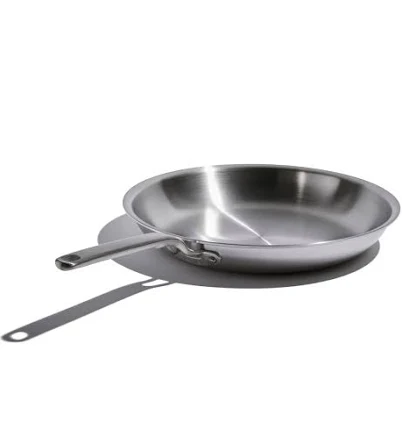
Heritage Steel
Eater Fry Pan
- Clad stainless steel, no coating
- The brand calls it PFAS-free, which we have not verified
- Metal ion release during cooking (iron, nickel, chromium)
More cookware grades
How we score, every product runs through the same public 0-100 rubric based on materials, coatings, brand disclosure, lab findings, and recalls. See the full methodology → Spotted a mistake? Report an error.