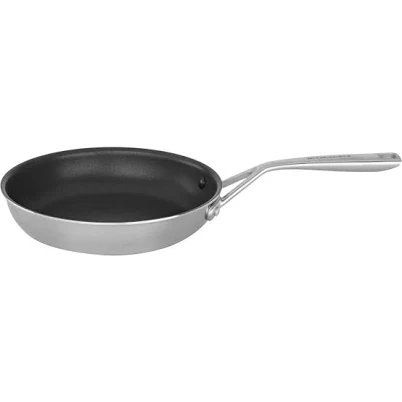
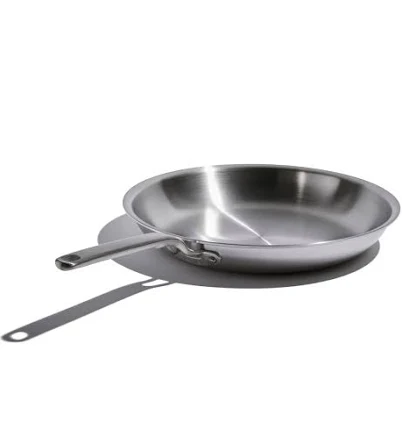
KitchenAid Tri-Ply Stainless Steel Nonstick Skillet
Nonstick coating chemistry not stated, brand has no PFAS statement on record.
This skillet has a nonstick coating whose chemistry is not stated. KitchenAid has no PFAS statement on record for this product. No third-party testing or certification is available.
The better-graded swap
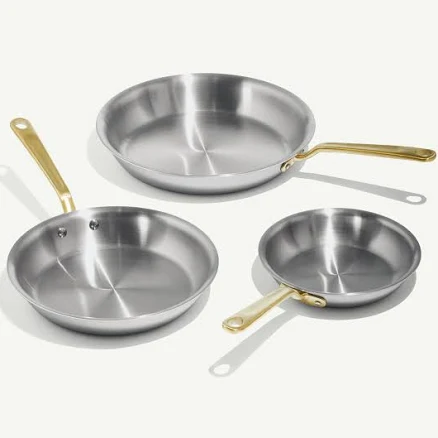
Made In
Made In Stainless Clad Frying Pan Set 3-Piece Professional-Grade 5-Layer Metal Construction
100/100 safety
Same rubric that flunked this product. The swap earned Excellent.
Still want this one anyway? Check the price on Amazon. We’d swap it.
Material
Stainless steel with nonstick coating, composition unspecified
Lab data
No public lab test
Is KitchenAid Tri-Ply Stainless Steel non-toxic? What it is made of
KitchenAid Tri-Ply Stainless Steel Nonstick Skillets use a stainless steel core (typically 18/8 or 18/10 chromium-nickel alloy) bonded to aluminum and copper layers for heat distribution. The nonstick coating type is not publicly specified by KitchenAid on product labels or their website. Since the 1980s, most commercial nonstick cookware has used Teflon-type coating (Teflon) or similar Teflon-family coating, though some newer lines claim Teflon-type coating-free alternatives; without explicit disclosure, Teflon-type coating presence cannot be ruled out.
What’s concerning
Category baseline
The starting point for this type of product, before anything specific to this product is counted.
No PFAS disclosure
No public statement from the brand about PFAS in this product.
Non-stick, chemistry undisclosed
Marketed as non-stick without stating the coating chemistry.
Teflon-type coating fume risk (thermal degradation)
If the nonstick coating is Teflon-type coating-based (not disclosed), overheating above 500°F can release polymer fumes causing acute respiratory symptoms (flu-like). KitchenAid does not specify coating type, so risk cannot be quantified; users must assume standard precautions (no preheating empty, medium heat max).
Coating degradation and flaking
All nonstick coatings wear with use. Dishwasher use, high heat, and metal utensils accelerate peeling. Flaked coating particles may be ingested; while not acutely toxic, chronic ingestion of unknown polymers is poorly studied in humans.
PFAS
Composition unknown. PFAS are common in Teflon-type coating-based coatings; KitchenAid's silence on this issue is the primary concern. See PFAS grade (15/100) for full analysis.
Source, ATSDR ↗What’s reassuring
Aluminum leaching
The aluminum core is bonded between stainless steel and the nonstick layer, so direct contact with food is prevented. Leaching is not a documented concern for tri-ply construction if the outer coating remains intact.
Lead
Stainless steel and modern nonstick coatings do not intentionally contain lead or cadmium. No recalls or testing data suggest contamination in this product line; standard cookware safety applies.
Source, ATSDR ↗The full breakdown
The brand's record and disclosure
KitchenAid (owned by Whirlpool Corporation) does not publicly disclose PFAS use, coating chemistry, or testing data for this product line. The brand has not published statements committing to PFAS-free formulations or third-party certifications (such as GreenGuard or NSF). No recalls or safety controversies specific to this skillet model are on record in FDA or CPSC databases, but silence on coating composition limits independent verification of safety claims.
How it compares in its category
KitchenAid's tri-ply construction is mid-to-premium in the stainless steel nonstick segment. Competitors like All-Clad, Calphalon, and Le Creuset vary widely in coating transparency, some disclose Teflon-type coating-free status (e.g., Caraway, Our Place), while most mass-market brands (including KitchenAid, Calphalon, T-fal) remain silent. The tri-ply design itself is durable and heat-distributing; the coating uncertainty is the differentiator.
If you buy it
Never heat an empty pan or exceed medium-high heat, as nonstick coatings can degrade and emit fumes above 400-500°F (exact threshold depends on undisclosed coating type). Hand wash only; dishwasher use and metal utensils accelerate coating wear. Inspect the cooking surface regularly for peeling, discoloration, or flaking; discard the pan if damage appears. Replace within 3-5 years or sooner if coating visibly degrades, especially if the composition remains unknown and you want to minimize exposure.
What we don’t know
- Basis
- Model estimate, 35% confidence, not a lab result
- Lab test
- None on record for this exact product
- Brand statement
- Kitchenaid has made a specific claim
Formulations change between production runs, so check the current label. How we grade.
Better-graded alternatives in Cookware
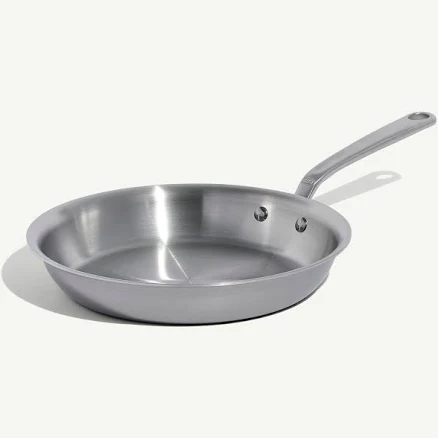
Made In
Stainless Clad Fry Pan
- Stainless steel clad construction, no nonstick coating
- The brand calls it PFAS-free, which we have not verified
- Clad separation or delamination over time
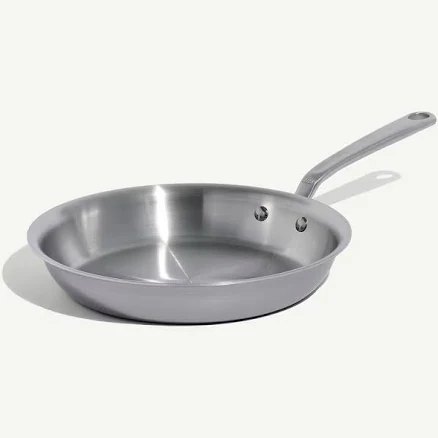
Made In
10' Stainless Clad Frying Pan
- stainless steel clad construction, no nonstick coating
- The brand calls it PFAS-free, which we have not verified
- Nickel leaching from stainless steel
3 hazards checked on this product. See all of them.
Heritage Steel
Eater Fry Pan
- Clad stainless steel, no coating
- The brand calls it PFAS-free, which we have not verified
- Metal ion release during cooking (iron, nickel, chromium)
More cookware grades
How we score, every product runs through the same public 0-100 rubric based on materials, coatings, brand disclosure, lab findings, and recalls. See the full methodology → Spotted a mistake? Report an error.