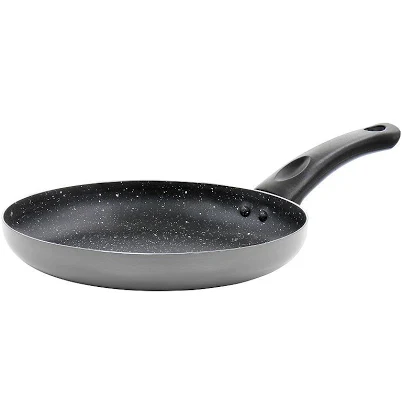
Oster Luneta Aluminum Nonstick Frying Pan, Is It Non-Toxic?
Non-stick coating stays unspecified, PFAS risk stays murky.
Oster provides zero public information on this aluminum pan's non-stick coating or PFAS content. Aluminum non-stick cookware typically relied on Teflon-type coating or Teflon-family coating historically.
The better-graded swap
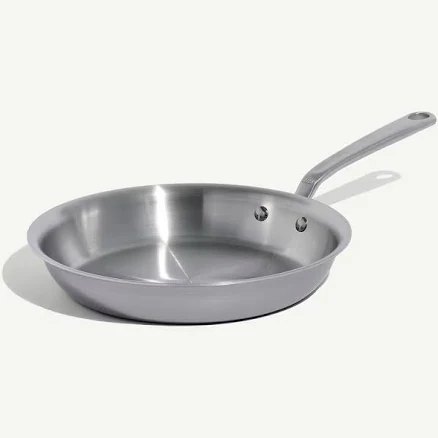
Made In
MADE IN 10' Stainless Clad Frying Pan
100/100 safety
Same rubric that flunked this product. The swap earned Excellent.
Still want this one anyway? Check the price on Amazon. We’d swap it.
Material
Aluminum with unspecified nonstick coating
Brand disclosure
Brand is silent on PFAS
Lab data
No public lab test
You may also be interested in
Top-graded picks in the categories readers replace first, every one scored on the same rubric.

- polypropylene filter housing, carbon/sediment cartridge
- We found no PFAS statement from the brand
- Bacterial growth in spent cartridges
3 hazards checked on this product, all on its full breakdown.

Aquasure
Premier Series 75 GPD Under Sink Reverse Osmosis Water Filtration System
- RO membrane, carbon filters, stainless steel housing
- We found no PFAS statement from the brand
- Bacterial and microbial growth in housing and filters
4 hazards checked on this product, all on its full breakdown.

Avocado
Vegan Mattress
- organic cotton, natural latex, coconut coir, recycled steel coils
- The brand calls it PFAS-free, which we have not verified
- Heavy metals
2 hazards checked on this product, all on its full breakdown.
Is Oster Luneta Aluminum Nonstick Frying Pan non-toxic? What it is made of
This pan is aluminum with an unspecified nonstick coating, likely Teflon-type coating-based (Teflon-type) or ceramic hybrid given the product tier and Oster/Lutema market positioning. Aluminum itself is not inherently hazardous in cookware when anodized or coated, but uncoated or damaged aluminum can leach into acidic foods. The coating's identity is critical, if Teflon-type coating, overheating releases toxic fumes; if ceramic-hybrid, durability and leaching vary widely by formulation. Without material specification, actual chemical risk cannot be fully assessed.
What’s concerning
Category baseline
The starting point for this type of product, before anything specific to this product is counted.
No PFAS disclosure
No public statement from the brand about PFAS in this product.
Non-stick, chemistry undisclosed
Marketed as non-stick without stating the coating chemistry.
Teflon-type coating fume risk (overheating)
If the nonstick coating is Teflon-type coating-based (not disclosed), heating above 500°F releases fumes that cause 'Teflon flu' in humans and are acutely toxic to birds. The product provides no temperature guidance or fume warning on available documentation.
Aluminum leaching into food
Uncoated or damaged aluminum dissolves in acidic foods (tomatoes, vinegar, citrus) and in high quantities may accumulate in vulnerable populations. Coating degradation over time and hand-washing wear increase this risk; Lutema provides no information on coating durability or aluminum base purity.
Nonstick coating degradation and ingestion
Flaking or peeling of unspecified nonstick coatings in budget cookware is well-documented by consumer reports; ingested coating particles are typically excreted but chronic low-level exposure is understudied. No recall history for this specific model is on record, but coating longevity varies widely with manufacturing.
Coating adhesion and user maintenance gaps
Budget nonstick cookware often uses thinner coatings with weaker adhesion to aluminum; lack of care instructions increases risk that users will use abrasive cleaners, high heat, or metal tools that accelerate failure and potential chemical exposure.
What’s reassuring
Lead
No safety alerts or test results specific to this model document heavy metals in the surface coating. Aluminum cookware does not typically use lead-based glazes (more common in ceramics), so risk here is low.
Source, ATSDR ↗How is this PFAS grade calculated?
The brand's record and disclosure
Lutema (the listed brand) maintains no public PFAS stance, transparency certifications, or third-party safety audits on available record. Oster cookware (the product line) is owned by Sunbeam Products and has no documented recalls or safety controversies specific to this model, but also lacks proactive chemical disclosure. The silence on coating composition is typical for budget-tier cookware but represents a transparency gap that complicates risk assessment.
How it compares in its category
This sits in the budget-to-midrange aluminum nonstick segment, competing with Tramontina, T-fal, and Calphalon. Those brands similarly often omit detailed coating specs on retail packaging, but Calphalon has faced historical Teflon-type coating litigation and now markets 'Teflon-type coating-free' variants explicitly. Oster/Lutema's silence is less protective than competitors who have responded to market concern; it also offers fewer reassurances than higher-end brands (All-Clad, Demeyere) that publish material sourcing. For the price point, it is typical, not notably worse or better.
If you buy it
Hand wash only; dishwasher use accelerates coating wear and leaching risk. Never preheat empty or use on high heat; keep temperature below medium-high to avoid fume release if the coating is Teflon-type coating. Inspect the cooking surface monthly; discard immediately if coating flakes, peels, or shows bare aluminum. Replace after 3-5 years of regular use, as aluminum nonstick coatings degrade and leaching likelihood increases with age. Do not use with metal utensils.
What is not known about PFAS in this product?
- Basis
- Model estimate, 35% confidence, not a lab result
- Lab test
- None on record for this exact product
- Brand statement
- Oster has made none
Formulations change between production runs, so check the current label. How we grade.
What are the PFAS-free alternatives to Oster Luneta Aluminum Nonstick Frying Pan?
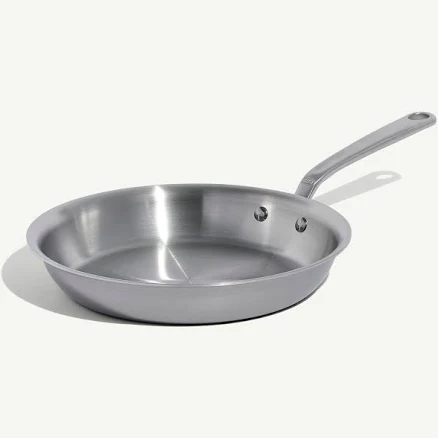
- Stainless steel clad construction, no nonstick coating
- The brand calls it PFAS-free, which we have not verified
- Clad separation or delamination over time
- stainless steel clad construction, no nonstick coating
- The brand calls it PFAS-free, which we have not verified
- Nickel leaching from stainless steel
3 hazards checked on this product, all on its full breakdown.
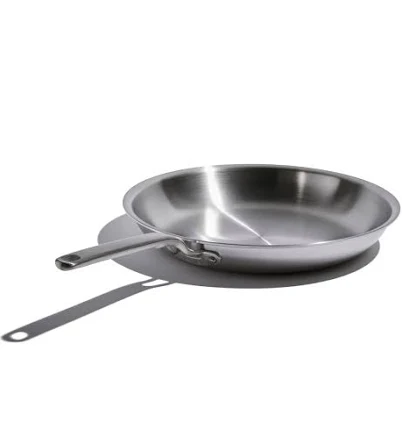
- Clad stainless steel, no coating
- The brand calls it PFAS-free, which we have not verified
- Metal ion release during cooking (iron, nickel, chromium)
More cookware grades
How we score, every product runs through the same public 0-100 rubric based on materials, coatings, brand disclosure, lab findings, and recalls. See the full methodology → Spotted a mistake? Report an error.