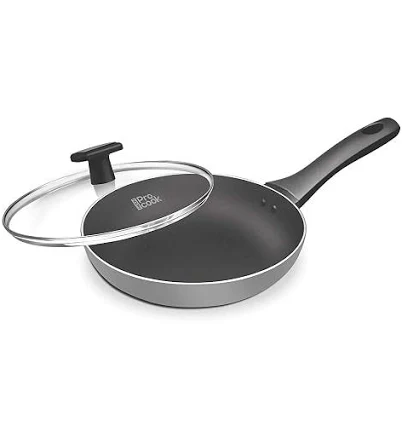
MILTON Pro Cook Black Pearl Induction Fry Pan, Is It Non-Toxic?
Milton won't explain coating type. Nonstick risk remains uncertain.
Milton's Black Pearl induction pan uses mystery nonstick coating without any brand transparency or PFAS-free certification to confirm safety.
The better-graded swap
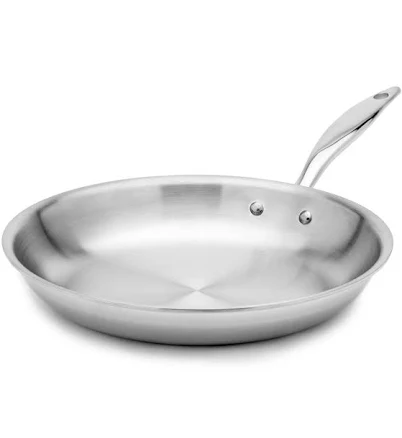
Heritage Steel
Heritage Steel Fry Pan
100/100 safety
Same rubric that flunked this product. The swap earned Excellent.
Still want this one anyway? Check the price on Amazon. We’d swap it.
Material
Unknown nonstick coating over induction-compatible base
Brand disclosure
Brand is silent on PFAS
Lab data
No public lab test
You may also be interested in
Top-graded picks in the categories readers replace first, every one scored on the same rubric.

- polypropylene filter housing, carbon/sediment cartridge
- We found no PFAS statement from the brand
- Bacterial growth in spent cartridges
3 hazards checked on this product, all on its full breakdown.

Aquasure
Premier Series 75 GPD Under Sink Reverse Osmosis Water Filtration System
- RO membrane, carbon filters, stainless steel housing
- We found no PFAS statement from the brand
- Bacterial and microbial growth in housing and filters
4 hazards checked on this product, all on its full breakdown.

Avocado
Vegan Mattress
- organic cotton, natural latex, coconut coir, recycled steel coils
- The brand calls it PFAS-free, which we have not verified
- Heavy metals
2 hazards checked on this product, all on its full breakdown.
Is MILTON Pro Cook Black Pearl Fry Pan non-toxic? What it is made of
The Milton Pro Cook Black Pearl uses an unknown proprietary nonstick coating over an induction-compatible base (likely stainless steel or aluminum sandwich). Without public disclosure of coating chemistry, you cannot definitively rule out Teflon-type coating (Teflon) or other fluorinated compounds. The induction base requires ferrous metal, typically a stainless steel exterior layer, which does not leach under normal cooking; however, the nonstick layer itself remains the primary concern.
What’s concerning
Category baseline
The starting point for this type of product, before anything specific to this product is counted.
No PFAS disclosure
No public statement from the brand about PFAS in this product.
Non-stick, chemistry undisclosed
Marketed as non-stick without stating the coating chemistry.
Teflon-type coating fume risk (thermal decomposition)
Milton does not disclose whether this pan uses Teflon-type coating-based nonstick. If it does, overheating above 400, 450°F can release toxic fluorinated gases. The risk is manageable with proper temperature control but present due to lack of public coating specification.
Coating degradation and microparticle release
All nonstick coatings degrade over time through normal use, scratching, and dishwasher exposure. Milton's warranty and published durability data are not widely available, making it difficult to predict lifespan. Flaking or peeling particles may be ingested if coating integrity is compromised.
Aluminum leaching (if present in base)
If the induction base includes an aluminum core under stainless steel cladding, and that cladding is damaged or thin, aluminum may migrate into acidic foods. Milton's exact base composition is not specified; induction pans often use aluminum for heat distribution.
Inadequate temperature warning or labeling
Milton does not prominently display safe heat limits on product packaging or instructions. Without clear guidance on maximum safe temperature, users may inadvertently exceed thresholds that trigger coating fume release or accelerate degradation.
What’s reassuring
Lead
No recalls or test results linking Milton cookware to heavy metal leaching have been published. Induction-compatible stainless steel is low-risk for lead/cadmium, but Milton's silence on materials testing leaves this unverified.
Source, ATSDR ↗How is this PFAS grade calculated?
The brand's record and disclosure
Milton does not publicly disclose the specific composition of its nonstick coatings, nor does the company maintain a published position on PFAS avoidance or phase-out timelines. No major recalls affecting this specific model have been recorded. The brand's silence on coating chemistry is typical of budget and mid-range cookware manufacturers and suggests either Teflon-type coating-based formulations or proprietary alternatives without third-party verification.
How it compares in its category
This pan falls into the mid-range induction cookware segment. Ceramic-coated alternatives (GreenPan, Our Place) offer explicit non-Teflon-type coating claims but carry lower non-stick durability and higher chipping risk. Premium Teflon-type coating brands (All-Clad, Calphalon) disclose their coatings openly and offer longer warranties. Milton's lack of transparency puts it below both groups in terms of consumer assurance, though pricing is competitive.
If you buy it
Keep heat below medium-high (never exceed 400, 450°F / 204, 232°C) to avoid triggering fume release if the coating contains Teflon-type coating. Use only silicone, wood, or plastic utensils; metal scratches accelerate coating breakdown and potential particle release. Hand-wash only, as dishwashers accelerate coating degradation. Replace immediately if the surface shows visible flaking, discoloration, or whitening. Do not preheat empty; always add oil or food first.
What is not known about PFAS in this product?
- Basis
- Model estimate, 35% confidence, not a lab result
- Lab test
- None on record for this exact product
- Brand statement
- Milton has made none
Formulations change between production runs, so check the current label. How we grade.
What are the PFAS-free alternatives to MILTON Pro Cook Black Pearl Induction Fry Pan?
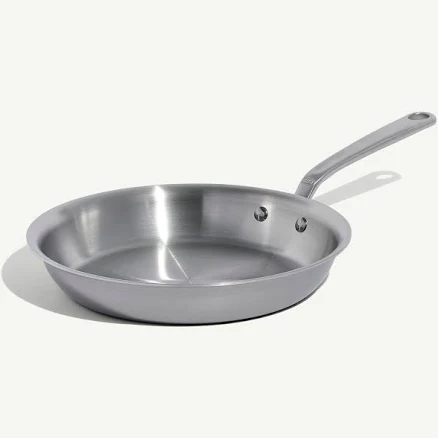
- Stainless steel clad construction, no nonstick coating
- The brand calls it PFAS-free, which we have not verified
- Clad separation or delamination over time
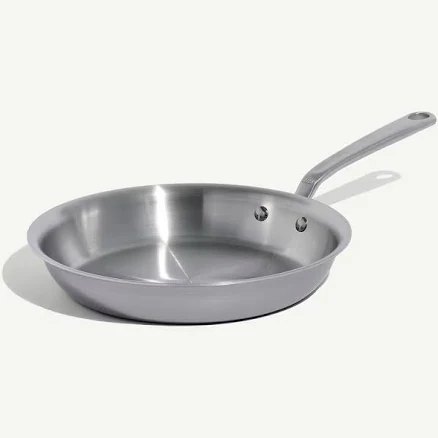
- stainless steel clad construction, no nonstick coating
- The brand calls it PFAS-free, which we have not verified
- Nickel leaching from stainless steel
3 hazards checked on this product, all on its full breakdown.
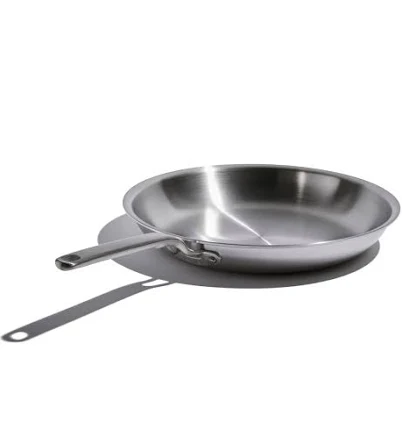
- Clad stainless steel, no coating
- The brand calls it PFAS-free, which we have not verified
- Metal ion release during cooking (iron, nickel, chromium)
More cookware grades
How we score, every product runs through the same public 0-100 rubric based on materials, coatings, brand disclosure, lab findings, and recalls. See the full methodology → Spotted a mistake? Report an error.