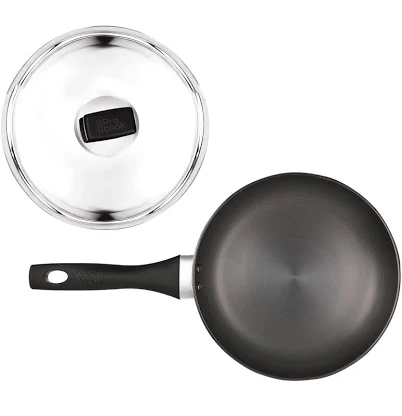
Milton Pro Cook Hard Anodized Nonstick Fry Pan, Induction Compatible, Is It Non-Toxic?
Pass until Milton identifies nonstick coating.
Milton does not say what non-stick coating covers this hard anodized pan, so its PFAS status is unclear.
The better-graded swap
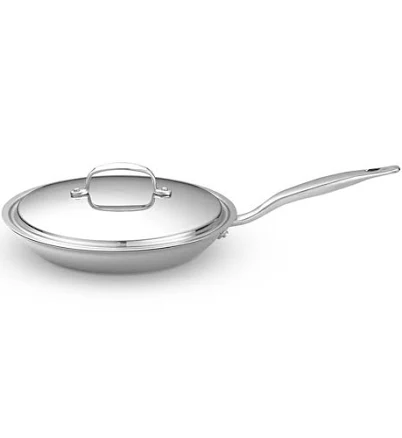
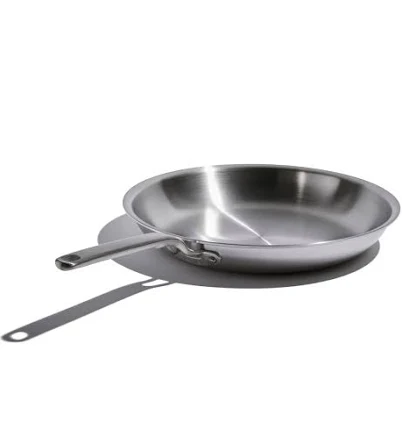
Heritage Steel
Heritage Steel 10.5" Fry Pan with Lid
100/100 safety
Same rubric that flunked this product. The swap earned Excellent.
Still want this one anyway? Check the price on Amazon. We’d swap it.
Material
Hard anodized aluminum with unspecified nonstick coating
Brand disclosure
Brand is silent on PFAS
Lab data
No public lab test
You may also be interested in
Top-graded picks in the categories readers replace first, every one scored on the same rubric.

- polypropylene filter housing, carbon/sediment cartridge
- We found no PFAS statement from the brand
- Bacterial growth in spent cartridges
3 hazards checked on this product, all on its full breakdown.

Aquasure
Premier Series 75 GPD Under Sink Reverse Osmosis Water Filtration System
- RO membrane, carbon filters, stainless steel housing
- We found no PFAS statement from the brand
- Bacterial and microbial growth in housing and filters
4 hazards checked on this product, all on its full breakdown.

Avocado
Vegan Mattress
- organic cotton, natural latex, coconut coir, recycled steel coils
- The brand calls it PFAS-free, which we have not verified
- Heavy metals
2 hazards checked on this product, all on its full breakdown.
Is Milton Pro Cook Hard Anodized Compatible non-toxic? What it is made of
This pan uses hard anodized aluminum as its core, a process that creates a sealed oxide layer more durable than standard aluminum and resistant to corrosion and leaching under normal cooking conditions. The nonstick coating composition is not publicly specified by Milton. Hard anodization itself does not leach aluminum into food when intact, but the nonstick layer's chemical makeup (whether Teflon-type coating-based, ceramic, or proprietary) determines degradation risk and fume potential at high heat.
What’s concerning
Category baseline
The starting point for this type of product, before anything specific to this product is counted.
No PFAS disclosure
No public statement from the brand about PFAS in this product.
Non-stick, chemistry undisclosed
Marketed as non-stick without stating the coating chemistry.
Teflon-type coating degradation and fume inhalation
If the nonstick layer is Teflon-type coating-based, overheating above 500F can release polymer fumes (Teflon-type coating flu-like symptoms possible in sensitive individuals). Milton's silence on coating type makes this risk unquantifiable but plausible given the product's budget-to-mid-market positioning.
Coating flaking and microparticle ingestion
Any nonstick coating can degrade over time with use. Flakes entering food are reported anecdotally in older nonstick pans; risk increases if cookware is scratched, improperly cleaned, or used at high temperatures. Hard anodized substrate does not become toxic if coating flakes, but ingestion of coating particles is undesirable.
PFAS
Coatings marketed as PFOA-free and PFAS-free increasingly use other synthetic compounds (silicones, polysiloxanes) whose long-term safety profile is still emerging. Milton's nonstick layer is unspecified, so risk cannot be definitively ruled out or characterized.
Source, ATSDR ↗What’s reassuring
Aluminum leaching from base metal
Hard anodization creates a protective barrier that prevents direct aluminum contact with food. Leaching is not a documented issue for intact hard anodized cookware under typical acidic and neutral cooking conditions.
Induction heating artifact (not product-specific)
Induction compatibility is a neutral safety feature; no known toxicological difference versus stovetop heating for this material class.
How is this PFAS grade calculated?
The brand's record and disclosure
Milton has not made public statements about PFAS presence or exclusion in their nonstick cookware line. No third-party certifications (such as Greenguard or EU compliance marks) are listed in available product documentation. The brand does not publish material safety data sheets or coating specifications that would clarify whether the nonstick layer contains legacy Teflon-type coating compounds or PFOA-replacement chemistries.
How it compares in its category
Hard anodized aluminum cookware is mid-tier in durability compared to stainless steel but lighter and heat-conductive. Milton's induction compatibility is standard for modern hard anodized pans. Without coating disclosure, this product sits in a gray zone versus brands (GreenPan, Our Place) that explicitly market PFAS-free or ceramic coatings, or established manufacturers that provide transparency on nonstick chemistry.
If you buy it
Keep heat below medium-high to reduce risk of nonstick coating degradation and potential fume release. Hand wash and avoid metal utensils to extend coating life. Inspect regularly for flaking or peeling; discard if coating deteriorates. Contact Milton directly to request coating composition documentation before purchase if PFAS avoidance is a priority for your household.
What is not known about PFAS in this product?
- Basis
- Model estimate, 35% confidence, not a lab result
- Lab test
- None on record for this exact product
- Brand statement
- Milton has made none
Formulations change between production runs, so check the current label. How we grade.
What are the PFAS-free alternatives to Milton Pro Cook Hard Anodized Nonstick Fry Pan, Induction Compatible?
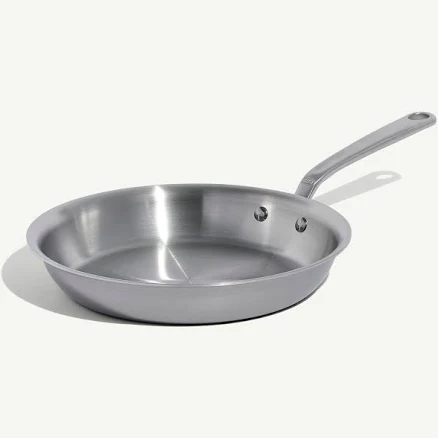
- Stainless steel clad construction, no nonstick coating
- The brand calls it PFAS-free, which we have not verified
- Clad separation or delamination over time
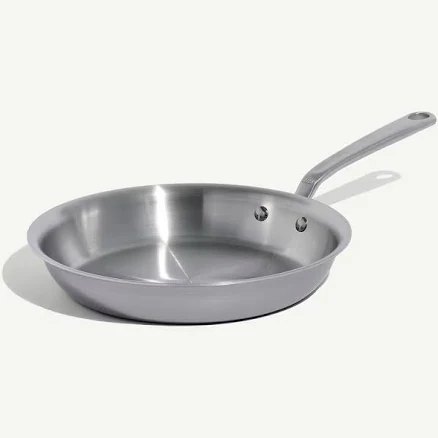
- stainless steel clad construction, no nonstick coating
- The brand calls it PFAS-free, which we have not verified
- Nickel leaching from stainless steel
3 hazards checked on this product, all on its full breakdown.
- Clad stainless steel, no coating
- The brand calls it PFAS-free, which we have not verified
- Metal ion release during cooking (iron, nickel, chromium)
More cookware grades
How we score, every product runs through the same public 0-100 rubric based on materials, coatings, brand disclosure, lab findings, and recalls. See the full methodology → Spotted a mistake? Report an error.