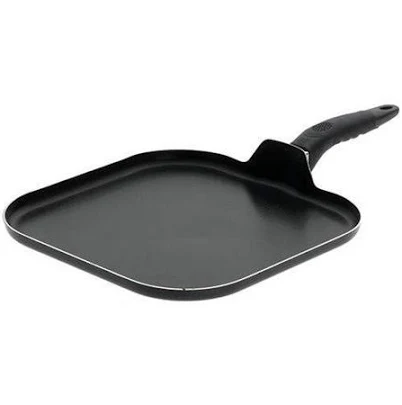
Mirro Get-A-Grip Non-Stick Griddle, Is It Non-Toxic?
Skip unless coating type is confirmed publicly.
Mirro won't disclose what non-stick formula covers this griddle. Without proof of ceramic or silicone coating, conventional non-stick chemistry raises flags.
The better-graded swap
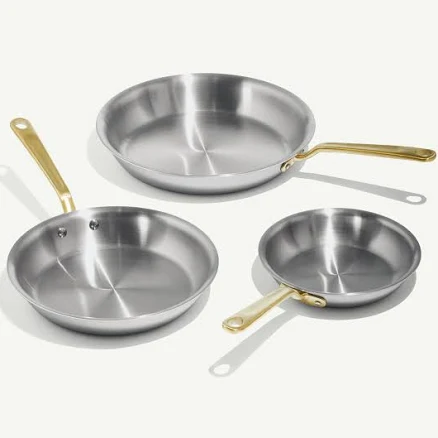
Made In
Made In Stainless Clad Frying Pan Set 3-Piece Professional-Grade 5-Layer Metal Construction
100/100 safety
Same rubric that flunked this product. The swap earned Excellent.
Still want this one anyway? Check the price on Amazon. We’d swap it.
Material
non-stick coating, type unspecified
Brand disclosure
Brand is silent on PFAS
Lab data
No public lab test
You may also be interested in
Top-graded picks in the categories readers replace first, every one scored on the same rubric.

- polypropylene filter housing, carbon/sediment cartridge
- We found no PFAS statement from the brand
- Bacterial growth in spent cartridges
3 hazards checked on this product, all on its full breakdown.

Aquasure
Premier Series 75 GPD Under Sink Reverse Osmosis Water Filtration System
- RO membrane, carbon filters, stainless steel housing
- We found no PFAS statement from the brand
- Bacterial and microbial growth in housing and filters
4 hazards checked on this product, all on its full breakdown.

Avocado
Vegan Mattress
- organic cotton, natural latex, coconut coir, recycled steel coils
- The brand calls it PFAS-free, which we have not verified
- Heavy metals
2 hazards checked on this product, all on its full breakdown.
Is Mirro Get-A-Grip Non-Stick Griddle non-toxic? What it is made of
The Mirro Get-A-Grip griddle uses a non-stick coating of unspecified chemistry. Mirro does not publicly disclose whether this is traditional Teflon-type coating (Teflon), ceramic-based, or another polymer. The aluminum substrate underneath is typical for griddles but can leach if the coating degrades or is exposed to acidic foods. Without transparency on the coating formulation, you cannot verify whether PFAS or other synthetic polymers are present.
What’s concerning
Category baseline
The starting point for this type of product, before anything specific to this product is counted.
No PFAS disclosure
No public statement from the brand about PFAS in this product.
Non-stick, chemistry undisclosed
Marketed as non-stick without stating the coating chemistry.
Teflon-type coating fume risk (polymer thermal degradation)
If the coating is traditional Teflon-type coating and reaches temperatures above 500F (common in griddle use without monitoring), decomposition can release fluorinated gases. Risk is heightened because Mirro does not specify the coating type or safe temperature ceiling.
Aluminum leaching
The aluminum substrate can migrate into food if the non-stick coating deteriorates, especially with acidic or salt-containing foods. Non-stick griddles degrade faster than enameled cookware under heavy use, and Mirro provides no guidance on expected coating lifespan.
Coating degradation over time
Non-stick coatings on griddles are prone to peeling and flaking with repeated heating, cooling, and cleaning. Once compromised, the griddle becomes both a leaching risk and a potential source of polymer particles in food. Mirro's silence on warranty or replacement timelines suggests limited commitment to durability or safety monitoring.
What’s reassuring
Lead
No public recalls or findings of heavy metal contamination in Mirro griddles have been documented. However, this remains a standard risk for budget-tier cookware; the brand does not publish third-party testing results to rule it out.
Source, ATSDR ↗How is this PFAS grade calculated?
The brand's record and disclosure
Mirro, now owned by Groupe SEB (a major cookware conglomerate), does not publish detailed material safety documentation or PFAS-avoidance commitments on this product line. No formal certifications (such as GreenGuard or GOTS equivalents for cookware) appear on the product. No significant safety recalls or toxicity investigations have been publicly documented for this specific griddle model, but the absence of transparency is itself a red flag for informed purchasing.
How it compares in its category
Non-stick griddles vary widely, ceramic-coated alternatives (e.g., GreenPan, Our Place) offer PFAS-free marketing but sometimes sacrifice durability; traditional Teflon-type coating brands (T-fal, Calphalon) often have stronger heat tolerance but carry higher PFAS risk if coating breaks down. Mirro's silence puts this griddle in the middle-ground category of legacy brands that have not modernized disclosure, making direct comparison difficult. Cast iron or stainless steel griddles eliminate non-stick chemistry entirely at the cost of performance and convenience.
If you buy it
Keep heat at medium or below to avoid polymer breakdown and fume release; hand-wash only to prevent coating damage from dishwasher abrasion. Do not use metal utensils or abrasive scrubbers; replace the griddle if the coating visibly peels, flakes, or discolors. Avoid prolonged contact with acidic foods (citrus, vinegar) to reduce aluminum leaching. If you prioritize PFAS avoidance, contact Mirro directly to confirm coating polymer type before purchase.
What is not known about PFAS in this product?
- Basis
- Model estimate, 35% confidence, not a lab result
- Lab test
- None on record for this exact product
- Brand statement
- Mirro has made none
Formulations change between production runs, so check the current label. How we grade.
What are the PFAS-free alternatives to Mirro Get-A-Grip Non-Stick Griddle?
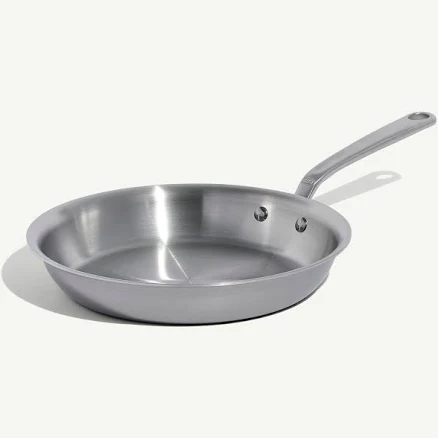
- Stainless steel clad construction, no nonstick coating
- The brand calls it PFAS-free, which we have not verified
- Clad separation or delamination over time
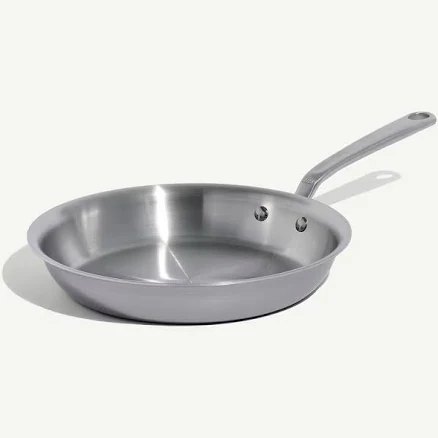
- stainless steel clad construction, no nonstick coating
- The brand calls it PFAS-free, which we have not verified
- Nickel leaching from stainless steel
3 hazards checked on this product, all on its full breakdown.
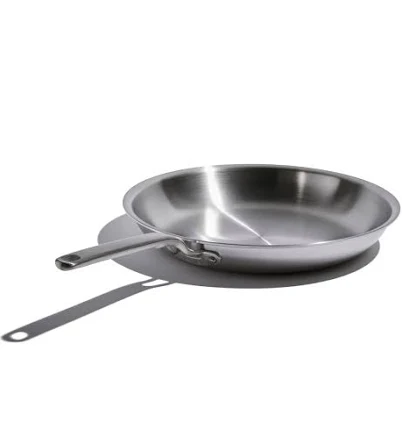
- Clad stainless steel, no coating
- The brand calls it PFAS-free, which we have not verified
- Metal ion release during cooking (iron, nickel, chromium)
More cookware grades
How we score, every product runs through the same public 0-100 rubric based on materials, coatings, brand disclosure, lab findings, and recalls. See the full methodology → Spotted a mistake? Report an error.