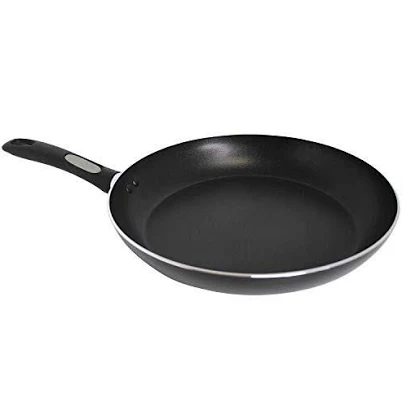
Mirro Get A Grip Saute Pan, Is It Non-Toxic?
Avoid until Mirro clarifies the nonstick coating type.
Mirro provides no details about this saute pan's nonstick coating type or PFAS content. Most nonstick cookware contains PFAS, so undisclosed coatings raise red flags.
The better-graded swap
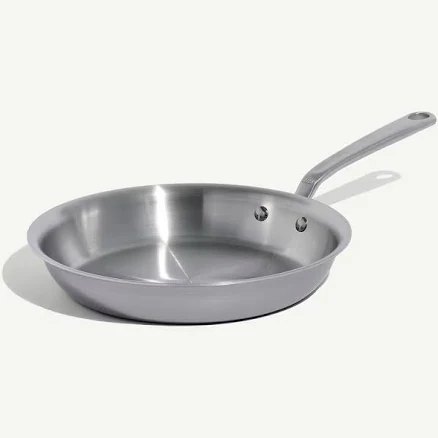
Made In
MADE IN 10' Stainless Clad Frying Pan
100/100 safety
Same rubric that flunked this product. The swap earned Excellent.
Still want this one anyway? Check the price on Amazon. We’d swap it.
Material
aluminum saute pan with unspecified nonstick coating
Brand disclosure
Brand is silent on PFAS
Lab data
No public lab test
You may also be interested in
Top-graded picks in the categories readers replace first, every one scored on the same rubric.

- polypropylene filter housing, carbon/sediment cartridge
- We found no PFAS statement from the brand
- Bacterial growth in spent cartridges
3 hazards checked on this product, all on its full breakdown.

Aquasure
Premier Series 75 GPD Under Sink Reverse Osmosis Water Filtration System
- RO membrane, carbon filters, stainless steel housing
- We found no PFAS statement from the brand
- Bacterial and microbial growth in housing and filters
4 hazards checked on this product, all on its full breakdown.

Avocado
Vegan Mattress
- organic cotton, natural latex, coconut coir, recycled steel coils
- The brand calls it PFAS-free, which we have not verified
- Heavy metals
2 hazards checked on this product, all on its full breakdown.
Is Mirro Get A Grip Saute Pan non-toxic? What it is made of
The Mirro Get A Grip is an aluminum saute pan with an applied nonstick coating of unspecified composition. Aluminum itself is a weak conductor of heat and prone to leaching in acidic or high-pH foods, though the nonstick layer should act as a barrier if intact. The critical unknown is the coating type, if it is Teflon-type coating-based (Teflon), it poses fume risk above 500°F; if ceramic or alternative, the risk profile differs substantially. Mirro has not publicly disclosed coating chemistry, making hazard assessment incomplete.
What’s concerning
Category baseline
The starting point for this type of product, before anything specific to this product is counted.
No PFAS disclosure
No public statement from the brand about PFAS in this product.
Non-stick, chemistry undisclosed
Marketed as non-stick without stating the coating chemistry.
Aluminum leaching
Aluminum itself can leach into acidic or alkaline foods if the nonstick barrier is breached or worn. No direct evidence of dangerous levels in this model, but degradation over time increases risk, especially if coating is thin or poor-quality.
Teflon-type coating fume risk (if Teflon-type coating-based coating)
Mirro does not confirm coating type; if Teflon-type coating, overheating above 500°F can release fumes toxic to birds and harmful to humans at high exposures. Unknown coating identity makes this impossible to rule out.
Coating degradation and microflaking
Aluminum nonstick pans of this price tier typically show visible wear and peeling within 2-3 years. Ingestion of flaked coating particles is a reported concern; no toxicity standard exists for small amounts, but loss of nonstick function signals safety boundary.
PFAS
Brand silence on whether coating is Teflon-type coating, GenX, or alternative means consumer cannot assess PFAS load independently. This absence of transparency is itself a documented industry pattern linked to regulatory gaps and potential use of legacy or unvetted chemistries.
Source, ATSDR ↗What’s reassuring
Lead
No specific testing or recalls for this product exist. Mirro does not disclose heavy metal assays for coating materials, so baseline risk cannot be ruled out, though modern US manufacturing is unlikely to use lead-based glazes.
Source, ATSDR ↗How is this PFAS grade calculated?
The brand's record and disclosure
Mirro (owned by Groupe SEB, a major French cookware manufacturer) has no established public commitment to PFAS elimination or transparency about nonstick composition in consumer-facing materials. The company does not advertise third-party testing or certifications (such as FDA compliance beyond baseline, or GOTS/Oeko-Tex equivalents for cookware). No major recalls or controversies specific to this model are on record, but the silence on coating chemistry is a red flag for a modern consumer product and suggests either older formulation practices or reluctance to disclose.
How it compares in its category
Mid-range aluminum nonstick saute pans are common and affordable, but quality and transparency vary widely. Competitors like T-fal and Calphalon (also Groupe SEB brands) similarly withhold detailed coating disclosure, whereas premium brands like Le Creuset and mid-tier alternatives like Caraway or GreenPan explicitly market PFOA-free or ceramic coatings. The Mirro offers no durability advantage or safety differentiation; it is a budget option that trades transparency for cost, making it riskier for long-term health-conscious use than fully disclosed alternatives.
If you buy it
Keep the pan below medium-high heat (under 400°F for safety margin), avoid preheating empty, and never exceed stovetop temperatures that cause visible smoking. Hand wash rather than dishwash to preserve coating integrity; expect visible wear within 2-3 years of regular use, at which point coating flaking or loss of nonstick function becomes likely. Replace the pan at the first sign of discoloration, sticking, or visible peeling. Avoid acidic foods (tomatoes, vinegar, citrus) or use them briefly, as aluminum can leach into food if the coating is compromised.
What is not known about PFAS in this product?
- Basis
- Model estimate, 35% confidence, not a lab result
- Lab test
- None on record for this exact product
- Brand statement
- Mirro has made none
Formulations change between production runs, so check the current label. How we grade.
What are the PFAS-free alternatives to Mirro Get A Grip Saute Pan?
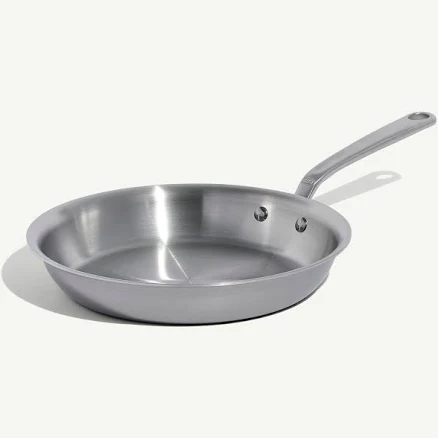
- Stainless steel clad construction, no nonstick coating
- The brand calls it PFAS-free, which we have not verified
- Clad separation or delamination over time
- stainless steel clad construction, no nonstick coating
- The brand calls it PFAS-free, which we have not verified
- Nickel leaching from stainless steel
3 hazards checked on this product, all on its full breakdown.
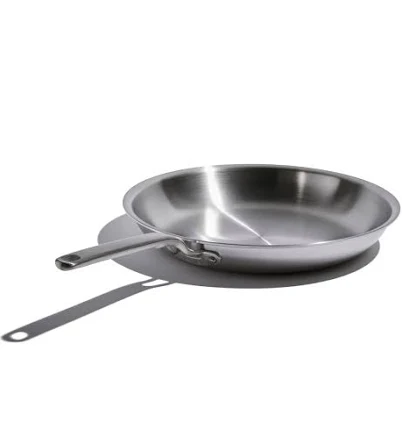
- Clad stainless steel, no coating
- The brand calls it PFAS-free, which we have not verified
- Metal ion release during cooking (iron, nickel, chromium)
More cookware grades
How we score, every product runs through the same public 0-100 rubric based on materials, coatings, brand disclosure, lab findings, and recalls. See the full methodology → Spotted a mistake? Report an error.