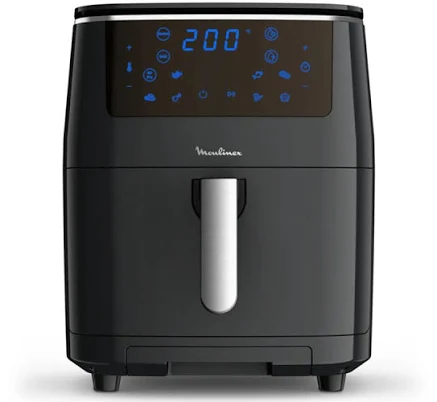
Moulinex Al201810 1.6l Air Fryer
Avoid until Moulinex discloses the non-stick coating material.
Moulinex provides no public disclosure of the coating material or PFAS status on this air fryer's cooking chamber. Most modern nonstick coatings carry PFAS concerns without transparency or verification.
The better-graded swap
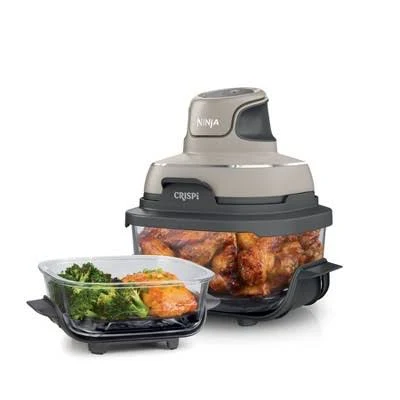
Ninja
Ninja Crispi 4-in-1 Portable Glass Air Fryer Cooking System
75/100 safety
Same rubric that flunked this product. The swap earned Excellent.
Still want this one anyway? Check the price on Amazon. We’d swap it.
Material
Nonstick-coated cooking chamber; coating type unspecified
Lab data
No public lab test
You may also be interested in
Top-graded picks in the categories readers replace first, every one scored on the same rubric.

- polypropylene filter housing, carbon/sediment cartridge
- We found no PFAS statement from the brand
- Bacterial growth in spent cartridges
3 hazards checked on this product, all on its full breakdown.

Aquasure
Premier Series 75 GPD Under Sink Reverse Osmosis Water Filtration System
- RO membrane, carbon filters, stainless steel housing
- We found no PFAS statement from the brand
- Bacterial and microbial growth in housing and filters
4 hazards checked on this product, all on its full breakdown.

Avocado
Vegan Mattress
- organic cotton, natural latex, coconut coir, recycled steel coils
- The brand calls it PFAS-free, which we have not verified
- Heavy metals
2 hazards checked on this product, all on its full breakdown.
What Moulinex Al201810 1.6l Air Fryer is made of, ingredients and materials
The Al201810 features a nonstick-coated cooking chamber, but Moulinex has not publicly specified whether the coating is Teflon-type coating-based (traditional Teflon-type), ceramic, or a proprietary formulation. This ambiguity is the core safety issue, different nonstick chemistries carry different thermal decomposition risks. The 1.6L capacity and typical air fryer operating temperatures (up to 200C/390F) mean the coating faces consistent heat stress over hundreds of cooking cycles.
What’s concerning
Category baseline
The starting point for this type of product, before anything specific to this product is counted.
No PFAS disclosure
No public statement from the brand about PFAS in this product.
Non-stick, chemistry undisclosed
Marketed as non-stick without stating the coating chemistry.
Teflon-type coating thermal decomposition fumes
If the coating is Teflon-type coating-based (unconfirmed), heating above 260C produces toxic fumes including perfluorinated compounds. Air fryers typically operate below this threshold, but malfunction, accidental overheating, or extended preheating could pose risk. Lack of transparency prevents definitive risk assessment.
Coating degradation and metal leaching
Repeated thermal stress and mechanical wear expose underlying aluminum or steel. No independent testing of this specific model is on record. Long-term use without coating replacement may allow trace aluminum leaching, particularly with acidic foods, though at levels typically below regulatory concern if exposure is occasional.
Microplastics
Flaking or peeling nonstick coating can shed particles into food. This is a cosmetic and safety concern more than a toxicological one, but indicates the coating's durability is suspect. No recalls or complaints specific to this model have been reported, but the risk increases with age and frequency of use.
Source, EPA ↗Inadequate user documentation on heat limits
If the product manual does not explicitly warn against prolonged preheating or maximum safe operating temperatures, users may unknowingly stress the coating. This is a behavioral hazard linked to poor disclosure rather than inherent material toxicity.
What’s reassuring
Absence of food-contact material certification
No public third-party certification (e.g., FDA food-contact compliance statement, EU 1935/2004 declaration) is readily available for this model. While Groupe SEB products generally comply with baseline regulations, explicit certification would reduce residual uncertainty.
How is this PFAS grade calculated?
The brand's record and disclosure
Moulinex (owned by Groupe SEB) does not publicly commit to PFAS-free nonstick formulations or disclose coating chemistry for this model. The brand has no widely documented recalls or safety controversies specific to air fryers, but silence on nonstick composition is a red flag in an industry where competitors increasingly market PFAS-free alternatives. Groupe SEB has made limited commitments to phasing PFAS in some product lines, but no universal pledge covers this model.
How it compares in its category
Among compact 1.6L air fryers, this unit sits in a mid-market price tier. Competitors like Instant Vortex and Philips Airfryer increasingly highlight ceramic or explicitly Teflon-type coating-free coatings; Moulinex's silence is notably less reassuring. The model offers standard features (rapid air circulation, temperature control) but lacks the transparency that has become a market differentiator for health-conscious consumers in the air fryer space over the past 2-3 years.
If you buy it
Never exceed the manufacturer's maximum temperature setting; sustained overheating degrades nonstick coatings faster and increases fume risk. Avoid preheating for extended periods and never use at temperatures above 200C. Hand-wash the basket and chamber gently; avoid abrasive scrubbers that accelerate coating wear. Replace the unit if the nonstick surface visibly flakes, peels, or shows discoloration, as these signs indicate breakdown and potential exposure to base metals or coating fragments.
What is not known about PFAS in this product?
- Basis
- Model estimate, 35% confidence, not a lab result
- Lab test
- None on record for this exact product
- Brand statement
- Moulinex has made a specific claim
Formulations change between production runs, so check the current label. How we grade.
What are the PFAS-free alternatives to Moulinex Al201810 1.6l Air Fryer?
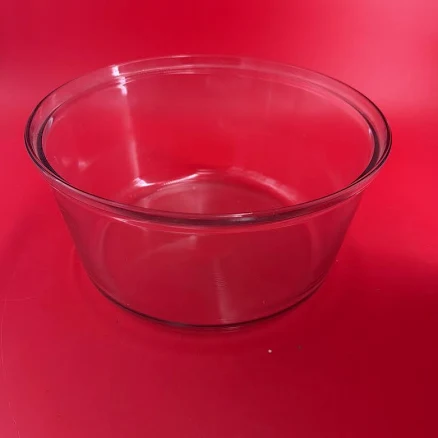
- borosilicate glass, bare uncoated
- We found no PFAS statement from the brand
- Thermal shock and fracture
2 hazards checked on this product, all on its full breakdown.
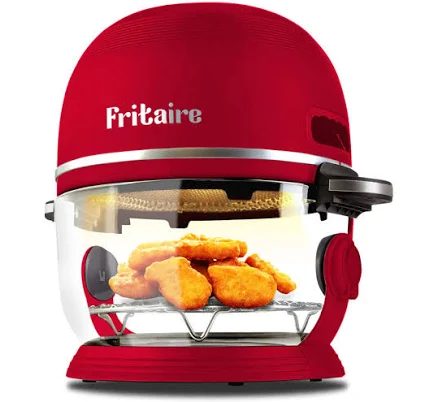
- borosilicate glass
- We found no PFAS statement from the brand
- Aluminum leaching from base/housing
4 hazards checked on this product, all on its full breakdown.
Find an alternative on Amazon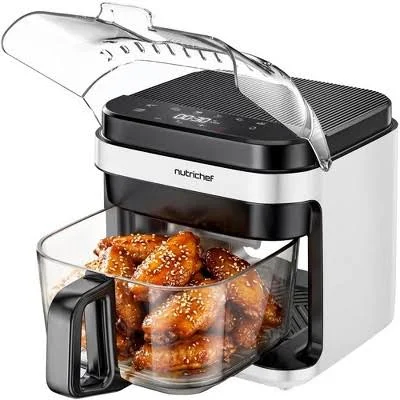
- glass bowl, stainless steel exterior
- We found no PFAS statement from the brand
- Thermal stress and glass breakage
2 hazards checked on this product, all on its full breakdown.
Find an alternative on AmazonMore air fryers grades
How we score, every product runs through the same public 0-100 rubric based on materials, coatings, brand disclosure, lab findings, and recalls. See the full methodology → Spotted a mistake? Report an error.