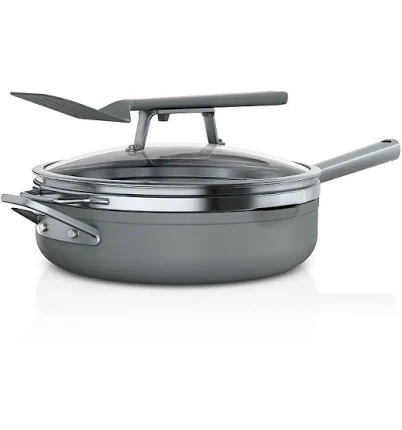
Ninja Foodi NeverStick PossiblePan Premium Set, Is It Non-Toxic?
Skip until Ninja discloses coating chemistry or provides PFAS-free certification.
Ninja's NeverStick Premium coating is proprietary and undisclosed. The brand does not publicly state whether Teflon-type coating, GenX, or other fluorochemicals are in the coating. No third-party verification exists.
The better-graded swap
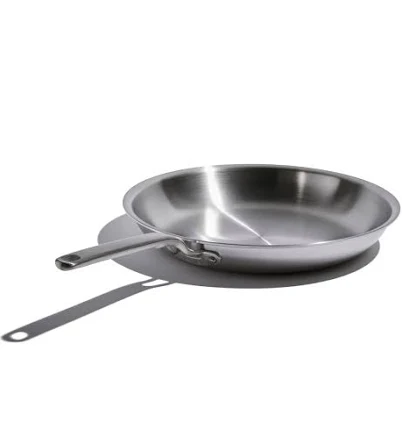
Heritage Steel
Heritage Steel Eater Fry Pan
100/100 safety
Same rubric that flunked this product. The swap earned Excellent.
Still want this one anyway? Check the price on Amazon. We’d swap it.
Material
Nonstick coating (unspecified chemistry)
Lab data
No public lab test
You may also be interested in
Top-graded picks in the categories readers replace first, every one scored on the same rubric.

- polypropylene filter housing, carbon/sediment cartridge
- We found no PFAS statement from the brand
- Bacterial growth in spent cartridges
3 hazards checked on this product, all on its full breakdown.

Aquasure
Premier Series 75 GPD Under Sink Reverse Osmosis Water Filtration System
- RO membrane, carbon filters, stainless steel housing
- We found no PFAS statement from the brand
- Bacterial and microbial growth in housing and filters
4 hazards checked on this product, all on its full breakdown.

Avocado
Vegan Mattress
- organic cotton, natural latex, coconut coir, recycled steel coils
- The brand calls it PFAS-free, which we have not verified
- Heavy metals
2 hazards checked on this product, all on its full breakdown.
Is Ninja Foodi NeverStick Premium Set non-toxic? What it is made of
Ninja markets this as 'NeverStick' nonstick coating but does not publicly specify whether it uses Teflon-type coating (Teflon), ceramic, or a proprietary formula. The pan body is typically hard-anodized aluminum with the nonstick surface applied on top. Without disclosure of the exact coating chemistry, you cannot verify whether it contains PFAS compounds or other synthetic polymers that degrade under heat. This opacity is the core issue; the product's unknown composition prevents full hazard assessment under normal use conditions.
What’s concerning
Category baseline
The starting point for this type of product, before anything specific to this product is counted.
Vague safety claims only
Uses vague language ("eco-friendly", "clean") without a specific PFAS statement.
Non-stick, chemistry undisclosed
Marketed as non-stick without stating the coating chemistry.
Teflon-type coating fume risk (if applicable)
If the NeverStick coating is Teflon-type coating-based, overheating above 500F can release polymer fumes toxic to birds and potentially harmful to humans (acute polymer fume fever). Ninja does not confirm material; risk depends on actual composition and user adherence to heat limits.
Aluminum leaching
Hard-anodized aluminum reduces but does not eliminate leaching risk. Acidic foods (tomatoes, vinegar, citrus) increase migration of aluminum into food. The extent depends on nonstick coating integrity; once coating is compromised, leaching risk rises significantly.
Nonstick coating degradation and particle shedding
All nonstick cookware sheds microscopic coating particles with use, especially if scratched or used at high heat. The composition and safety profile of shed Ninja coating particles are unknown due to proprietary formulation. Long-term inhalation or ingestion risk from low-level particle exposure remains unquantified in published research.
Coating-to-base bond failure over time
Consumer reviews report occasional peeling or bubbling of the nonstick layer after extended use, particularly if exposed to thermal shock or dishwasher cycling. When adhesion fails, both coating particles and underlying aluminum become accessible to food and users.
What’s reassuring
Lead
No recalls or test reports of heavy metals in Ninja NeverStick cookware have been published. Hard-anodized aluminum pans typically do not use lead or cadmium-containing enamels, but absence of testing data does not guarantee zero risk.
Source, ATSDR ↗How is this PFAS grade calculated?
The brand's record and disclosure
Ninja (SharkNinja Operating LLC) has not published detailed ingredient disclosures or PFAS certifications for its cookware line. The brand does not appear on public registries of cookware makers that have committed to PFAS-free standards or third-party testing. Ninja's silence on nonstick coating chemistry is typical of many manufacturers but leaves consumers without verification. No major recalls specific to NeverStick coating safety have been documented, but lack of incident data is not confirmation of safety.
How it compares in its category
Most mass-market nonstick cookware (Calphalon, T-fal, GreenPan) fall into the same disclosure gap regarding coating composition. Premium alternatives like All-Clad and Le Creuset offer more transparent material specifications and longer warranties. Some newer brands explicitly market ceramic or Teflon-type coating-free coatings, though durability claims vary. Ninja's price point is mid-range, but competitive transparency is not a strength across this tier.
If you buy it
Use only at low to medium heat; nonstick coatings degrade faster at high temperatures and may release fumes if overheated. Hand wash instead of dishwasher to extend coating life. Replace the pan if you notice chipping, peeling, or discoloration of the coating surface, as a compromised coating may expose underlying aluminum or release coating particles into food. Store with soft utensils only (wood, silicone, plastic); metal utensils accelerate coating damage.
What is not known about PFAS in this product?
- Basis
- Model estimate, 35% confidence, not a lab result
- Lab test
- None on record for this exact product
- Brand statement
- Ninja has made a specific claim
Formulations change between production runs, so check the current label. How we grade.
What are the PFAS-free alternatives to Ninja Foodi NeverStick PossiblePan Premium Set?
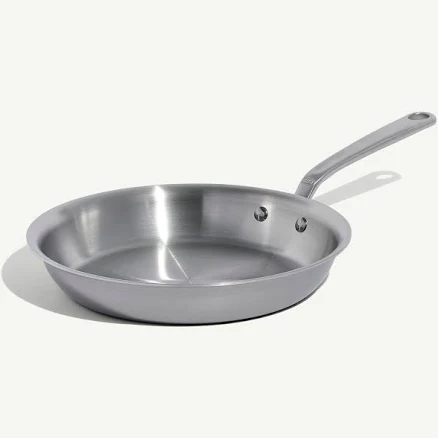
- Stainless steel clad construction, no nonstick coating
- The brand calls it PFAS-free, which we have not verified
- Clad separation or delamination over time
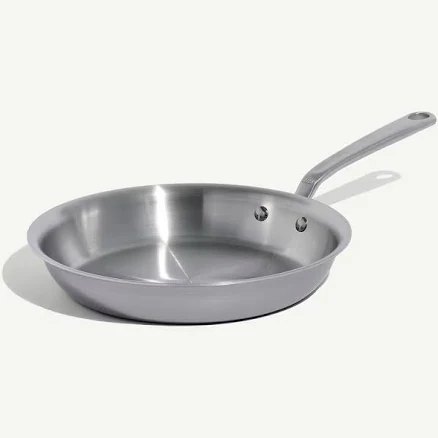
- stainless steel clad construction, no nonstick coating
- The brand calls it PFAS-free, which we have not verified
- Nickel leaching from stainless steel
3 hazards checked on this product, all on its full breakdown.
- Clad stainless steel, no coating
- The brand calls it PFAS-free, which we have not verified
- Metal ion release during cooking (iron, nickel, chromium)
More cookware grades
How we score, every product runs through the same public 0-100 rubric based on materials, coatings, brand disclosure, lab findings, and recalls. See the full methodology → Spotted a mistake? Report an error.