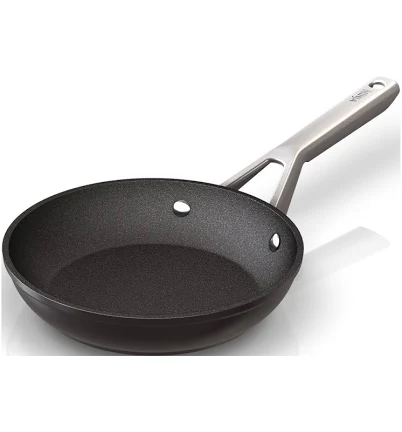
Ninja Foodi NeverStick Premium Fry Pan, Is It Non-Toxic?
Skip this pan unless Ninja confirms the coating material.
This Ninja fry pan has a proprietary nonstick coating with no public information about PFAS content or chemical makeup. You cannot reliably assess PFAS risk without lab testing or brand transparency.
The better-graded swap
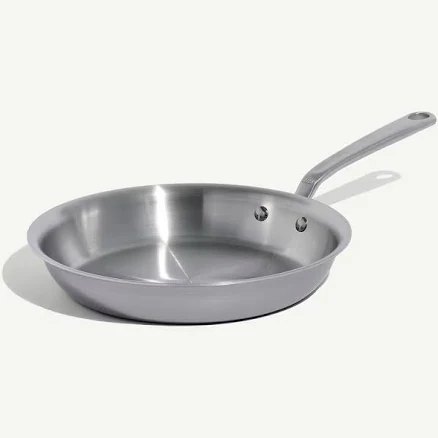
Made In
MADE IN 10' Stainless Clad Frying Pan
100/100 safety
Same rubric that flunked this product. The swap earned Excellent.
Still want this one anyway? Check the price on Amazon. We’d swap it.
Material
Nonstick coating (unspecified Teflon-family coating or proprietary)
Lab data
No public lab test
You may also be interested in
Top-graded picks in the categories readers replace first, every one scored on the same rubric.

- polypropylene filter housing, carbon/sediment cartridge
- We found no PFAS statement from the brand
- Bacterial growth in spent cartridges
3 hazards checked on this product, all on its full breakdown.

Aquasure
Premier Series 75 GPD Under Sink Reverse Osmosis Water Filtration System
- RO membrane, carbon filters, stainless steel housing
- We found no PFAS statement from the brand
- Bacterial and microbial growth in housing and filters
4 hazards checked on this product, all on its full breakdown.

Avocado
Vegan Mattress
- organic cotton, natural latex, coconut coir, recycled steel coils
- The brand calls it PFAS-free, which we have not verified
- Heavy metals
2 hazards checked on this product, all on its full breakdown.
Is Ninja Foodi NeverStick Premium Fry Pan non-toxic? What it is made of
The Ninja Foodi NeverStick Premium uses a proprietary Teflon-family coating nonstick coating applied over an aluminum base. Ninja has not publicly disclosed whether this coating is Teflon-type coating (traditional Teflon), a Teflon-type coating alternative like PFOA-free variants, or a completely different Teflon-family coating chemistry. This opacity is the core safety issue, without knowing the specific chemistry, you cannot assess thermal stability, leaching risk under abuse, or what degradation byproducts might be inhaled or ingested if the coating fails.
What’s concerning
Category baseline
The starting point for this type of product, before anything specific to this product is counted.
No PFAS disclosure
No public statement from the brand about PFAS in this product.
Non-stick, chemistry undisclosed
Marketed as non-stick without stating the coating chemistry.
Teflon-type coating fume inhalation risk (thermal decomposition)
If the coating is traditional Teflon-type coating, overheating above 500°F can release toxic fumes (polymer fume fever). Ninja has not disclosed the thermal stability profile of its proprietary coating, making risk assessment speculative but not negligible for preheating or high-heat searing use.
Aluminum leaching from base metal
The aluminum substrate may leach small amounts of aluminum into acidic foods (tomato sauce, vinegar, citrus) if the nonstick coating degrades or chips. Ninja does not disclose whether the aluminum core has an anodized barrier layer to reduce this risk.
Coating degradation and microparticulate exposure
Consumer reports on similar Ninja nonstick cookware describe flaking or peeling coatings after 1-3 years, particularly with dishwasher use or metal utensils. If nonstick particles are ingested, long-term effects are not well characterized in humans, though animal studies suggest low acute toxicity.
Unknown Teflon-family coating chemistry and lack of transparency
Ninja's refusal or failure to disclose the specific coating formulation means you cannot independently verify whether it contains PFAS, what byproducts it sheds under stress, or what certifications it meets. This information gap is the product's largest safety liability.
What’s reassuring
Lead
No recalls or public test results document lead or cadmium in Ninja Foodi cookware. Modern cookware manufacturing in compliant facilities is unlikely to contain these metals, but Ninja provides no third-party test reports to confirm.
Source, ATSDR ↗How is this PFAS grade calculated?
The brand's record and disclosure
Ninja (SharkNinja Operating LLC) does not publish detailed safety data sheets or transparency reports on coating composition for its cookware lines. The company has not signed voluntary PFAS reduction pledges or obtained third-party certifications like NSF or Greenguard for nonstick products. No major recalls specifically targeting PFAS or coating degradation in Ninja cookware have been publicly documented, but absence of recall does not confirm safety; it may reflect limited independent testing or complaint tracking.
How it compares in its category
Most mainstream nonstick brands (T-Fal, Calphalon, All-Clad) now offer PFOA-free or explicitly labeled ceramic/hybrid coatings with published material disclosures. Premium brands like GreenPan and Our Place have prioritized PFAS-free marketing and third-party validation. Ninja's silence on coating chemistry is notably less transparent than competitors at similar price points and market positioning. This lack of disclosure shifts burden to the consumer to assume standard Teflon-type coating or demand accountability.
If you buy it
Keep heat below 400°F (204°C) during normal use; Teflon-type coating-based coatings can off-gas at 500°F+, and unknown Teflon-family coating may have different thresholds. Use wooden or silicone utensils only; metal utensils scratch coatings, exposing aluminum and accelerating degradation. Replace the pan within 3-5 years or immediately if coating peels, flakes, or shows visible wear. Hand wash only; dishwashers and high-heat drying accelerate coating breakdown. Contact Ninja for coating material documentation before purchase if PFAS exposure is a household concern.
What is not known about PFAS in this product?
- Basis
- Model estimate, 35% confidence, not a lab result
- Lab test
- None on record for this exact product
- Brand statement
- Ninja has made a specific claim
Formulations change between production runs, so check the current label. How we grade.
What are the PFAS-free alternatives to Ninja Foodi NeverStick Premium Fry Pan?
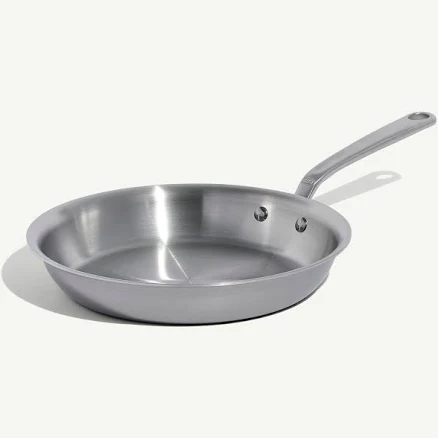
- Stainless steel clad construction, no nonstick coating
- The brand calls it PFAS-free, which we have not verified
- Clad separation or delamination over time
- stainless steel clad construction, no nonstick coating
- The brand calls it PFAS-free, which we have not verified
- Nickel leaching from stainless steel
3 hazards checked on this product, all on its full breakdown.
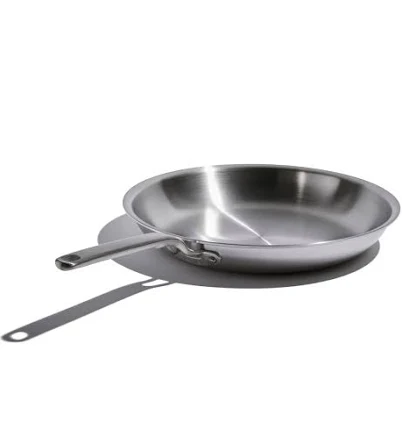
- Clad stainless steel, no coating
- The brand calls it PFAS-free, which we have not verified
- Metal ion release during cooking (iron, nickel, chromium)
More cookware grades
How we score, every product runs through the same public 0-100 rubric based on materials, coatings, brand disclosure, lab findings, and recalls. See the full methodology → Spotted a mistake? Report an error.