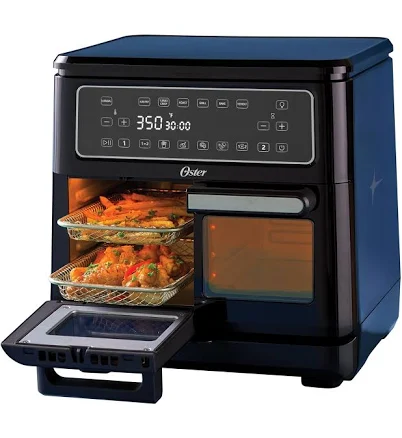
Oster 11-Quart Flex Air Fryer Oven
Wait for Oster to disclose coating type; PFAS risk unclear.
This Oster air fryer has a nonstick interior, but the brand won't say what coating it uses or if PFAS is present. You can't know the risk without this.
The better-graded swap
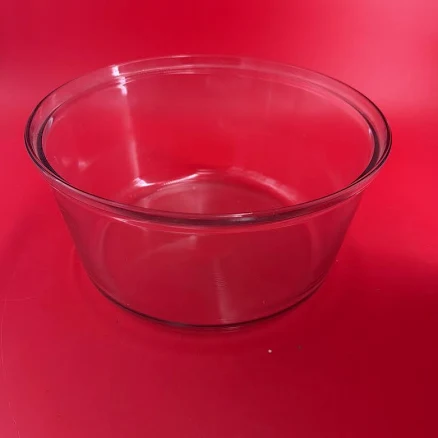
Big Boss
Big Boss Oil Less Fryer Air Fryer 16 Quart Replacement Clear Glass
75/100 safety
Same rubric that flunked this product. The swap earned Excellent.
Still want this one anyway? Check the price on Amazon. We’d swap it.
Material
nonstick-coated interior (coating type unspecified)
Brand disclosure
Brand is silent on PFAS
Lab data
No public lab test
You may also be interested in
Top-graded picks in the categories readers replace first, every one scored on the same rubric.

- polypropylene filter housing, carbon/sediment cartridge
- We found no PFAS statement from the brand
- Bacterial growth in spent cartridges
3 hazards checked on this product, all on its full breakdown.

Aquasure
Premier Series 75 GPD Under Sink Reverse Osmosis Water Filtration System
- RO membrane, carbon filters, stainless steel housing
- We found no PFAS statement from the brand
- Bacterial and microbial growth in housing and filters
4 hazards checked on this product, all on its full breakdown.

Avocado
Vegan Mattress
- organic cotton, natural latex, coconut coir, recycled steel coils
- The brand calls it PFAS-free, which we have not verified
- Heavy metals
2 hazards checked on this product, all on its full breakdown.
What Oster 11-Quart Flex Air Fryer Oven is made of, ingredients and materials
The Oster 11-quart Flex Air Fryer Oven features a nonstick-coated interior chamber, but Oster does not publicly disclose the specific coating chemistry (Teflon-type coating, ceramic hybrid, silicone-based, or alternative). Without this detail, it is impossible to assess whether the coating contains PFAS compounds or other Teflon-family coating. The heating element and housing materials are typical aluminum and stainless steel; aluminum exposure from cookware interiors is generally low under normal use, but the nonstick layer's degradation profile is the primary concern.
What’s concerning
Category baseline
The starting point for this type of product, before anything specific to this product is counted.
No PFAS disclosure
No public statement from the brand about PFAS in this product.
Non-stick, chemistry undisclosed
Marketed as non-stick without stating the coating chemistry.
Teflon-type coating fume inhalation risk (if Teflon-type coating-based coating)
If the nonstick coating is Teflon-type coating (Teflon), overheating above 500°F can release Teflon-family coating fumes that cause polymer fume fever in humans and harm pet birds. Oster does not disclose temperature degradation data or coating type; standard air fryer use (350-400°F) is low-risk, but presets and user error introduce danger.
Coating degradation and microparticulate ingestion
Nonstick coatings on budget air fryers commonly flake or peel within 1-3 years of regular use. Ingestion of small coating particles (flakes or dust) is unlikely to cause acute toxicity but represents a quality and longevity failure; no specific recalls exist for this model, but user reviews document coating wear.
Offgassing of manufacturing residues (volatile organic compounds)
Initial use may release minor odors from residual manufacturing solvents or oils in the nonstick coating. This typically dissipates after 2-3 heating cycles; it is not a hazard if ventilation is adequate, but sensitivity varies by individual.
What’s reassuring
Aluminum leaching from interior surfaces
The aluminum housing beneath the nonstick layer is not in direct contact with food, and the nonstick coating acts as a barrier. Leaching risk is minimal under normal use unless the coating is severely compromised and food contact with bare aluminum occurs.
Heating element durability and electrical safety
No recalls or widespread safety incidents reported for the Oster 11-quart model. Standard electrical safety expectations apply; ensure the device is used on a grounded outlet and not operated with wet interior surfaces.
How is this PFAS grade calculated?
The brand's record and disclosure
Oster (part of Sunbeam Products) has not issued public statements on PFAS use, PFOA phase-out timelines, or third-party certification for nonstick coatings on this model. The company's cookware and small appliance division does not prominently advertise PFAS-free or Teflon-family coating-free formulations. This silence on material transparency is typical of mid-market kitchen brands but represents a significant gap compared to premium competitors who explicitly certify coating chemistry.
How it compares in its category
Air fryer ovens in this size and price range commonly use Teflon-type coating-based or hybrid ceramic nonstick coatings; Oster's approach is unremarkable for the category. Some competitors (Instant Pot, Ninja, Cosori) provide clearer nonstick coating disclosures or offer PFOA-free variants. Budget models rarely volunteer coating details; Oster's silence is neither exceptional nor reassuring in a market where PFAS avoidance is increasingly expected.
If you buy it
Do not exceed 400-450°F, as nonstick coatings degrade and release volatile compounds at higher temperatures; air fryer presets should be verified against temperature settings. Hand-wash the interior basket and tray with soft sponges to avoid scratching the coating; visible flaking or peeling is a signal to stop use and contact Oster about replacement. Ensure good ventilation during use. Request written confirmation from Oster on nonstick coating composition before purchase if PFAS exposure is a household priority.
What is not known about PFAS in this product?
- Basis
- Model estimate, 35% confidence, not a lab result
- Lab test
- None on record for this exact product
- Brand statement
- Oster has made none
Formulations change between production runs, so check the current label. How we grade.
What are the PFAS-free alternatives to Oster 11-Quart Flex Air Fryer Oven?
- borosilicate glass, bare uncoated
- We found no PFAS statement from the brand
- Thermal shock and fracture
2 hazards checked on this product, all on its full breakdown.
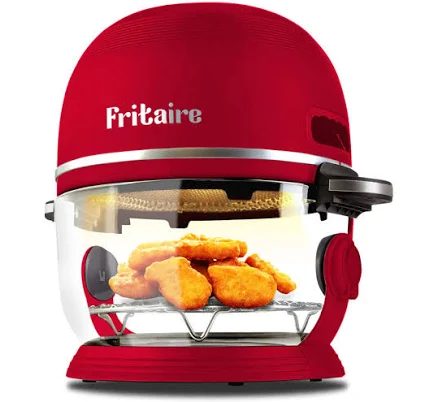
- borosilicate glass
- We found no PFAS statement from the brand
- Aluminum leaching from base/housing
4 hazards checked on this product, all on its full breakdown.
Find an alternative on Amazon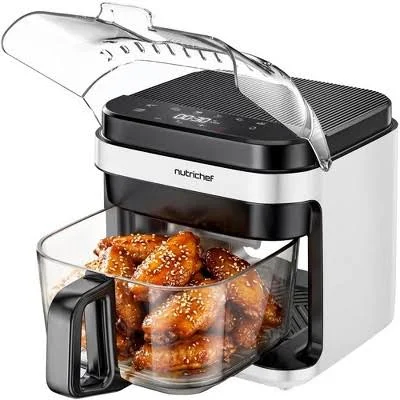
- glass bowl, stainless steel exterior
- We found no PFAS statement from the brand
- Thermal stress and glass breakage
2 hazards checked on this product, all on its full breakdown.
Find an alternative on AmazonMore air fryers grades
How we score, every product runs through the same public 0-100 rubric based on materials, coatings, brand disclosure, lab findings, and recalls. See the full methodology → Spotted a mistake? Report an error.