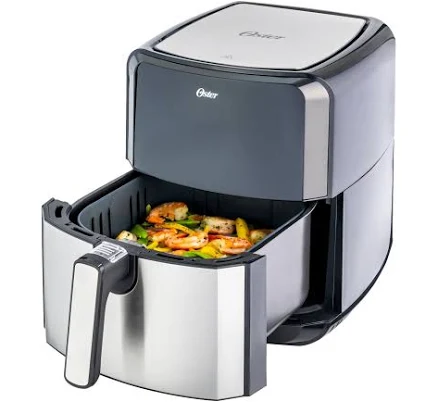
Oster DiamondForce Nonstick XL 5 Quart Digital Air Fryer
Wait for Oster to disclose the nonstick coating chemistry.
Oster markets a DiamondForce nonstick coating but won't say if it's Teflon-family coating or PFAS-based. No third-party testing or PFAS-free claims back it up.
The better-graded swap
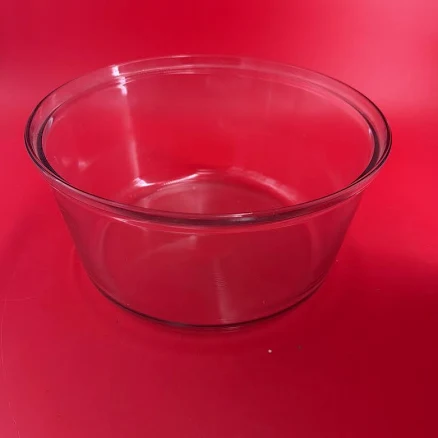
Big Boss
Big Boss Oil Less Fryer Air Fryer 16 Quart Replacement Clear Glass
75/100 safety
Same rubric that flunked this product. The swap earned Excellent.
Still want this one anyway? Check the price on Amazon. We’d swap it.
Material
Nonstick coating (DiamondForce brand, unspecified polymer)
Brand disclosure
Brand is silent on PFAS
Lab data
No public lab test
You may also be interested in
Top-graded picks in the categories readers replace first, every one scored on the same rubric.

- polypropylene filter housing, carbon/sediment cartridge
- We found no PFAS statement from the brand
- Bacterial growth in spent cartridges
3 hazards checked on this product, all on its full breakdown.

Aquasure
Premier Series 75 GPD Under Sink Reverse Osmosis Water Filtration System
- RO membrane, carbon filters, stainless steel housing
- We found no PFAS statement from the brand
- Bacterial and microbial growth in housing and filters
4 hazards checked on this product, all on its full breakdown.

Avocado
Vegan Mattress
- organic cotton, natural latex, coconut coir, recycled steel coils
- The brand calls it PFAS-free, which we have not verified
- Heavy metals
2 hazards checked on this product, all on its full breakdown.
What Oster DiamondForce Nonstick XL 5 Air Fryer is made of, ingredients and materials
The Oster DiamondForce coating is a proprietary nonstick polymer applied to the cooking basket and interior surfaces. Oster has not publicly disclosed whether this formulation contains Teflon-type coating (Teflon) or a Teflon-type coating-free alternative such as ceramic or silicone-based polymers. The lack of transparency is the primary concern, Teflon-type coating-based coatings can emit harmful fumes if overheated above 500-600F, while ceramic alternatives carry lower thermal risk but may degrade with repeated thermal cycling.
What’s concerning
Category baseline
The starting point for this type of product, before anything specific to this product is counted.
No PFAS disclosure
No public statement from the brand about PFAS in this product.
Non-stick, chemistry undisclosed
Marketed as non-stick without stating the coating chemistry.
Teflon-type coating thermal fume emission risk
DiamondForce is not confirmed Teflon-type coating-free. If Teflon-type coating-based, overheating above 500-600F can release perfluorooctanoic acid (PFOA) precursors and other polymer fumes; this risk is highest with empty-basket operation or user error on temperature settings.
Nonstick coating degradation and particle ingestion
Polymer off-gassing during initial use
New nonstick coatings may emit volatile organic compounds (VOCs) during the first few heating cycles. Ensure ventilation during the initial 5-10 uses; this is standard for the category but intensified by unknown coating chemistry here.
What’s reassuring
Aluminum housing leaching
Air fryer baskets are typically aluminum with nonstick overlay. If the nonstick layer fails and bare aluminum contacts food or acidic residue, minor leaching is theoretically possible but not documented as a hazard for this model or category under normal use.
Electrical component safety and housing materials
No recalls or documented hazards with the digital heating control or plastic housing materials have been reported for this model. Standard electrical safety applies.
How is this PFAS grade calculated?
The brand's record and disclosure
Oster has not issued public statements on DiamondForce chemistry or PFAS content as of available records. The brand does not advertise PFAS-free certification or third-party testing results for this coating line. No major recalls specific to nonstick fume hazards have been documented for this model, but the silence on formulation makes independent verification impossible for consumers.
How it compares in its category
Many competing air fryers (Cosori, Ninja, Instant Vortex) either disclose Teflon-type coating-free materials or carry transparency statements. Oster's refusal to specify puts this model behind category leaders in safety communication. Ceramic-coated alternatives are available at comparable price points and require less guesswork about thermal safety limits.
If you buy it
Never exceed the manufacturer's temperature settings (typically 400F for air fryers); do not run empty or at max heat for extended periods, as this accelerates fume risk if Teflon-type coating is present. Ensure kitchen ventilation is strong during use. Inspect the coating quarterly for peeling, flaking, or discoloration; once degradation appears, replacement is prudent to avoid ingestion of coating particles. Store in a dry environment to slow degradation.
What is not known about PFAS in this product?
- Basis
- Model estimate, 35% confidence, not a lab result
- Lab test
- None on record for this exact product
- Brand statement
- Oster has made none
Formulations change between production runs, so check the current label. How we grade.
What are the PFAS-free alternatives to Oster DiamondForce Nonstick XL 5 Quart Digital Air Fryer?
- borosilicate glass, bare uncoated
- We found no PFAS statement from the brand
- Thermal shock and fracture
2 hazards checked on this product, all on its full breakdown.
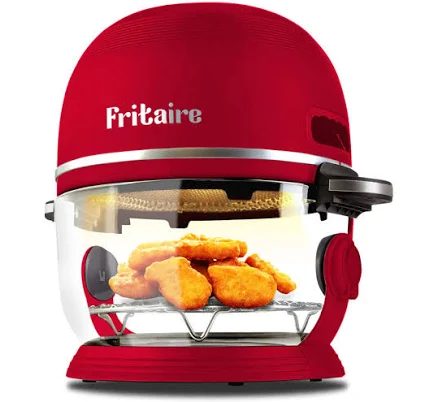
- borosilicate glass
- We found no PFAS statement from the brand
- Aluminum leaching from base/housing
4 hazards checked on this product, all on its full breakdown.
Find an alternative on Amazon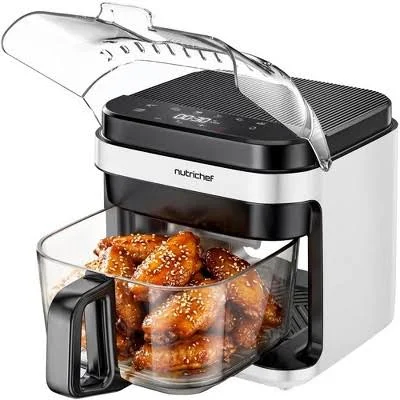
- glass bowl, stainless steel exterior
- We found no PFAS statement from the brand
- Thermal stress and glass breakage
2 hazards checked on this product, all on its full breakdown.
Find an alternative on AmazonMore air fryers grades
How we score, every product runs through the same public 0-100 rubric based on materials, coatings, brand disclosure, lab findings, and recalls. See the full methodology → Spotted a mistake? Report an error.