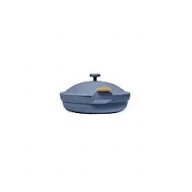
Our Place Always Pan 2.0
A non-stick coating of unstated type, with a brand PFAS statement we have not verified.
Our Place says its ceramic non-stick coating is made without PFAS, including Teflon-type coating and PFOA. We record that as an unverified brand claim. Its record describes a non-stick coating of unstated type, which is still counted.
Brand says: “Our Place says its ceramic non-stick coating is made without PFAS, including PTFE and PFOA.”
The better-graded swap
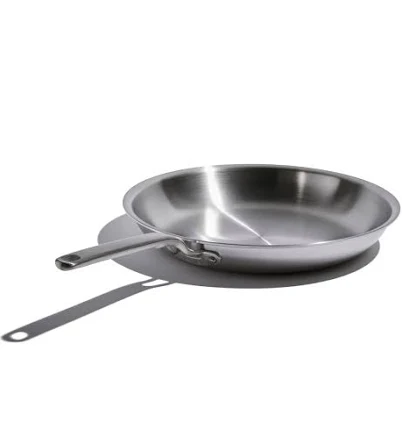
Heritage Steel
Heritage Steel Eater Fry Pan
100/100 safety
Same rubric that flunked this product. The swap earned Excellent.
Still want this one anyway? Check the price on Amazon. We’d swap it.
Material
Ceramic-titanium hybrid nonstick coating on stainless steel core
Brand disclosure
Brand claims PFAS-free
Lab data
No public lab test
Is Our Place Always Pan 2.0 non-toxic? What it is made of
The Always Pan 2.0 uses a ceramic-titanium hybrid nonstick coating bonded to a stainless steel core. Ceramic and titanium-based coatings avoid Teflon-type coating (Teflon) but their actual chemical composition, durability under heat stress, and any binding agents remain partially opaque from Our Place's public materials. Stainless steel cores are generally stable for food contact, but the coating's integrity over time determines whether particles or leachates reach food.
What’s concerning
Category baseline
The starting point for this type of product, before anything specific to this product is counted.
Disclosed non-fluorinated coating
Coating is named and the brand states it is made without PFAS.
Ceramic-titanium coating degradation over time
Ceramic hybrid coatings typically show visible wear faster than Teflon-type coating or enamel. If the coating flakes or peels, small particles may contact food and the underlying stainless steel core may leach metals, though stainless steel itself poses minimal risk at normal pH and temperature.
Unverified chemical composition of coating
Our Place has not publicly disclosed the full ingredient list, binding agents, or manufacturing process for this coating. Third-party lab analysis or certification data is not readily available, making independent assessment of trace contaminants or release potential difficult.
Thermal stability of coating at high heat
Ceramic and titanium hybrid coatings have lower thermal thresholds than Teflon-type coating; sustained exposure above medium-high heat may compromise coating integrity. No published fume emission or decomposition data specific to this product is available.
What’s reassuring
Brand-stated PFAS-free
The brand states this product is PFAS-free. We have not verified the claim.
Aluminum leaching (core material risk)
The Always Pan 2.0 has a stainless steel core, not aluminum. This hazard does not apply to this product.
Lead
No documented recalls or test reports of lead or cadmium contamination in Our Place cookware have been published. The hybrid ceramic-titanium system does not rely on traditional glaze chemistry where these metals historically posed risk.
Source, ATSDR ↗The full breakdown
The brand's record and disclosure
Our Place markets the Always Pan 2.0 as PFAS-free, a claim that has not been independently verified by third-party testing data we can confirm. The brand has faced consumer interest in transparency but has not published full chemical formulations, safety certifications (e.g., NSF, FDA compliance letters), or accelerated aging data for the coating. No major safety recalls linked to the coating have been publicly documented to date.
How it compares in its category
Hybrid ceramic-titanium coatings sit in a middle ground, they avoid Teflon-type coating fume risk (the core safety concern with traditional nonstick), but they are newer and less durability-tested than established enameled cast iron or bare stainless steel. Ceramic coatings in general show faster wear than Teflon-type coating under typical home use, often developing visible scratches within 1-2 years. Our Place has marketed durability as a selling point, but independent wear data on this specific formulation is sparse.
If you buy it
Keep the pan below medium-high heat to minimize stress on the coating and preserve its integrity. Avoid metal utensils and scouring pads; use soft silicone or wood. Inspect regularly for flaking, discoloration, or worn patches; if coating degradation becomes visible, discontinue use on acidic or fatty foods and consider replacement. Hand wash gently to reduce abrasion; dishwasher use may accelerate wear.
What we don’t know
- Basis
- Model estimate, 45% confidence, not a lab result
- Lab test
- None on record for this exact product
- Brand statement
- Our Place has made a specific claim
Formulations change between production runs, so check the current label. How we grade.
Better-graded alternatives in Cookware
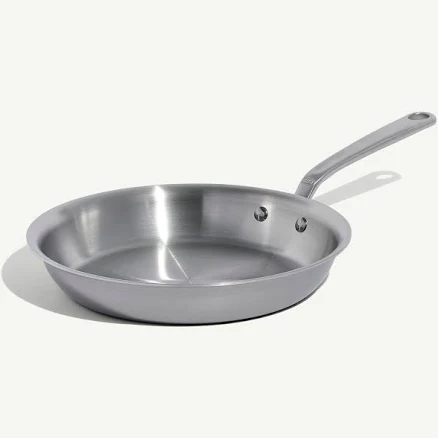
Made In
Stainless Clad Fry Pan
- Stainless steel clad construction, no nonstick coating
- The brand calls it PFAS-free, which we have not verified
- Clad separation or delamination over time
Made In
10' Stainless Clad Frying Pan
- stainless steel clad construction, no nonstick coating
- The brand calls it PFAS-free, which we have not verified
- Nickel leaching from stainless steel
3 hazards checked on this product. See all of them.
Heritage Steel
Eater Fry Pan
- Clad stainless steel, no coating
- The brand calls it PFAS-free, which we have not verified
- Metal ion release during cooking (iron, nickel, chromium)
More cookware grades
How we score, every product runs through the same public 0-100 rubric based on materials, coatings, brand disclosure, lab findings, and recalls. See the full methodology → Spotted a mistake? Report an error.