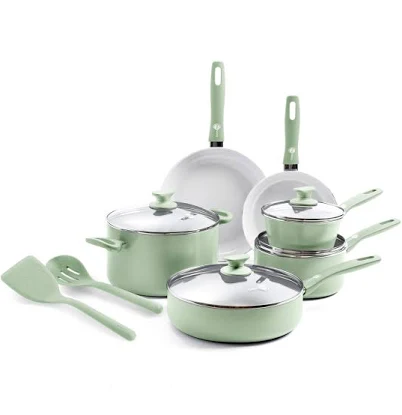
GreenPan Dover 12-Piece Ceramic Nonstick Cookware Set, Is It Non-Toxic?
Named ceramic non-stick coating, with a brand PFAS statement we have not verified.
Full ceramic non-stick cookware set provides complete kitchen coverage without any PFAS contamination.
We flunk more products than we pass. This one earned its grade. How we grade
You may also be interested in
Top-graded picks in the categories readers replace first, every one scored on the same rubric.

- polypropylene filter housing, carbon/sediment cartridge
- We found no PFAS statement from the brand
- Bacterial growth in spent cartridges
3 hazards checked on this product, all on its full breakdown.

Aquasure
Premier Series 75 GPD Under Sink Reverse Osmosis Water Filtration System
- RO membrane, carbon filters, stainless steel housing
- We found no PFAS statement from the brand
- Bacterial and microbial growth in housing and filters
4 hazards checked on this product, all on its full breakdown.

Avocado
Vegan Mattress
- organic cotton, natural latex, coconut coir, recycled steel coils
- The brand calls it PFAS-free, which we have not verified
- Heavy metals
2 hazards checked on this product, all on its full breakdown.
Is GreenPan Dover 12-Piece Cookware Set non-toxic? What it is made of
GreenPan Dover uses a ceramic nonstick coating applied to an undisclosed base metal (likely aluminum or stainless steel blend). The ceramic layer replaces Teflon-type coating (Teflon) with mineral-derived compounds, reducing acute fume risk at normal cooking temperatures. However, the base metal and coating adhesion quality determine long-term safety; ceramic coatings can chip or peel over time, potentially exposing underlying aluminum to acidic foods.
What’s concerning
Disclosed non-fluorinated coating
Coating is named and the brand states it is made without PFAS.
Category baseline
The starting point for this type of product, before anything specific to this product is counted.
Ceramic coating degradation and aluminum leaching
As ceramic nonstick coatings wear, the underlying metal substrate is exposed. If base metal is aluminum, acidic foods (tomatoes, citrus, vinegar) may cause leaching into food. No specific batch testing for this set has been published; risk increases with age and dishwasher use.
Coating adhesion and flaking into food
Consumer reviews and online forums describe flaking or peeling of ceramic nonstick coatings in GreenPan products after 1-3 years of use, particularly after dishwasher cycles. While not a formal recall, this suggests batch or design variability in coating durability that may expose users to ingested coating particles over time.
Unknown base metal composition
GreenPan does not publicly specify whether Dover cookware uses aluminum, stainless steel, or a composite base. Without this information, risk of leaching from the substrate cannot be fully assessed. Heavier cookware often indicates stainless steel (lower leaching risk), but visual weight alone is not a guarantee.
What’s reassuring
Brand-stated PFAS-free
The brand states this product is PFAS-free. We have not verified the claim.
Teflon-type coating fume risk (thermal decomposition)
Ceramic nonstick eliminates traditional Teflon-type coating, so polymer fume risk is not applicable to this product. Risk remains only if the coating composition includes undisclosed Teflon-family coating, which GreenPan claims it does not.
Lead
No recalls or test results indicating lead or cadmium contamination in GreenPan Dover cookware are on record. Ceramic coatings manufactured to US standards typically undergo leaching tests; however, independent third-party confirmation for this specific product line is not publicly documented.
Source, ATSDR ↗How is this PFAS grade calculated?
The brand's record and disclosure
GreenPan markets itself as a PFAS-free alternative and has published statements emphasizing ceramic technology. Public disclosure of specific coating formulations remains limited. No major recalls for this product line have been documented in FDA or CPSC databases. The brand's PFAS stance is stated but independent verification of all product batches is not publicly available.
How it compares in its category
Ceramic nonstick sits between traditional Teflon-type coating cookware (lower PFAS risk but fume hazard if overheated) and bare stainless steel (no coating degradation, more durable, less nonstick). GreenPan's ceramic option avoids PFOA entirely and carries less thermal fume risk than older Teflon. Durability typically lags Teflon-type coating in sustained use; many ceramic nonstick sets lose performance within 2-3 years of regular cooking.
If you buy it
Keep heat at medium or below to prevent coating breakdown and fume release; avoid preheating empty pans. Hand wash rather than dishwasher to extend coating life. Inspect visually every 6 months for chips, scratches, or dull spots indicating wear; replace if coating flakes into food. Do not use metal utensils; silicone, wood, or nylon only to prevent premature peeling.
What is not known about PFAS in this product?
- Basis
- Model estimate, 80% confidence, not a lab result
- Lab test
- None on record for this exact product
- Brand statement
- GreenPan has made a specific claim
Formulations change between production runs, so check the current label. How we grade.
What are the PFAS-free alternatives to GreenPan Dover 12-Piece Ceramic Nonstick Cookware Set?
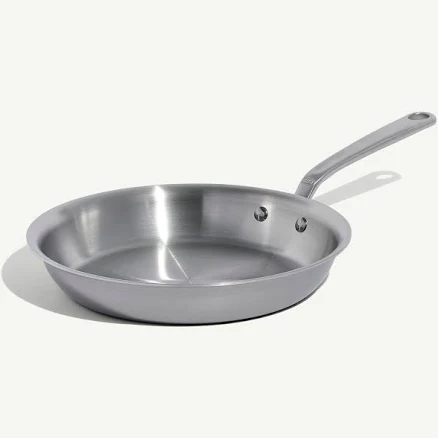
- Stainless steel clad construction, no nonstick coating
- The brand calls it PFAS-free, which we have not verified
- Clad separation or delamination over time
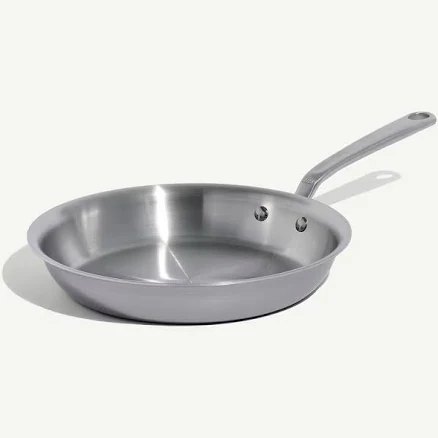
- stainless steel clad construction, no nonstick coating
- The brand calls it PFAS-free, which we have not verified
- Nickel leaching from stainless steel
3 hazards checked on this product, all on its full breakdown.
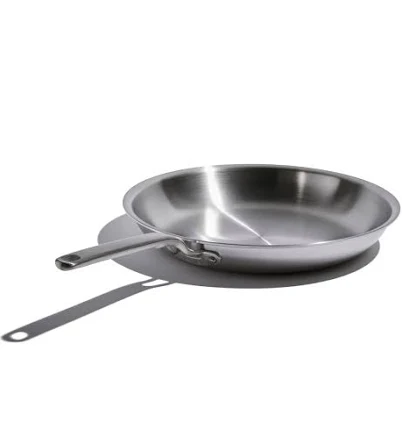
- Clad stainless steel, no coating
- The brand calls it PFAS-free, which we have not verified
- Metal ion release during cooking (iron, nickel, chromium)
More cookware grades
How we score, every product runs through the same public 0-100 rubric based on materials, coatings, brand disclosure, lab findings, and recalls. See the full methodology → Spotted a mistake? Report an error.