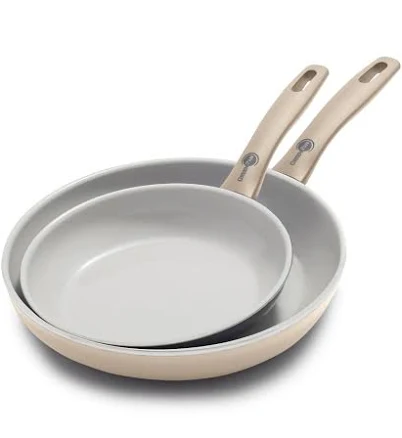
GreenPan Dover Ceramic Nonstick 8" and 10" Frypan Set, Is It Non-Toxic?
Ceramic nonstick coating disclosed as PFAS-free by GreenPan, unverified.
GreenPan states this two-piece frying pan set has a ceramic nonstick coating made without PFAS. The coating chemistry is named but not independently verified.
We flunk more products than we pass. This one earned its grade. How we grade
You may also be interested in
Top-graded picks in the categories readers replace first, every one scored on the same rubric.

- polypropylene filter housing, carbon/sediment cartridge
- We found no PFAS statement from the brand
- Bacterial growth in spent cartridges
3 hazards checked on this product, all on its full breakdown.

Aquasure
Premier Series 75 GPD Under Sink Reverse Osmosis Water Filtration System
- RO membrane, carbon filters, stainless steel housing
- We found no PFAS statement from the brand
- Bacterial and microbial growth in housing and filters
4 hazards checked on this product, all on its full breakdown.

Avocado
Vegan Mattress
- organic cotton, natural latex, coconut coir, recycled steel coils
- The brand calls it PFAS-free, which we have not verified
- Heavy metals
2 hazards checked on this product, all on its full breakdown.
Is GreenPan Dover Ceramic Nonstick Frypan Set non-toxic? What it is made of
GreenPan Dover uses a ceramic-based nonstick coating, which the brand markets as PFOA-free and Teflon-type coating-free. The underlying cookware material (steel or aluminum) is not publicly specified for this model, but ceramic coatings bond to the surface rather than relying on Teflon-family coating chemistry. Ceramic coatings are less prone to off-gassing at normal cooking temperatures than Teflon-type coating-based nonsticks, though durability and release of underlying metals depend on coating integrity over time.
What’s concerning
Disclosed non-fluorinated coating
Coating is named and the brand states it is made without PFAS.
Category baseline
The starting point for this type of product, before anything specific to this product is counted.
Coating degradation and microchip release
Ceramic coatings are inherently more fragile than Teflon-type coating and can flake or chip with impact or use of abrasive tools. GreenPan does not publicly disclose composition of ceramic formulation, so potential contaminants in shed material (if any) cannot be assessed; users should monitor for visible damage and discard pans with compromised surfaces.
Aluminum leaching (substrate dependent)
If the underlying substrate is aluminum, the ceramic coating's primary function is to act as a barrier. Coating damage or thinning over time could expose aluminum to acidic or basic foods. GreenPan has not disclosed substrate material for this model; contact the brand directly or check product packaging for confirmation.
What’s reassuring
Brand-stated PFAS-free
The brand states this product is PFAS-free. We have not verified the claim.
Lead
No recalls or public testing data indicate lead or cadmium contamination in GreenPan ceramic cookware. However, third-party independent testing of ceramic nonstick cookware is rare; GreenPan does not publish heavy metal assay results for consumer verification.
Source, ATSDR ↗High-heat fume risk (reduced vs Teflon-type coating)
Ceramic coatings do not release perfluorinated fumes at normal cooking temperatures the way Teflon-type coating can. However, exceeding recommended heat limits may degrade the ceramic and release uncharacterized breakdown products; the brand specifies low-to-medium heat use, which should be followed.
Handle or lid material not disclosed
GreenPan does not publicly specify handle material (plastic, silicone, or stainless steel) or lid composition for this set. If handles contain phenolic resins or lids use polycarbonate, low-level formaldehyde or BPA exposure is theoretically possible; request product documentation from the retailer or manufacturer for confirmation.
How is this PFAS grade calculated?
The brand's record and disclosure
GreenPan has publicly committed to phasing out PFAS in its cookware lines and markets its ceramic products as part of that initiative. The brand does not currently disclose detailed composition (e.g., underlying substrate material or full ceramic formulation) on consumer-facing documentation, making independent verification of all claims difficult. No major safety recalls or regulatory actions against GreenPan cookware have been publicly recorded, though the brand operates in a competitive market with varied third-party testing standards.
How it compares in its category
Ceramic nonstick cookware occupies a middle ground, lower PFAS concern than traditional Teflon-type coating nonsticks, but generally less durable and nonstick performance that degrades faster. GreenPan's Dover line is priced in the mainstream retail range, comparable to other ceramic or hybrid nonstick alternatives but lower than premium stainless steel or cast iron. Performance and longevity reviews are mixed; some users report good results with careful use, while others note coating wear within 1-2 years of regular cooking.
If you buy it
Use on low to medium heat only; ceramic coatings can degrade or release particles at high temperatures. Hand wash and avoid metal utensils, scouring pads, and dishwashers to extend coating life. Replace the pans if the ceramic surface visibly chips, peels, or develops rough spots that compromise nonstick function. Do not preheat empty; always add fat or liquid before heating to minimize coating stress.
What is not known about PFAS in this product?
- Basis
- Model estimate, 80% confidence, not a lab result
- Lab test
- None on record for this exact product
- Brand statement
- GreenPan has made a specific claim
Formulations change between production runs, so check the current label. How we grade.
What are the PFAS-free alternatives to GreenPan Dover Ceramic Nonstick 8" and 10" Frypan Set?
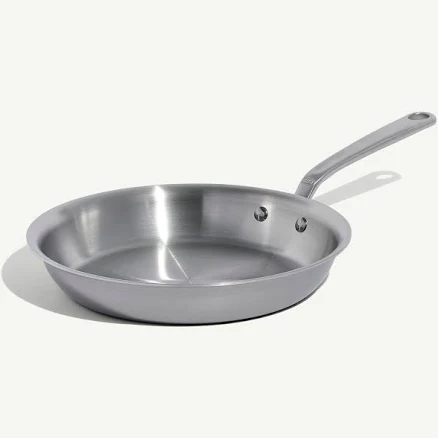
- Stainless steel clad construction, no nonstick coating
- The brand calls it PFAS-free, which we have not verified
- Clad separation or delamination over time
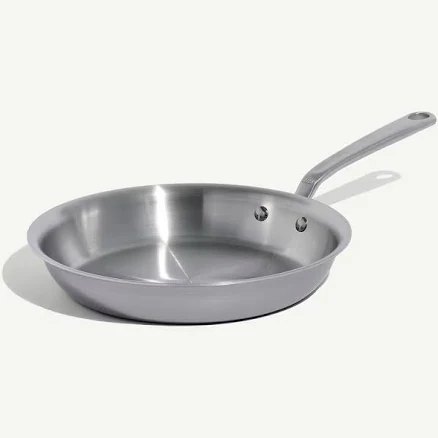
- stainless steel clad construction, no nonstick coating
- The brand calls it PFAS-free, which we have not verified
- Nickel leaching from stainless steel
3 hazards checked on this product, all on its full breakdown.
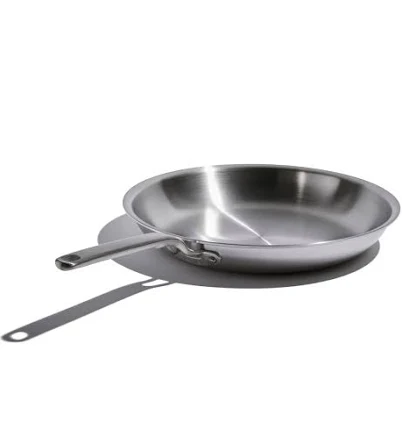
- Clad stainless steel, no coating
- The brand calls it PFAS-free, which we have not verified
- Metal ion release during cooking (iron, nickel, chromium)
More cookware grades
How we score, every product runs through the same public 0-100 rubric based on materials, coatings, brand disclosure, lab findings, and recalls. See the full methodology → Spotted a mistake? Report an error.