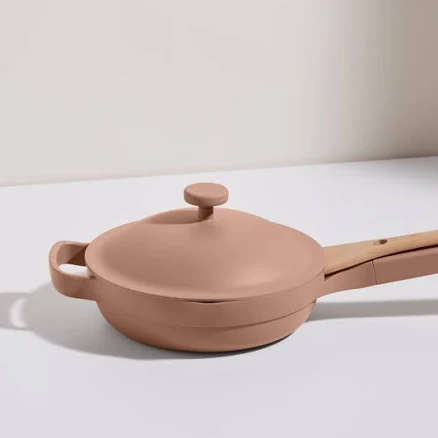
Our Place Ceramic Nonstick Mini Always Pan
Named ceramic non-stick coating, with a brand PFAS statement we have not verified.
Our Place says its ceramic non-stick coating is made without PFAS, including Teflon-type coating and PFOA. We record that as an unverified brand claim. Its record describes a non-stick coating of unstated type, which is still counted.
Brand says: “Our Place says its ceramic non-stick coating is made without PFAS, including PTFE and PFOA.”
We flunk more products than we pass. This one earned its grade. How we grade
Material
Ceramic nonstick coating over aluminum
Brand disclosure
Brand claims PFAS-free
Lab data
No public lab test
Is Our Place Ceramic Nonstick Mini Always Pan non-toxic? What it is made of
The Always Pan Mini uses a ceramic nonstick coating applied over an aluminum core. Ceramic coatings are mineral-based (typically silica or zirconia compounds) rather than synthetic Teflon-family coating, which eliminates the Teflon-type coating fume risk present in traditional Teflon cookware. Aluminum conducts heat efficiently but can leach into acidic foods if the coating degrades or is scratched; the ceramic layer is the protective barrier against this contact.
What’s concerning
Disclosed non-fluorinated coating
Coating is named and the brand states it is made without PFAS.
Category baseline
The starting point for this type of product, before anything specific to this product is counted.
Aluminum leaching
Ceramic coating protects against direct aluminum contact, but scratches, chips, or progressive wear expose bare aluminum to acidic foods (tomato, citrus, vinegar). No leaching incidents are on record for this brand, but risk exists if coating degrades.
Ceramic coating degradation and loss of nonstick function
User reviews and third-party testing of ceramic nonstick cookware show coating wear accelerates with high heat, metal utensils, and dishwasher use. Degradation timeline varies (6 months to 2+ years); loss of coating performance is the primary failure mode, not a safety hazard per se, but signals protective barrier compromise.
Microplastic or coating particle ingestion from wear
Severely worn or flaking ceramic coatings can shed small particles into food. No established health standard exists for ceramic particulate ingestion, but visible flaking or chipping is a sign to retire the pan and avoid continued use.
What’s reassuring
Brand-stated PFAS-free
The brand states this product is PFAS-free. We have not verified the claim.
Lead
No lead or cadmium contamination has been reported in Our Place cookware. Ceramic glazes in modern US-manufactured or certified cookware are subject to FDA migration limits, but the brand does not publicly provide composition or test certificates.
Source, ATSDR ↗Teflon-type coating fume release and thermal decomposition
Ceramic coatings do not contain Teflon-type coating or Teflon-family coating and do not release Teflon-related fumes. This is a key safety advantage over traditional nonstick cookware, though high-heat use may still generate food-contact coating particles if severely damaged.
The full breakdown
The brand's record and disclosure
Our Place has made explicit PFAS-free claims for its nonstick line but has not published independent third-party testing results or material certifications (e.g., GOTS, NSF) publicly available. The company markets toward health-conscious consumers and emphasizes sustainability, but disclosure depth on coating composition and manufacturing controls is limited compared to brands that publish full ingredient lists or lab reports. No recalls or documented heavy-metal contamination issues have been reported for this product line.
How it compares in its category
Ceramic nonstick cookware is a middle-ground option, with lower concern than legacy Teflon-type coating/PFOA products but with trade-offs in nonstick durability and heat tolerance compared to traditional Teflon. The Always Pan Mini's ceramic coating is less proven long-term than cast iron or stainless steel, but avoids fluorochemical exposure entirely. Price and aesthetic design position it as a premium alternative to budget nonstick; performance and longevity remain user-dependent.
If you buy it
Use low to medium heat; high heat can accelerate ceramic coating wear and degrade performance faster than intended. Avoid metal utensils and abrasive scrubbers, which chip or scratch the coating and expose the aluminum underneath. Hand wash only (dishwasher can compromise the coating). Replace the pan if the coating shows visible cracks, flaking, or permanent sticking, as the protective barrier has failed. Store with a soft cloth between the pan and other items to prevent scratching during handling.
What we don’t know
- Basis
- Model estimate, 72% confidence, not a lab result
- Lab test
- None on record for this exact product
- Brand statement
- Our Place has made a specific claim
Formulations change between production runs, so check the current label. How we grade.
Better-graded alternatives in Cookware
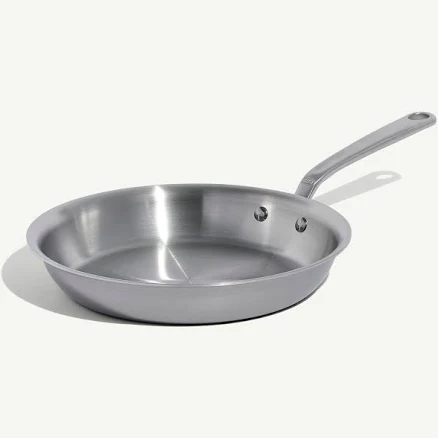
Made In
Stainless Clad Fry Pan
- Stainless steel clad construction, no nonstick coating
- The brand calls it PFAS-free, which we have not verified
- Clad separation or delamination over time
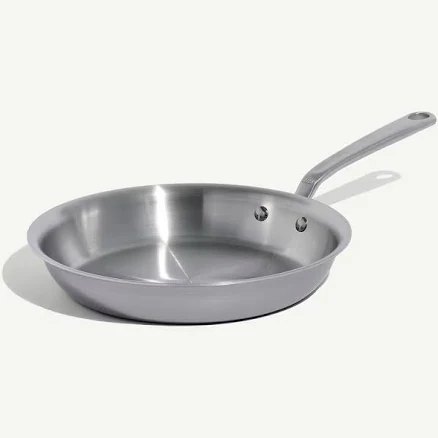
Made In
10' Stainless Clad Frying Pan
- stainless steel clad construction, no nonstick coating
- The brand calls it PFAS-free, which we have not verified
- Nickel leaching from stainless steel
3 hazards checked on this product. See all of them.
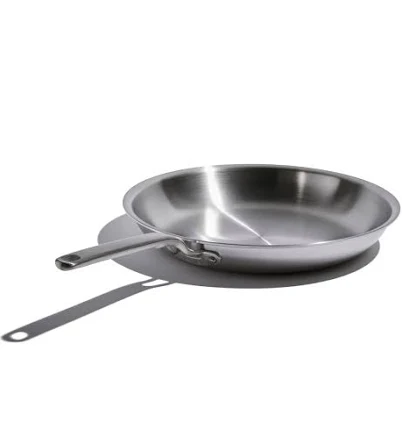
Heritage Steel
Eater Fry Pan
- Clad stainless steel, no coating
- The brand calls it PFAS-free, which we have not verified
- Metal ion release during cooking (iron, nickel, chromium)
More cookware grades
How we score, every product runs through the same public 0-100 rubric based on materials, coatings, brand disclosure, lab findings, and recalls. See the full methodology → Spotted a mistake? Report an error.