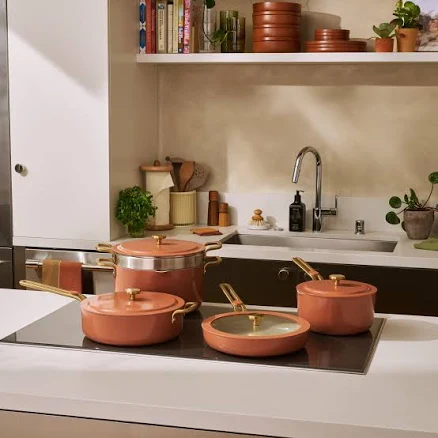
Our Place Essentials 8-Piece Pan Set
A non-stick coating of unstated type, with a brand PFAS statement we have not verified.
Our Place says its ceramic non-stick coating is made without PFAS, including Teflon-type coating and PFOA. We record that as an unverified brand claim. Its record describes a non-stick coating of unstated type, which is still counted.
Brand says: “Our Place says its ceramic non-stick coating is made without PFAS, including PTFE and PFOA.”
The better-graded swap
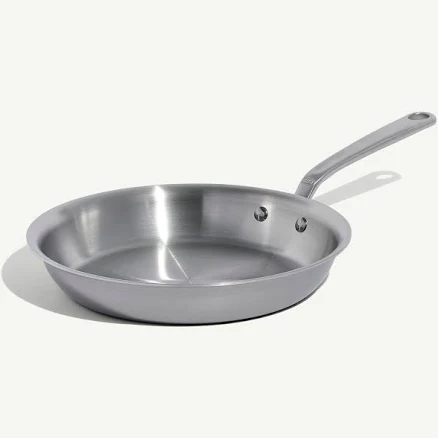
Made In
Made In Stainless Clad Fry Pan
100/100 safety
Same rubric that flunked this product. The swap earned Excellent.
Still want this one anyway? Check the price on Amazon. We’d swap it.
Material
nonstick coating, composition unspecified
Brand disclosure
Brand claims PFAS-free
Lab data
No public lab test
Is Our Place Essentials 8-Piece Pan Set non-toxic? What it is made of
Our Place Essentials uses a nonstick coating of unspecified type and chemical composition. This is a significant transparency gap, traditional Teflon-type coating-based nonstick (Teflon) carries thermal decomposition risk above 500F, while ceramic or ceramic-type alternatives have different durability and leaching profiles. Without knowing which coating family this product uses, consumers cannot reliably assess safe temperature thresholds or degradation behavior over time.
What’s concerning
Category baseline
The starting point for this type of product, before anything specific to this product is counted.
Disclosed non-fluorinated coating
Coating is named and the brand states it is made without PFAS.
Teflon-type coating fume risk (thermal decomposition)
If the unspecified coating is Teflon-type coating-based, heating above 500F can release toxic fumes (polymer fume fever). Our Place does not confirm coating type, so this risk cannot be ruled out; ceramic alternatives carry lower risk but are not confirmed here.
Coating degradation and microparticle shedding
Nonstick cookware of any type degrades over 3-5 years with regular use. As coating chips or flakes, microparticles can enter food; long-term effects are not fully studied. Undisclosed coating chemistry makes it harder to predict degradation timeline or safety profile of wear byproducts.
Aluminum leaching from substrate
If the pan core is aluminum (common in nonstick cookware), damage to or breakthrough in the nonstick layer can expose aluminum to acidic foods. No specific aluminum content or substrate material is disclosed for this product, so leaching risk cannot be quantified.
Lack of labeling on safe temperature limits
Our Place has not publicly stated a maximum safe temperature for this cookware. Without this information, users may exceed the thermal threshold for the nonstick coating, whether Teflon-type coating or alternative, increasing fume or degradation risk.
What’s reassuring
Brand-stated PFAS-free
The brand states this product is PFAS-free. We have not verified the claim.
Lead
No reports of lead or cadmium contamination in Our Place cookware. Modern US cookware is rarely enameled in ways that pose this risk, but the brand has not explicitly confirmed absence of these metals in any decorative coatings.
Source, ATSDR ↗The full breakdown
The brand's record and disclosure
Our Place markets these pans as PFAS-free but has not publicly disclosed the specific nonstick chemistry used or provided third-party verification (e.g., NSF, testing lab certification). The brand is known for lifestyle positioning rather than materials transparency; no major recalls or formal complaints about this product line are on public record. This lack of detailed disclosure is common in the direct-to-consumer cookware space but makes independent hazard assessment difficult.
How it compares in its category
Most major cookware brands (Calphalon, T-fal, GreenPan) now disclose whether coatings are Teflon-type coating-based, ceramic, or hybrid, and provide temperature limits in labeling. Our Place's refusal to name the coating type puts it below industry transparency norms. Price point and design appeal are competitive, but the safety information lag is a real drawback versus established brands with full material disclosures and independent certification trails.
If you buy it
Keep heat below 400F to minimize risk of any nonstick coating thermal breakdown, which can occur faster with unknown formulations. Hand-wash or use gentle machine cycles; abrasive scourers accelerate coating wear and potential microparticle release. Inspect coating annually for peeling, darkening, or flaking; replace the pan if damage is visible. Contact Our Place directly for confirmation of the nonstick chemistry before purchase if thermal safety limits matter to you.
What we don’t know
- Basis
- Model estimate, 42% confidence, not a lab result
- Lab test
- None on record for this exact product
- Brand statement
- Our Place has made a specific claim
Formulations change between production runs, so check the current label. How we grade.
Better-graded alternatives in Cookware
Made In
Stainless Clad Fry Pan
- Stainless steel clad construction, no nonstick coating
- The brand calls it PFAS-free, which we have not verified
- Clad separation or delamination over time
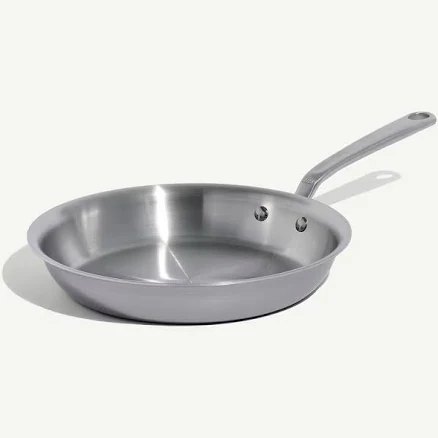
Made In
10' Stainless Clad Frying Pan
- stainless steel clad construction, no nonstick coating
- The brand calls it PFAS-free, which we have not verified
- Nickel leaching from stainless steel
3 hazards checked on this product. See all of them.
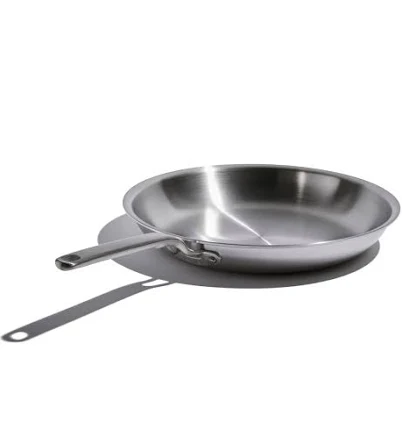
Heritage Steel
Eater Fry Pan
- Clad stainless steel, no coating
- The brand calls it PFAS-free, which we have not verified
- Metal ion release during cooking (iron, nickel, chromium)
More cookware grades
How we score, every product runs through the same public 0-100 rubric based on materials, coatings, brand disclosure, lab findings, and recalls. See the full methodology → Spotted a mistake? Report an error.