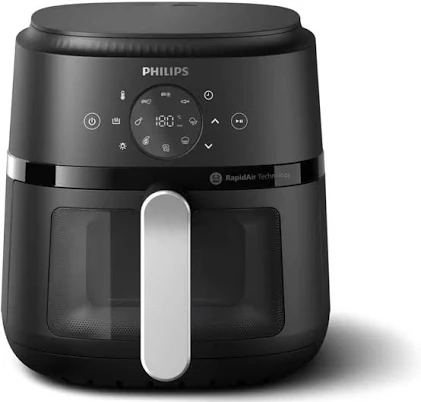
Philips 2000 Air Fryer
Nonstick coating chemistry not disclosed. Philips has no PFAS statement on record.
The cooking basket has a nonstick coating, but Philips does not disclose the coating chemistry. No third-party testing or certifications are on record for this product.
The better-graded swap
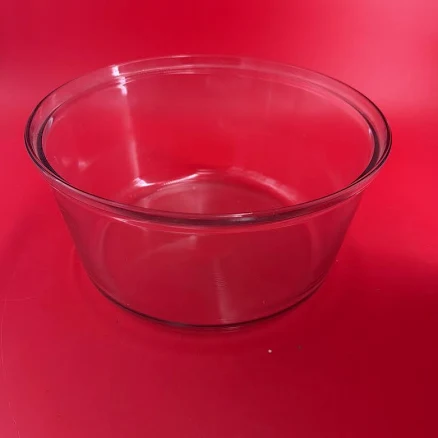
Big Boss
Big Boss Oil Less Fryer Air Fryer 16 Quart Replacement Clear Glass
75/100 safety
Same rubric that flunked this product. The swap earned Excellent.
Still want this one anyway? Check the price on Amazon. We’d swap it.
Material
Nonstick-coated cooking basket; coating type not disclosed
Brand disclosure
Brand is silent on PFAS
Lab data
No public lab test
You may also be interested in
Top-graded picks in the categories readers replace first, every one scored on the same rubric.

- polypropylene filter housing, carbon/sediment cartridge
- We found no PFAS statement from the brand
- Bacterial growth in spent cartridges
3 hazards checked on this product, all on its full breakdown.

Aquasure
Premier Series 75 GPD Under Sink Reverse Osmosis Water Filtration System
- RO membrane, carbon filters, stainless steel housing
- We found no PFAS statement from the brand
- Bacterial and microbial growth in housing and filters
4 hazards checked on this product, all on its full breakdown.

Avocado
Vegan Mattress
- organic cotton, natural latex, coconut coir, recycled steel coils
- The brand calls it PFAS-free, which we have not verified
- Heavy metals
2 hazards checked on this product, all on its full breakdown.
What Philips 2000 Air Fryer is made of, ingredients and materials
The Philips 2000 uses a nonstick-coated cooking basket, but Philips does not publicly disclose the coating chemistry (Teflon-type coating-based, ceramic, silicone, or hybrid). This opacity is the core safety issue, most conventional air fryer nonstick coatings are Teflon-type coating (Teflon), which historically contained PFOA and may still use other fluorinated compounds. The basket material beneath the coating is typically aluminum or steel; aluminum itself can leach under acidic conditions, though the nonstick layer usually prevents direct contact. Without transparency, you cannot verify what you are heating repeatedly.
What’s concerning
Category baseline
The starting point for this type of product, before anything specific to this product is counted.
No PFAS disclosure
No public statement from the brand about PFAS in this product.
Non-stick, chemistry undisclosed
Marketed as non-stick without stating the coating chemistry.
Nonstick coating degradation and leaching
Philips does not specify coating durability or lifespan. Scratches, high heat, and abrasive cleaning accelerate flaking; degraded Teflon-type coating or unknown fluorinated coatings may release particles and chemical residue into food. Without disclosure of coating type, you cannot assess true replacement intervals.
Aluminum leaching (if basket is aluminum substrate)
Many air fryer baskets use aluminum cores. If the nonstick coating degrades or was never applied uniformly, direct contact with acidic or alkaline foods can promote aluminum migration into food. This risk is mitigated by an intact coating but rises sharply once coating fails.
Thermal degradation fumes from nonstick coating
If the coating is Teflon-type coating or Teflon-type coating-hybrid, sustained temperatures above 260°C can release Teflon-type coating decomposition fumes (linked to polymer fume fever in occupational settings). Home air fryer use typically stays below temperatures associated with nonstick coating degradation in practice, but rapid heating or malfunction could exceed typical operating ranges. Without coating specification, this risk cannot be quantified.
Microplastics
General air fryer coatings are prone to microscopic shedding from mechanical wear and thermal cycling. Studies of nonstick cookware confirm particle release into food over time, though long-term human health impact remains uncertain. Philips provides no data on coating wear rates or particle size/composition.
Source, EPA ↗What’s reassuring
Electrical and housing safety (non-chemical)
Philips 2000 has no known electrical faults or housing material leaching issues on public record. Standard appliance safety standards (UL, CE) apply; no specific chemical concern beyond the nonstick coating itself.
How is this PFAS grade calculated?
The brand's record and disclosure
Philips has not published a clear, public statement on PFAS avoidance or PFAS-free certification for its cookware and small appliances. The company maintains general product safety compliance claims but does not voluntarily disclose nonstick coating type or third-party testing results for PFAS presence. This silence is noteworthy in an industry where competitors (notably some ceramic-coated and Teflon-type coating-free brands) now advertise chemistry transparency. Philips' lack of proactive disclosure suggests either Teflon-type coating or a proprietary coating they prefer not to detail.
How it compares in its category
Air fryers are category-wide prone to undisclosed Teflon-type coating coatings; Philips 2000 is typical in this regard. Competitors like Ninja and Cosori similarly obscure coating chemistry, though some (Dash, Instant Pot Vortex) now market ceramic or Teflon-type coating-free alternatives with transparent labeling. The Philips 2000 is middle-market and widely available, making it a default choice but not a safety leader. If nonstick chemistry transparency is your priority, specialist brands with ceramic or mineral-oil-based coatings present lower concern regarding coating composition disclosure.
If you buy it
Use only silicone or wood utensils to avoid scratching the nonstick coating; any damage accelerates leaching risk and coating degradation. Never exceed the appliance's stated temperature (typically 200-400°C depending on setting); sustained high heat degrades most nonstick surfaces faster. Hand-wash the basket with soft cloths; dishwasher exposure accelerates coating breakdown. Replace the basket if visible peeling, flaking, or discoloration appears, do not use a degraded coating. Avoid cooking acidic foods (vinegars, tomato, citrus) directly on the basket for prolonged periods if the coating shows any wear.
What is not known about PFAS in this product?
- Basis
- Model estimate, 35% confidence, not a lab result
- Lab test
- None on record for this exact product
- Brand statement
- Philips has made none
Formulations change between production runs, so check the current label. How we grade.
What are the PFAS-free alternatives to Philips 2000 Air Fryer?
- borosilicate glass, bare uncoated
- We found no PFAS statement from the brand
- Thermal shock and fracture
2 hazards checked on this product, all on its full breakdown.
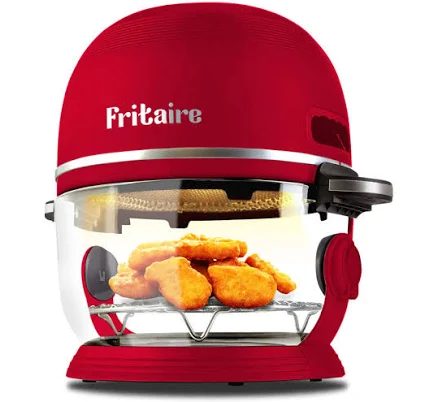
- borosilicate glass
- We found no PFAS statement from the brand
- Aluminum leaching from base/housing
4 hazards checked on this product, all on its full breakdown.
Find an alternative on Amazon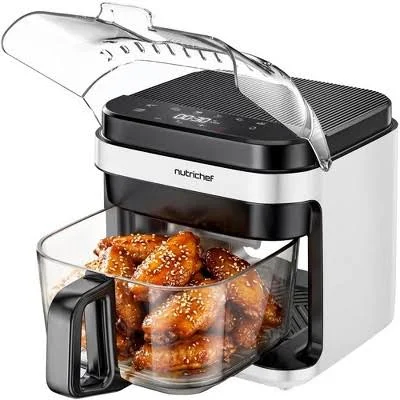
- glass bowl, stainless steel exterior
- We found no PFAS statement from the brand
- Thermal stress and glass breakage
2 hazards checked on this product, all on its full breakdown.
Find an alternative on AmazonMore air fryers grades
How we score, every product runs through the same public 0-100 rubric based on materials, coatings, brand disclosure, lab findings, and recalls. See the full methodology → Spotted a mistake? Report an error.