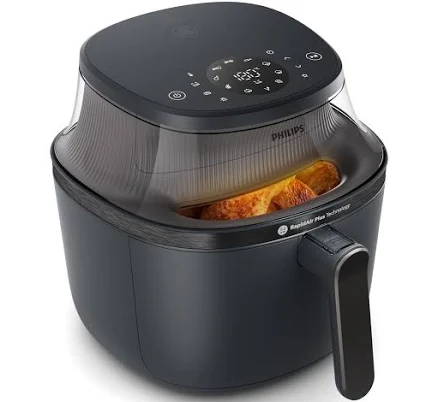
Philips Airfryer 3000 Series Premium 6.5qt Airfryer
Pass on this model until Philips reveals nonstick coating chemistry; silence on PFAS signals cookware concern.
Philips does not disclose what nonstick coating material covers the 3000 Series basket. While modern air fryers may use Teflon-type coating-free alternatives, the brand's silence on this standard cookware PFAS risk question makes assessment impossible.
The better-graded swap
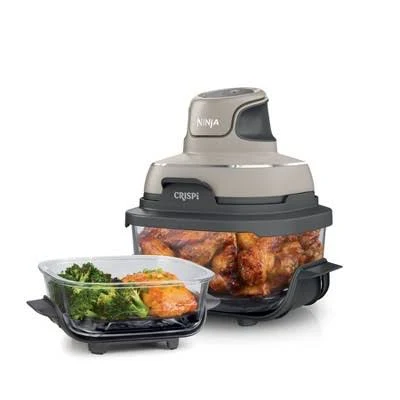
Ninja
Ninja Crispi 4-in-1 Portable Glass Air Fryer Cooking System
75/100 safety
Same rubric that flunked this product. The swap earned Excellent.
Still want this one anyway? Check the price on Amazon. We’d swap it.
Material
Nonstick-coated cooking basket; composition unspecified by Philips
Brand disclosure
Brand is silent on PFAS
Lab data
No public lab test
You may also be interested in
Top-graded picks in the categories readers replace first, every one scored on the same rubric.

- polypropylene filter housing, carbon/sediment cartridge
- We found no PFAS statement from the brand
- Bacterial growth in spent cartridges
3 hazards checked on this product, all on its full breakdown.

Aquasure
Premier Series 75 GPD Under Sink Reverse Osmosis Water Filtration System
- RO membrane, carbon filters, stainless steel housing
- We found no PFAS statement from the brand
- Bacterial and microbial growth in housing and filters
4 hazards checked on this product, all on its full breakdown.

Avocado
Vegan Mattress
- organic cotton, natural latex, coconut coir, recycled steel coils
- The brand calls it PFAS-free, which we have not verified
- Heavy metals
2 hazards checked on this product, all on its full breakdown.
What Philips Airfryer 3000 Series Airfryer is made of, ingredients and materials
The Philips Airfryer 3000 Series uses a nonstick-coated cooking basket, but Philips does not publicly disclose the specific nonstick chemistry (Teflon-type coating, ceramic, silicone, etc.) or whether PFAS compounds are present in the coating. The heating chamber is stainless steel. Without transparency on coating composition, users cannot independently verify whether the product uses traditional Teflon-type coating-based nonstick (which can release fumes if overheated) or an alternative with lower concern for this risk. This lack of disclosure is a significant gap for a high-temperature cooking appliance.
What’s concerning
Category baseline
The starting point for this type of product, before anything specific to this product is counted.
No PFAS disclosure
No public statement from the brand about PFAS in this product.
Non-stick, chemistry undisclosed
Marketed as non-stick without stating the coating chemistry.
Teflon-type coating fume risk (if nonstick coating contains Teflon-type coating)
Philips does not disclose whether the Airfryer 3000 basket uses Teflon-type coating (Teflon) or an alternative nonstick chemistry. Teflon-type coating can release fluorinated gases if heated above 400°F; most airfryers operate below this threshold, but accidental overheating or manufacturing defects could present a risk for fluorinated gas release. Absence of disclosure makes independent assessment impossible.
Nonstick coating degradation over time
No public failure data exists for the Airfryer 3000 basket coating, but nonstick surfaces degrade with repeated heating and mechanical wear. Visible flaking or peeling of the coating should trigger replacement of the basket to prevent ingestion of coating particles and loss of nonstick function.
Off-gassing and indoor air quality on first use
Users have reported mild odors or off-gassing during initial operation of Philips Airfryer models, consistent with residual manufacturing residues or solvent traces on the heating elements and basket coating. This is typically temporary and resolves after one or two cycles with ventilation, but sensitive individuals may experience temporary irritation.
What’s reassuring
Aluminum exposure (basket substrate)
The cooking basket substrate material (aluminum, stainless steel, or composite) is not specified in available product documentation. If aluminum is used, it is coated and should not leach under normal cooking conditions, but confirmation from Philips would clarify this risk.
Plastic housing and handle durability
The exterior housing is thermoplastic and handles are rated for the operating temperature range. No reports of melting or significant off-gassing from the housing have been documented, and Philips does not disclose the specific plastic formulation or presence of BPA or phthalates in non-food-contact surfaces.
How is this PFAS grade calculated?
The brand's record and disclosure
Philips does not prominently disclose nonstick coating chemistry or PFAS content for any of its small appliances, including the Airfryer line. The company has not published third-party test results for fume emissions or PFAS leaching from this product. Philips holds certifications for energy efficiency and general product safety, but maintains silence on PFAS "forever chemicals" (PFAS), a posture increasingly viewed as a red flag in the cookware industry. No major product recalls have been issued for this model related to coating failure or off-gassing.
How it compares in its category
Most mainstream airfryer brands (Instant Pot, Cosori, GoWISE USA) similarly do not disclose nonstick coating details publicly. A minority of premium brands (e.g., some high-end European manufacturers) have begun specifying ceramic or Teflon-type coating-free coatings and testing for PFAS. The Philips Airfryer 3000 sits in the middle of the market, widely trusted, but no more transparent than competitors. Users concerned about PFAS exposure have few options in the mass-market airfryer category regardless of brand.
If you buy it
Use the airfryer at or below the manufacturer's maximum recommended temperature (typically 400°F / 200°C) to reduce any risk of coating degradation or fume release. Inspect the basket coating annually for chips, flaking, or discoloration; if damage appears, discontinue use and contact Philips for a replacement basket. Clean the basket by hand with warm soapy water rather than abrasive scourers to extend coating life. Ensure adequate kitchen ventilation during use, especially on first use when any residual manufacturing odors may dissipate.
What is not known about PFAS in this product?
- Basis
- Model estimate, 35% confidence, not a lab result
- Lab test
- None on record for this exact product
- Brand statement
- Philips has made none
Formulations change between production runs, so check the current label. How we grade.
What are the PFAS-free alternatives to Philips Airfryer 3000 Series Premium 6.5qt Airfryer?
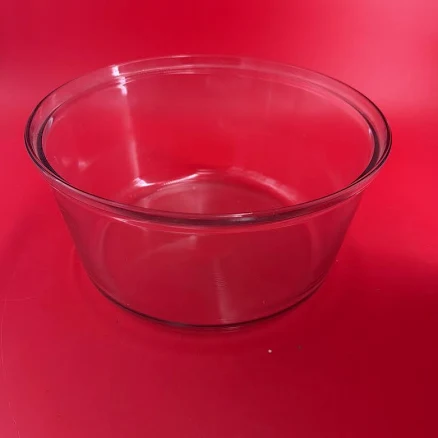
- borosilicate glass, bare uncoated
- We found no PFAS statement from the brand
- Thermal shock and fracture
2 hazards checked on this product, all on its full breakdown.
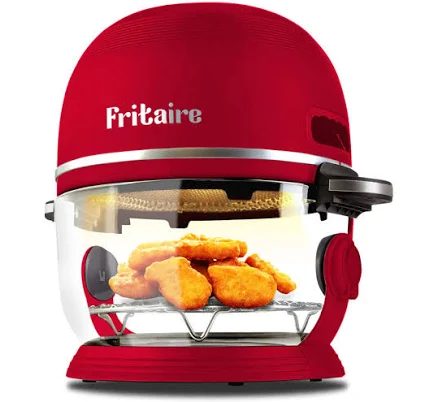
- borosilicate glass
- We found no PFAS statement from the brand
- Aluminum leaching from base/housing
4 hazards checked on this product, all on its full breakdown.
Find an alternative on Amazon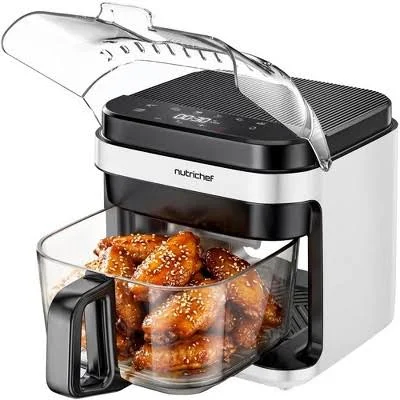
- glass bowl, stainless steel exterior
- We found no PFAS statement from the brand
- Thermal stress and glass breakage
2 hazards checked on this product, all on its full breakdown.
Find an alternative on AmazonMore air fryers grades
How we score, every product runs through the same public 0-100 rubric based on materials, coatings, brand disclosure, lab findings, and recalls. See the full methodology → Spotted a mistake? Report an error.