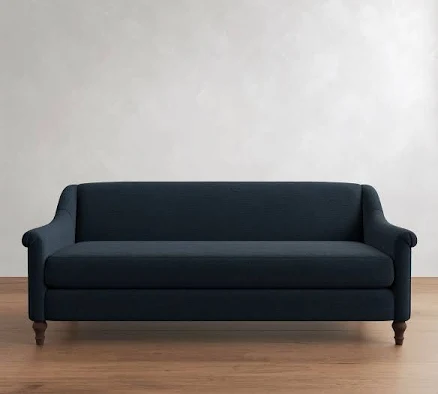
Pottery Barn · Upholstered Furniture
Pottery Barn Josie Upholstered Sofa 81.5" Polyester Wrapped Cushions
Unknown PFAS risk; stain-resistant polyester may contain legacy PFAS.
Pottery Barn does not disclose PFAS content or stain treatment chemistry for this sofa. Stain-resistant textiles commonly use PFAS-based finishes; contact brand for specifics.
The better-graded swap
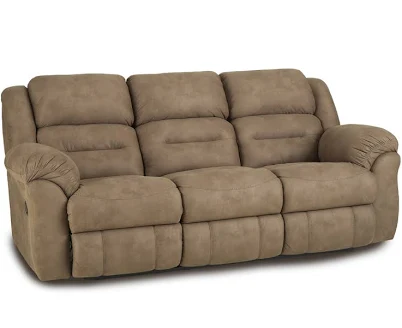
HomeStretch
Enzo Brown Sofa - Bob Mills Furniture - HomeStretch - Brown Sofas
75/100 safety
Same rubric that flunked this product. The swap earned Excellent.
Still want this one anyway? Check the price on Amazon. We’d swap it.
Material
polyester wrapped cushions with stain-resistant treatment
Lab data
No public lab test
You may also be interested in
Top-graded picks in the categories readers replace first, every one scored on the same rubric.

- polypropylene filter housing, carbon/sediment cartridge
- We found no PFAS statement from the brand
- Bacterial growth in spent cartridges
3 hazards checked on this product, all on its full breakdown.

Aquasure
Premier Series 75 GPD Under Sink Reverse Osmosis Water Filtration System
- RO membrane, carbon filters, stainless steel housing
- We found no PFAS statement from the brand
- Bacterial and microbial growth in housing and filters
4 hazards checked on this product, all on its full breakdown.

Avocado
Vegan Mattress
- organic cotton, natural latex, coconut coir, recycled steel coils
- The brand calls it PFAS-free, which we have not verified
- Heavy metals
2 hazards checked on this product, all on its full breakdown.
What Pottery Barn Josie Wrapped Cushions is made of, ingredients and materials
This sofa uses polyester-wrapped cushions treated with a stain-resistant finish, likely applied during manufacturing to resist water and oils. Polyester itself is a stable synthetic polymer, but the stain-resistant treatment is the concern, these coatings historically used PFAS (PFAS "forever chemicals") to achieve water and oil repellency, though some manufacturers have switched to alternatives. The polyester wrapping may also contain antimony as a catalyst used in polyester synthesis, though modern production typically minimizes residual antimony to trace levels.
What’s concerning
Waterproof / stain-resistant treatment
Water-repellent coating treatments have historically used PFAS.
Category baseline
The starting point for this type of product, before anything specific to this product is counted.
No PFAS disclosure
No public statement from the brand about PFAS in this product.
PFAS
Polyester upholstery is legally required to meet federal flammability standards (16 CFR 1633) in the US, which typically requires brominated or phosphorus-based flame retardants added to the foam or polyester backing. Pottery Barn does not disclose which retardants are used; some alternatives (such as halogenated compounds) can off-gas or leach into indoor air.
Source, ATSDR ↗Formaldehyde / VOCs
Polyester fabrics and adhesives used in cushion wrapping may contain trace formaldehyde or other volatile organic compounds released during the first weeks of ownership. This is worst in high-humidity or warm conditions and poses minimal risk to most users but may irritate sensitive individuals.
Source, ATSDR ↗Stain-resistant coating degradation over time
Water-repellent coating (water-repellent coating) coatings on polyester break down with repeated cleaning, abrasion, and weathering, potentially releasing particles or residual coating chemicals. Manufacturers do not typically disclose how degradation products behave or whether they off-gas.
Microplastic shedding from polyester
Polyester textiles can shed microfibers during use and cleaning, particularly on cushions subject to friction. While ingestion is unlikely, indoor accumulation of microplastics is a recognized environmental concern with unclear human health significance.
What’s reassuring
Antimony (polyester catalyst residue)
Antimony is used as a catalyst in polyester synthesis but residual amounts in finished fabric are typically negligible and not reported as a concern in upholstered furniture. No specific testing or concerns have been documented for Pottery Barn polyester products.
How is this PFAS grade calculated?
The brand's record and disclosure
Pottery Barn does not publicly disclose material safety testing, PFAS avoidance policies, or flame retardant chemistry for upholstered furniture on their website or in product documentation. The brand has no published sustainability certifications (such as GREENGUARD or Global Organic Textile Standard) for this product line that would third-party verify chemical safety. No recalls or safety controversies specific to Pottery Barn upholstery have been widely reported, but the lack of transparency on stain-resistant treatments and flame retardants is typical of mainstream furniture retailers.
How it compares in its category
Stain-resistant polyester upholstery is standard in mainstream furniture retail and carries the same PFAS uncertainty across most brands unless explicitly certified otherwise. Higher-end alternatives (such as certified organic cotton or wool blends, or brands with published PFAS-free pledges) command significant price premiums and are less stain-resistant. Budget and mid-market retailers rarely disclose flame retardant chemistry; Pottery Barn is neither exceptional nor worse than peers in this regard. The 81.5 inch size and polyester wrap indicate this is a conventional, mass-market sofa with cost-driven material selection.
If you buy it
Unpack and air out the sofa in a well-ventilated space for 48-72 hours before prolonged use to reduce volatile organic compound off-gassing from polyester, adhesives, and flame retardants. Avoid placing it in direct sunlight or near heat sources, as polyester can degrade and leach chemicals when heated above 140-160 degrees Fahrenheit. Use the manufacturer's recommended fabric cleaner for spot cleaning rather than water-based methods that may compromise the stain-resistant coating. Plan to replace cushion covers or the sofa itself within 5-7 years, as the stain-resistant treatment degrades with washing and UV exposure.
What is not known about PFAS in this product?
- Basis
- Model estimate, 40% confidence, not a lab result
- Lab test
- None on record for this exact product
- Brand statement
- Pottery Barn has made a specific claim
Formulations change between production runs, so check the current label. How we grade.
What are the PFAS-free alternatives to Pottery Barn Josie Upholstered Sofa 81.5" Polyester Wrapped Cushions?
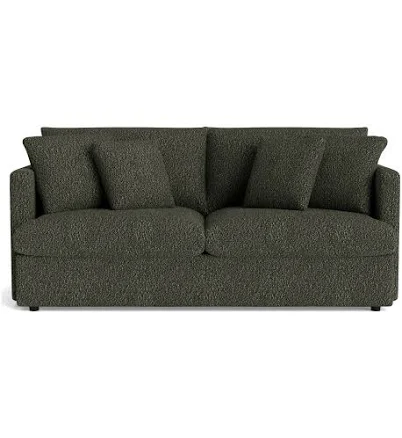
- polyurethane foam
- We found no PFAS statement from the brand
- Volatile Organic Compound (VOC) Off-Gassing
4 hazards checked on this product, all on its full breakdown.
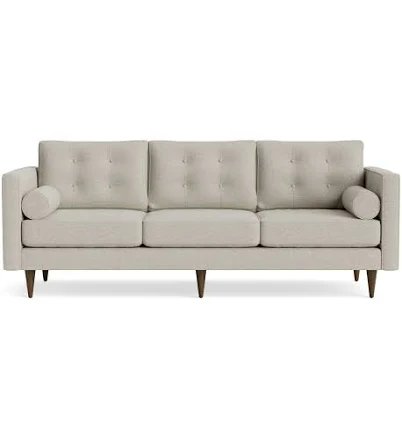
- Polyester upholstery fabric
- We found no PFAS statement from the brand
- Volatile organic compound (VOC) off-gassing
3 hazards checked on this product, all on its full breakdown.
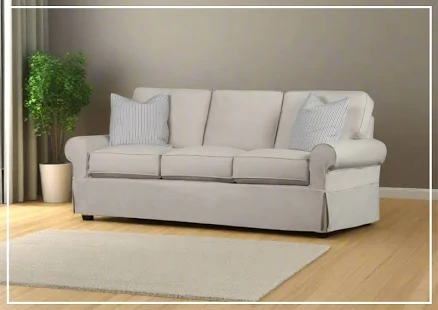
- John Linen, polyester blend upholstery
- We found no PFAS statement from the brand
- Formaldehyde / VOCs
4 hazards checked on this product, all on its full breakdown.
More upholstered furniture grades
How we score, every product runs through the same public 0-100 rubric based on materials, coatings, brand disclosure, lab findings, and recalls. See the full methodology → Spotted a mistake? Report an error.