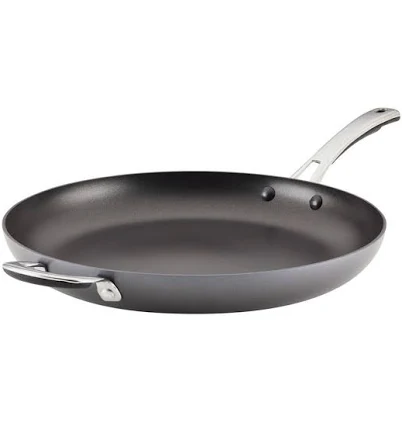
Rachael Ray Cook + Create Hard Anodized Nonstick Frying Pan
Nonstick coating chemistry not stated for this hard anodized aluminum pan.
This hard anodized aluminum frying pan is marketed with a nonstick coating, but the coating type and chemistry are not disclosed. Rachael Ray has no PFAS statement on record for this product.
The better-graded swap
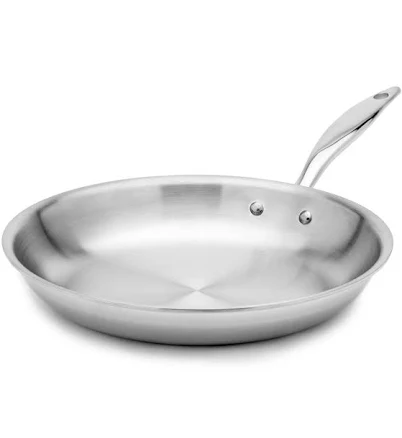
Heritage Steel
Heritage Steel Fry Pan
100/100 safety
Same rubric that flunked this product. The swap earned Excellent.
Still want this one anyway? Check the price on Amazon. We’d swap it.
Material
hard anodized aluminum with nonstick coating, type unspecified
Brand disclosure
Brand is silent on PFAS
Lab data
No public lab test
Is Rachael Ray Cook + Create Hard Anodized non-toxic? What it is made of
This pan uses hard anodized aluminum as its core, which undergoes electrochemical treatment to create a dense oxide layer that resists corrosion and leaching. The nonstick coating type is not disclosed by the brand, which is the critical gap. Hard anodized aluminum itself does not leach problematic aluminum levels under normal cooking, but the nonstick surface chemistry determines whether Teflon-type coating, PFOA, or PFAS alternatives are present. The combination of these two materials is common in mid-range cookware, but transparency about the coating is essential for informed purchase.
What’s concerning
Category baseline
The starting point for this type of product, before anything specific to this product is counted.
No PFAS disclosure
No public statement from the brand about PFAS in this product.
Non-stick, chemistry undisclosed
Marketed as non-stick without stating the coating chemistry.
Teflon-type coating fume risk (thermal degradation)
If the nonstick coating is Teflon-type coating-based, overheating above 500F can produce fumes. The product lacks explicit temperature warnings or coating type disclosure, making risk assessment difficult.
Coating degradation and migration
Nonstick coatings on mid-range hard anodized pans are susceptible to chipping, flaking, and scratching over time. Once compromised, coating particles can enter food; exact composition of degraded material is unknown without disclosure.
Lack of material transparency
Brand silence on nonstick coating type, PFAS status, and manufacturing certifications is a red flag for informed consumers. Inability to verify coating chemistry prevents full safety assessment and limits recourse if health concerns emerge.
What’s reassuring
Aluminum leaching
Hard anodization significantly reduces aluminum ion release compared to bare aluminum. No reports of elevated aluminum levels from hard anodized cookware under normal use. Acidic foods may cause minor leaching, but levels are lower concern for cookware use.
Lead
This product does not appear to use enameled or glazed surfaces on the cooking area. Hard anodized surfaces do not rely on ceramic coatings, so this hazard class is not applicable.
Source, ATSDR ↗The full breakdown
The brand's record and disclosure
Rachael Ray cookware does not publicly disclose nonstick coating chemistry or provide certifications like GFSI, NSF, or PFOA-free pledges on product pages. The brand has not faced major documented recalls or safety controversies specific to this line, but the absence of transparency on PFAS status is noteworthy given industry movement toward disclosure. No independent testing results of this specific product are on record in public databases.
How it compares in its category
Hard anodized aluminum nonstick pans occupy the mid-market segment. Competitors like Calphalon and T-fal also use hard anodized bases but often label their coating explicitly (e.g., 'Teflon-type coating-free' or 'ceramic-reinforced'). Premium brands like All-Clad and Le Creuset tend to offer greater material transparency and longer warranties. Budget nonstick pans from unknown manufacturers carry higher risk of coating degradation and unlabeled coatings. This Rachael Ray product sits in a crowded, murky middle where brand recognition does not guarantee material clarity.
If you buy it
Avoid temperatures above 500F; most nonstick coatings begin to degrade or off-gas at higher heat. Hand-wash only; dishwashers accelerate coating wear. Inspect the cooking surface regularly for scratches, peeling, or discoloration; replace the pan if the coating shows signs of flaking or wear. Store with protective padding to avoid impact damage. Use wooden or silicone utensils exclusively to prevent scratching the nonstick layer.
What we don’t know
- Basis
- Model estimate, 42% confidence, not a lab result
- Lab test
- None on record for this exact product
- Brand statement
- Rachael Ray has made none
Formulations change between production runs, so check the current label. How we grade.
Better-graded alternatives in Cookware
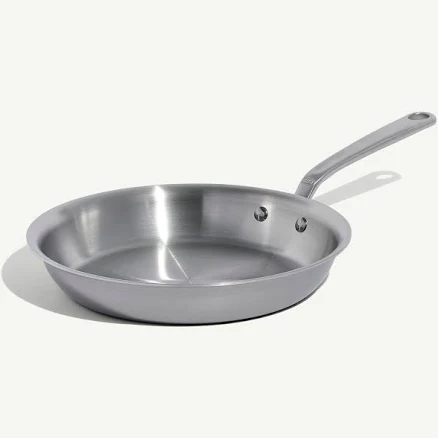
Made In
Stainless Clad Fry Pan
- Stainless steel clad construction, no nonstick coating
- The brand calls it PFAS-free, which we have not verified
- Clad separation or delamination over time
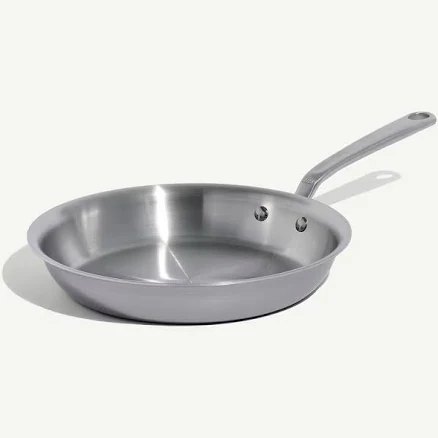
Made In
10' Stainless Clad Frying Pan
- stainless steel clad construction, no nonstick coating
- The brand calls it PFAS-free, which we have not verified
- Nickel leaching from stainless steel
3 hazards checked on this product. See all of them.
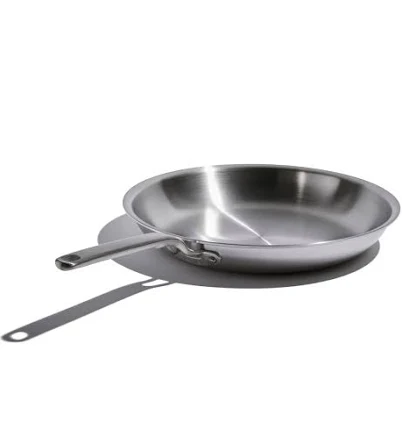
Heritage Steel
Eater Fry Pan
- Clad stainless steel, no coating
- The brand calls it PFAS-free, which we have not verified
- Metal ion release during cooking (iron, nickel, chromium)
More cookware grades
How we score, every product runs through the same public 0-100 rubric based on materials, coatings, brand disclosure, lab findings, and recalls. See the full methodology → Spotted a mistake? Report an error.