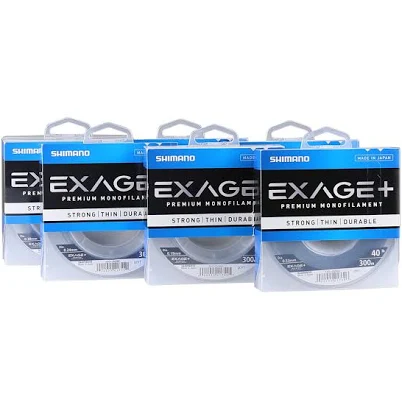
shimano Exage Monofilament Fishing Line
Low concern; standard monofilament rarely contains PFAS without transparency.
This standard nylon monofilament lacks PFAS-prone coatings like Teflon-type coating or Teflon-family coating. Shimano provides no public material disclosure or testing.
We flunk more products than we pass. This one earned its grade. How we grade
Material
Monofilament nylon fishing line
Brand disclosure
Brand is silent on PFAS
Lab data
No public lab test
You may also be interested in
Top-graded picks in the categories readers replace first, every one scored on the same rubric.

- polypropylene filter housing, carbon/sediment cartridge
- We found no PFAS statement from the brand
- Bacterial growth in spent cartridges
3 hazards checked on this product, all on its full breakdown.

Aquasure
Premier Series 75 GPD Under Sink Reverse Osmosis Water Filtration System
- RO membrane, carbon filters, stainless steel housing
- We found no PFAS statement from the brand
- Bacterial and microbial growth in housing and filters
4 hazards checked on this product, all on its full breakdown.

Avocado
Vegan Mattress
- organic cotton, natural latex, coconut coir, recycled steel coils
- The brand calls it PFAS-free, which we have not verified
- Heavy metals
2 hazards checked on this product, all on its full breakdown.
What shimano Exage Monofilament Fishing Line is made of, ingredients and materials
Shimano Exage Monofilament is extruded nylon polymer, a synthetic thermoplastic engineered for tensile strength and knot-holding under load. Monofilament nylon does not rely on coatings, glazes, or chemical finishes that introduce leaching risks; the material itself is the functional component. Unlike braided lines, mono has no voids or woven structures that trap contaminants, making it chemically stable in freshwater and saltwater use. Standard nylon monofilament is not known to degrade or leach hazardous compounds during normal fishing.
What’s concerning
Category baseline
The starting point for this type of product, before anything specific to this product is counted.
No PFAS disclosure
No public statement from the brand about PFAS in this product.
UV degradation and material embrittlement
Nylon monofilament degrades under sunlight exposure, becoming brittle and prone to breakage. This is a performance rather than toxicological hazard, but failed line can strand fish and create litter.
Microplastic shedding from wear
Nylon breaks down into particles through abrasion on guides and through the water; the extent of microplastic contribution from fishing line relative to other sources is not quantified and remains a research gap rather than an established consumer risk.
What’s reassuring
Base material not linked to PFAS
The main material recorded for this product is not one associated with PFAS.
No established leaching or migration hazards
Nylon monofilament does not leach monomers, plasticizers, or heavy metals into water at normal temperatures. No public data on Shimano Exage specifically, but the material class has no documented bioaccumulation or toxicity pathway in aquatic use.
Thermal stability under storage
Nylon is stable at room temperature and does not off-gas or degrade into harmful compounds during typical storage. Exposure to extreme heat (above 80C) can soften the polymer but is unlikely in consumer use.
How is this PFAS grade calculated?
The brand's record and disclosure
Shimano is a major Japanese fishing and cycling component manufacturer with no public disclosure of material composition, heavy metals testing, or third-party certifications for fishing line safety. No recalls or safety controversies on record for Exage monofilament. The brand's silence on PFAS and other chemical details is typical of the fishing line industry; transparency is not a competitive differentiator in this category and no regulatory mandate exists for disclosure.
How it compares in its category
Exage monofilament sits in the mid-market segment of nylon fishing lines; it is not premium carbon-coated or specialty formulated. Comparable monofilaments (Berkley Trilene, Yo-Zuri, Seaguar) have equally limited public composition data. Braided and fluorocarbon alternatives introduce different material profiles but no clear safety advantage; all mainstream fishing lines lack hazard testing by consumer safety bodies, reflecting the niche nature of the product category.
If you buy it
Store in cool, dry conditions away from direct sunlight to slow UV degradation, which yellows and weakens nylon over time. Replace line annually or after heavy use, as micro-cracks from casting stress and UV exposure compromise knot strength. Do not heat or boil line for storage or treatment; nylon will soften and degrade. Dispose of spent line in trash or a designated recycling program; do not discard in water.
What is not known about PFAS in this product?
- Basis
- Model estimate, 72% confidence, not a lab result
- Lab test
- None on record for this exact product
- Brand statement
- Shimano has made none
Formulations change between production runs, so check the current label. How we grade.
More fishing line grades
How we score, every product runs through the same public 0-100 rubric based on materials, coatings, brand disclosure, lab findings, and recalls. See the full methodology → Spotted a mistake? Report an error.