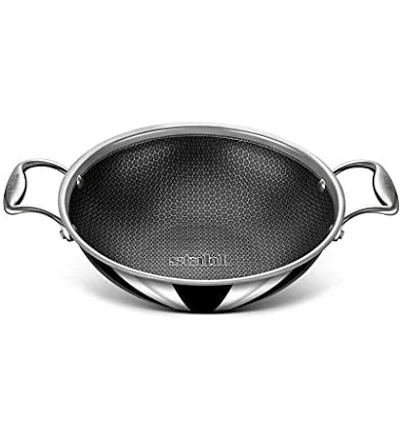
Stahl Artisan Hybrid Triply Non Stick Kadai with Lid, Stainless Steel Kadai for Cooking, Triply Kadhai Metal Spatula Friendly, Induction & Gas Stove, Is It Non-Toxic?
Nonstick coating undisclosed, PFAS risk unclear.
Stahl provides zero information about their nonstick coating or PFAS content, even though hybrid triply cookware typically uses various coatings.
The better-graded swap
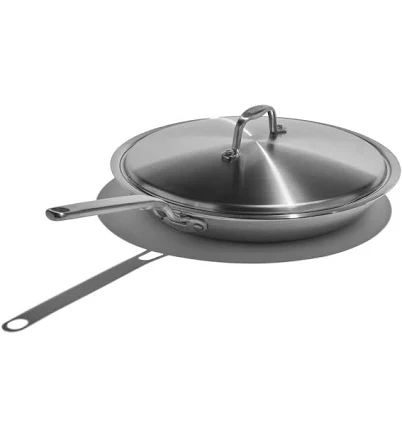
Heritage Steel
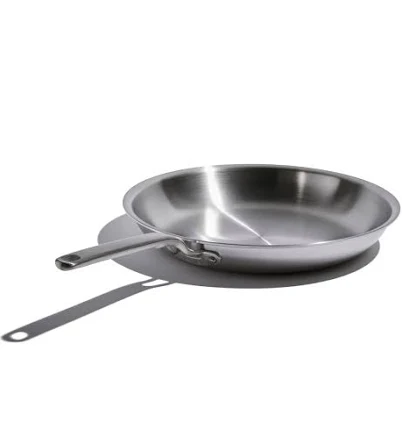
Heritage Steel Eater 12" Fry Pan with Lid
100/100 safety
Same rubric that flunked this product. The swap earned Excellent.
Still want this one anyway? Check the price on Amazon. We’d swap it.
Material
Stainless steel with unspecified non-stick coating
Brand disclosure
Brand is silent on PFAS
Lab data
No public lab test
You may also be interested in
Top-graded picks in the categories readers replace first, every one scored on the same rubric.

- polypropylene filter housing, carbon/sediment cartridge
- We found no PFAS statement from the brand
- Bacterial growth in spent cartridges
3 hazards checked on this product, all on its full breakdown.

Aquasure
Premier Series 75 GPD Under Sink Reverse Osmosis Water Filtration System
- RO membrane, carbon filters, stainless steel housing
- We found no PFAS statement from the brand
- Bacterial and microbial growth in housing and filters
4 hazards checked on this product, all on its full breakdown.

Avocado
Vegan Mattress
- organic cotton, natural latex, coconut coir, recycled steel coils
- The brand calls it PFAS-free, which we have not verified
- Heavy metals
2 hazards checked on this product, all on its full breakdown.
Is Stahl Artisan Hybrid Triply Non Gas Stove non-toxic? What it is made of
This kadai uses a stainless steel body with an unspecified non-stick coating applied to the cooking surface. The triply construction (three-layer base) refers to the bottom heat distribution layers, which is a cookware strength, not a safety concern. The critical unknown is the non-stick coating chemistry, it could be Teflon-type coating-based (conventional Teflon), Teflon-type coating-free polymer, or ceramic, each with different safety profiles. Without manufacturer disclosure, you cannot confirm whether PFAS compounds are present or what fume risk exists at high temperatures.
What’s concerning
Category baseline
The starting point for this type of product, before anything specific to this product is counted.
No PFAS disclosure
No public statement from the brand about PFAS in this product.
Non-stick, chemistry undisclosed
Marketed as non-stick without stating the coating chemistry.
Non-stick coating thermal stability and fume risk (Teflon-type coating-based)
If the coating is Teflon-type coating (Teflon), heating beyond 500F can degrade the polymer and release fluorinated compounds. Stahl does not disclose coating type, so thermal risk cannot be ruled out. Standard use on gas or induction stoves at normal cooking temperatures is unlikely to trigger this, but empty preheating or high searing could pose risk.
Coating degradation and metal leaching
Non-stick coatings on cookware degrade with age and mechanical wear; once the non-stick layer is compromised, the underlying stainless steel is exposed. Stainless steel itself is not a material linked to PFAS, and does not leach nickel or chromium under normal cooking conditions, but visible peeling or flaking of the coating is a signal to stop using the pan.
Lack of safety certification and disclosure
The absence of FDA, LFGB, or explicit PFAS-free certification is not proof of danger, but it reflects lower transparency standards compared to market leaders. This makes it harder for you to verify whether manufacturing quality and material sourcing meet international safety baselines.
What’s reassuring
Aluminum leaching (if present in base layers)
The product is described as stainless steel triply construction, which typically means the core is stainless or copper, not aluminum. No aluminum content is indicated, so leaching risk is not a concern for this specific product.
Lead
Stainless steel cookware does not use ceramic glazes or enamel coatings, so traditional lead/cadmium risks from glazing do not apply. The non-stick polymer coating would not contain these heavy metals unless formulated with contaminated pigments, which is not a documented issue for modern non-stick coatings.
Source, ATSDR ↗How is this PFAS grade calculated?
The brand's record and disclosure
Stahl is an Indian cookware manufacturer with limited public transparency on material composition and safety certifications in English-language sources. No major recalls or safety controversies are documented in publicly available records for this brand. The company does not appear to provide third-party certifications (FDA, LFGB, or PFAS-free claims) for this product line, and coating type is not specified on typical product listings. This silence on non-stick chemistry is a red flag for informed purchasing, as responsible brands now routinely disclose whether coatings are Teflon-type coating-based or alternative.
How it compares in its category
Stainless steel non-stick cookware at this apparent price point is common in South Asian markets; the triply base design is a genuine feature that reduces hot spots. However, many competitors (including major brands like Calphalon, Scanpan, and GreenPan) now explicitly state whether their coatings are Teflon-type coating-free or PFOA-free, or provide independent certifications. The lack of disclosure from Stahl puts this product below the transparency standard set by premium and even mid-range alternatives. Ceramic-coated and proven Teflon-type coating-free options are widely available for similar pricing.
If you buy it
Contact the manufacturer or seller to confirm the non-stick coating type before purchase; do not assume it is PFAS-free without written confirmation. Use the kadai only up to moderate heat (never above 400-450F/200-230C) to minimize fume risk if Teflon-type coating is present; avoid preheating empty or exposing the pan to direct flame on its sides. Inspect the coating monthly for scratches, peeling, or discoloration; discontinue use immediately if the non-stick layer degrades, as stainless steel underneath will react differently with acidic foods. Hand-wash with soft sponges and avoid metal utensils that can accelerate coating wear.
What is not known about PFAS in this product?
- Basis
- Model estimate, 35% confidence, not a lab result
- Lab test
- None on record for this exact product
- Brand statement
- Stahl has made none
Formulations change between production runs, so check the current label. How we grade.
What are the PFAS-free alternatives to Stahl Artisan Hybrid Triply Non Stick Kadai with Lid, Stainless Steel Kadai for Cooking, Triply Kadhai Metal Spatula Friendly, Induction & Gas Stove?
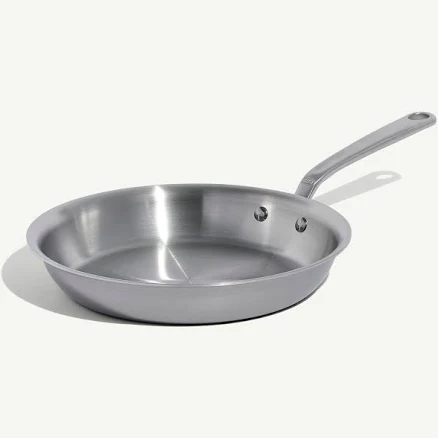
- Stainless steel clad construction, no nonstick coating
- The brand calls it PFAS-free, which we have not verified
- Clad separation or delamination over time
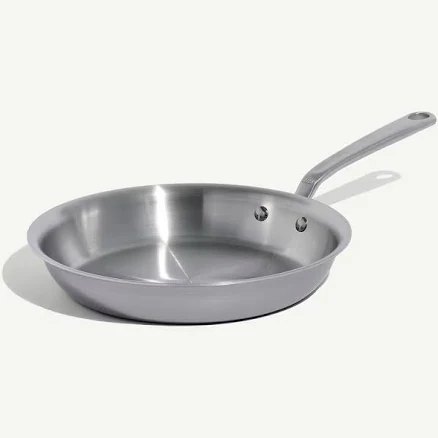
- stainless steel clad construction, no nonstick coating
- The brand calls it PFAS-free, which we have not verified
- Nickel leaching from stainless steel
3 hazards checked on this product, all on its full breakdown.
- Clad stainless steel, no coating
- The brand calls it PFAS-free, which we have not verified
- Metal ion release during cooking (iron, nickel, chromium)
More cookware grades
How we score, every product runs through the same public 0-100 rubric based on materials, coatings, brand disclosure, lab findings, and recalls. See the full methodology → Spotted a mistake? Report an error.