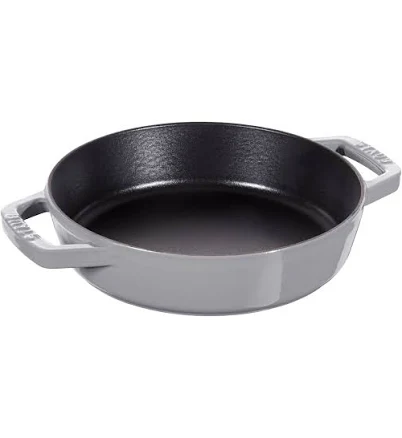
Staub Frying Pan Handles
Plastic with no coating described, and no PFAS statement from the brand.
The product information we reviewed describes phenolic resin handle, with no applied coating named. A flexible cutting mat does not need a non-stick coating, and the listing does not describe one. The brand has published no PFAS statement for it.
The better-graded swap
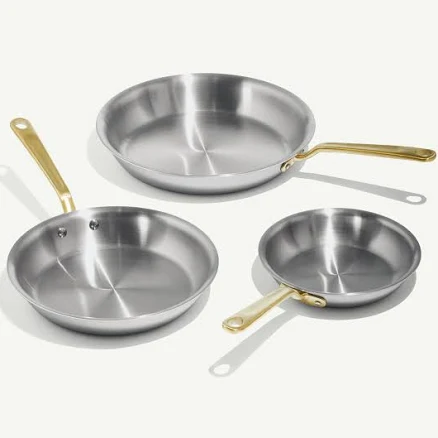
Made In
Made In Stainless Clad Frying Pan Set 3-Piece Professional-Grade 5-Layer Metal Construction
100/100 safety
Same rubric that flunked this product. The swap earned Excellent.
Still want this one anyway? Check the price on Amazon. We’d swap it.
Material
Phenolic resin handle
Brand disclosure
Brand is silent on PFAS
Lab data
No public lab test
Are Staub Frying Pan Handles non-toxic? What it is made of
Phenolic resin (also called Bakelite or phenol-formaldehyde plastic) is a thermosetting polymer formed by cross-linking phenol and formaldehyde under heat and pressure. Once cured, the resin is chemically stable and does not leach monomers or residual formaldehyde under typical cooking temperatures (under 200°C / 392°F). Phenolic handles are chosen for cookware because they have high heat resistance, low thermal conductivity (does not transfer heat to the hand), and excellent structural rigidity.
What’s concerning
Category baseline
The starting point for this type of product, before anything specific to this product is counted.
No PFAS disclosure
No public statement from the brand about PFAS in this product.
Thermal degradation and polymer breakdown
Phenolic resin begins to soften and may discolor above 150, 160°C and may degrade if exposed to prolonged temperatures above 200°C. At normal stovetop temperatures (100, 150°C), risk is minimal; use outside stated heat limits poses potential for charring, smoke, or minor degradation products, though acute toxicity risk is low.
What’s reassuring
Base material not linked to PFAS
The main material recorded for this product is not one associated with PFAS.
Formaldehyde / VOCs
Phenolic resin undergoes complete cross-linking during manufacture; residual formaldehyde monomer is negligible in cured handles and does not mobilize at cooking temperatures. No formaldehyde off-gassing has been reported for cured phenolic cookware handles in published testing.
Source, ATSDR ↗Lead
Staub phenolic handles are typically black or dark brown; no public testing or recalls have identified heavy-metal pigments in Staub handles. Phenolic resin itself does not contain lead or cadmium; any colorant would be applied during manufacture and is subject to EU and US material regulations, though the brand does not disclose pigment composition.
Source, ATSDR ↗Coating degradation or delamination
Phenolic resin handles do not have a separate coating; the material is solid throughout. Discoloration or slight surface wear over years of use is cosmetic and does not compromise safety or integrity.
Microplastic or particulate shedding
Phenolic resin is hard and chemically inert; it does not shed microplastics during normal use or dishwashing. Breakage or cracking would be visible and would not result in shedding of fine particles into food.
The full breakdown
The brand's record and disclosure
Staub (owned by Zwilling J.A. Henckels, a German manufacturer) is known for premium cookware with enamel-coated cast iron and stainless steel products. The brand does not publish detailed material safety statements or third-party certifications (such as NSF or FDA compliance documentation) on its website. No recalls or safety controversies involving Staub cookware handles have been reported in public databases. The brand's silence on PFAS and material disclosures is typical for high-end cookware makers, reflecting industry practice rather than a red flag.
How it compares in its category
Phenolic resin handles are standard across mid-to-premium cookware brands (Le Creuset, Staub, All-Clad, Cuisinart) and are considered industry baseline for heat-resistant handles. Silicone-coated handles offer similar safety but may degrade faster at high temperatures; metal handles conduct heat and require care to avoid burns. Wood handles offer lower heat transfer but are porous and less durable; phenolic resin avoids both drawbacks and does not require maintenance or replacement as frequently.
If you buy it
Avoid exposing the handle to sustained direct flame or temperatures above 200°C (common for stovetop cooking); dishwasher-safe phenolic handles may discolor but retain their structural integrity. Do not use the pan under a broiler or in an oven above the manufacturer's stated maximum (typically 250, 260°C for Staub cookware). Inspect the handle for cracks or chips; any damage exposes the underlying resin and may require replacement. Phenolic handles do not require seasoning or special maintenance beyond normal washing.
What we don’t know
- Basis
- Model estimate, 72% confidence, not a lab result
- Lab test
- None on record for this exact product
- Brand statement
- Staub has made none
Formulations change between production runs, so check the current label. How we grade.
Better-graded alternatives in Cookware
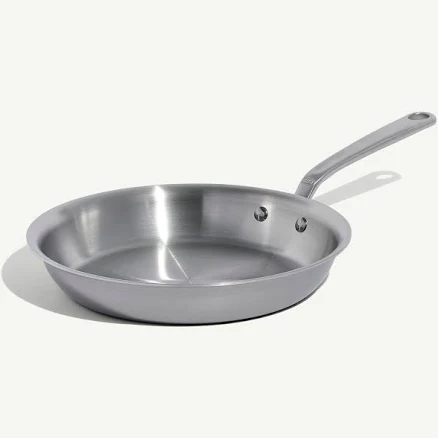
Made In
Stainless Clad Fry Pan
- Stainless steel clad construction, no nonstick coating
- The brand calls it PFAS-free, which we have not verified
- Clad separation or delamination over time
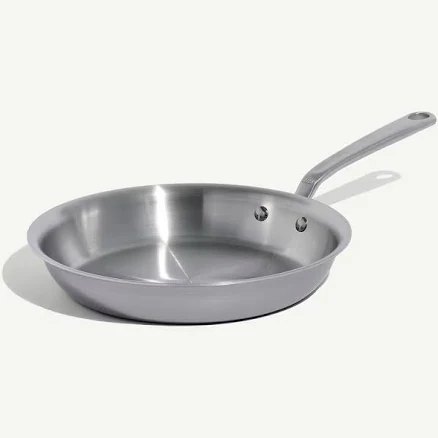
Made In
10' Stainless Clad Frying Pan
- stainless steel clad construction, no nonstick coating
- The brand calls it PFAS-free, which we have not verified
- Nickel leaching from stainless steel
3 hazards checked on this product. See all of them.
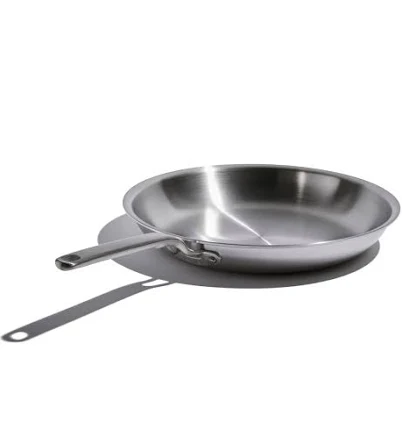
Heritage Steel
Eater Fry Pan
- Clad stainless steel, no coating
- The brand calls it PFAS-free, which we have not verified
- Metal ion release during cooking (iron, nickel, chromium)
More cookware grades
How we score, every product runs through the same public 0-100 rubric based on materials, coatings, brand disclosure, lab findings, and recalls. See the full methodology → Spotted a mistake? Report an error.