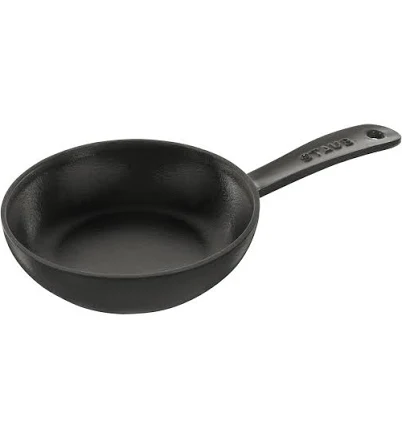
Staub Mini Skillet Frying Pan
Plastic with no coating described, and no PFAS statement from the brand.
The product information we reviewed describes enameled cast iron, with no applied coating named. A flexible cutting mat does not need a non-stick coating, and the listing does not describe one. The brand has published no PFAS statement for it.
The better-graded swap
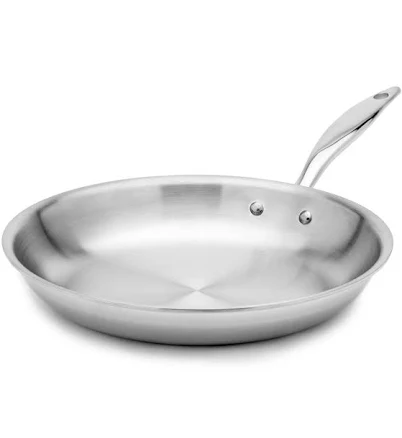
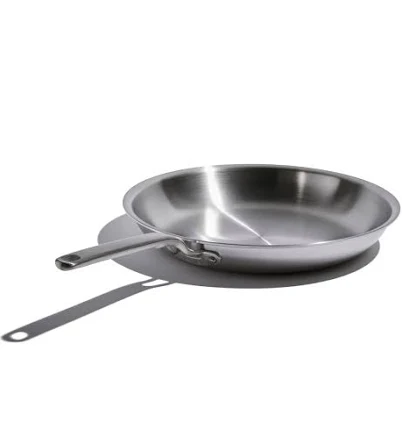
Heritage Steel
Heritage Steel Fry Pan
100/100 safety
Same rubric that flunked this product. The swap earned Excellent.
Still want this one anyway? Check the price on Amazon. We’d swap it.
Material
Enameled cast iron
Brand disclosure
Brand is silent on PFAS
Lab data
No public lab test
Is Staub Mini Skillet Frying Pan non-toxic? What it is made of
The Staub Mini Skillet is enameled cast iron, a cast iron core coated with a vitreous enamel (fused glass-like surface). This enamel layer is the cooking surface and barrier between food and the iron base. Enameled cast iron does not require seasoning like bare cast iron, and the enamel prevents iron leaching into acidic foods. The material class has a long history of use without documented PFAS-related concerns when the enamel coating remains intact.
What’s concerning
Category baseline
The starting point for this type of product, before anything specific to this product is counted.
No PFAS disclosure
No public statement from the brand about PFAS in this product.
Enamel coating degradation and spalling
Enameled cast iron can chip or flake if subjected to thermal shock, dropped, or subjected to prolonged acidic contact. Once compromised, the exposed cast iron can corrode and shed particles into food. This is a mechanical risk rather than a manufacturing defect and depends on use and care.
What’s reassuring
Base material not linked to PFAS
The main material recorded for this product is not one associated with PFAS.
Lead
No recalls or documented cases of lead/cadmium in Staub enameled cookware are on record. EU production standards restrict heavy metals in food-contact ceramics and enamels; however, Staub does not publish independent testing results for this specific product.
Source, ATSDR ↗Iron leaching (when enamel is intact)
The intact enamel layer prevents direct iron contact with food. Iron leaching is not a concern for this product unless the enamel is damaged or chipped.
Teflon-type coating or synthetic nonstick fume hazard
Enameled cast iron does not use Teflon-type coating (Teflon) or other Teflon-family coating nonstick coatings, so fume risk from polymer degradation at high heat does not apply.
Aluminum leaching
Cast iron and enamel do not contain or shed aluminum; this hazard is not relevant to this product.
The full breakdown
The brand's record and disclosure
Staub (owned by Zwilling J.A. Henkel) does not publish a dedicated PFAS or chemical safety statement for this product line. The brand has no known recalls or established safety controversies specific to enameled cookware coatings. Staub cookware is made in France and Germany under established EU manufacturing standards that restrict heavy metals and hazardous substances in food contact surfaces, though the brand does not volunteer testing data or third-party certifications for this skillet.
How it compares in its category
Enameled cast iron like Staub sits in the middle-to-premium tier of cookware safety. It avoids Teflon-type coating (Teflon) fume risk entirely and does not rely on chemical non-stick treatments. Unlike some ceramic or nonstick coatings, enamel does not degrade into microparticles under normal use. Compared to bare cast iron, the enamel eliminates iron leaching but introduces the small risk of chipping, exposing the metal beneath if the coating fails.
If you buy it
Use on medium-to-medium-high heat; enameled cast iron retains heat well and does not require high flame. Avoid thermal shock (do not move from hot stove directly into cold water), which can crack the enamel. Inspect the enamel regularly for chips, cracks, or flaking. If the enamel is damaged or peeling, discontinue use to prevent iron particles and corrosion. Hand wash gently; aggressive scrubbing can wear the enamel over time.
What we don’t know
- Basis
- Model estimate, 72% confidence, not a lab result
- Lab test
- None on record for this exact product
- Brand statement
- Staub has made none
Formulations change between production runs, so check the current label. How we grade.
Better-graded alternatives in Cookware
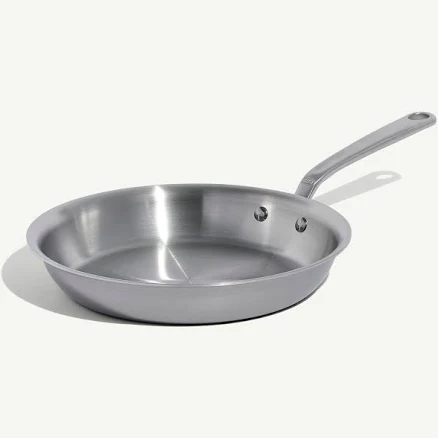
Made In
Stainless Clad Fry Pan
- Stainless steel clad construction, no nonstick coating
- The brand calls it PFAS-free, which we have not verified
- Clad separation or delamination over time
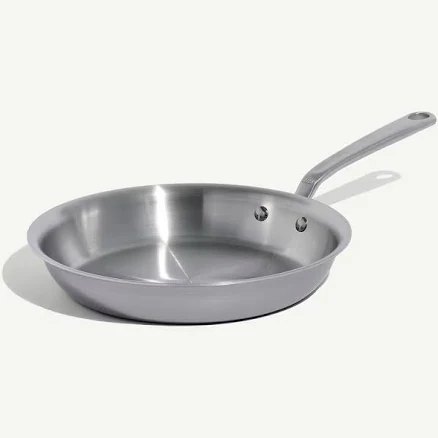
Made In
10' Stainless Clad Frying Pan
- stainless steel clad construction, no nonstick coating
- The brand calls it PFAS-free, which we have not verified
- Nickel leaching from stainless steel
3 hazards checked on this product. See all of them.
Heritage Steel
Eater Fry Pan
- Clad stainless steel, no coating
- The brand calls it PFAS-free, which we have not verified
- Metal ion release during cooking (iron, nickel, chromium)
More cookware grades
How we score, every product runs through the same public 0-100 rubric based on materials, coatings, brand disclosure, lab findings, and recalls. See the full methodology → Spotted a mistake? Report an error.