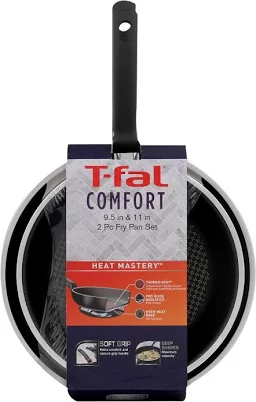
T-Fal Cook & Strain Nonstick Fry Pan Cookware Set, Is It Non-Toxic?
Teflon-type coating nonstick carries traditional PFAS concern, no brand statement.
T-Fal Cook & Strain uses standard Teflon-type coating nonstick coating, a Teflon-family coating with historical PFAS associations. The brand offers no disclosure about PFAS or alternative options.
The better-graded swap
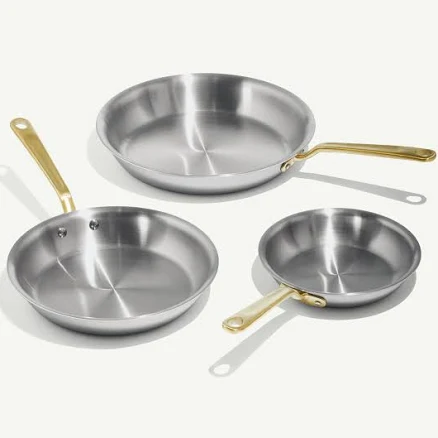
Made In
Made In Stainless Clad Frying Pan Set 3-Piece Professional-Grade 5-Layer Metal Construction
100/100 safety
Same rubric that flunked this product. The swap earned Excellent.
Still want this one anyway? Check the price on Amazon. We’d swap it.
Material
Teflon-type coating nonstick coating (Teflon equivalent)
Lab data
No public lab test
You may also be interested in
Top-graded picks in the categories readers replace first, every one scored on the same rubric.

- polypropylene filter housing, carbon/sediment cartridge
- We found no PFAS statement from the brand
- Bacterial growth in spent cartridges
3 hazards checked on this product, all on its full breakdown.

Aquasure
Premier Series 75 GPD Under Sink Reverse Osmosis Water Filtration System
- RO membrane, carbon filters, stainless steel housing
- We found no PFAS statement from the brand
- Bacterial and microbial growth in housing and filters
4 hazards checked on this product, all on its full breakdown.

Avocado
Vegan Mattress
- organic cotton, natural latex, coconut coir, recycled steel coils
- The brand calls it PFAS-free, which we have not verified
- Heavy metals
2 hazards checked on this product, all on its full breakdown.
Is T-Fal Cook & Strain Pan Cookware Set non-toxic? What it is made of
T-Fal Cook & Strain uses Teflon-type coating (polytetrafluoroethylene) nonstick coating bonded to an aluminum core, likely with a stainless steel or hard-anodized exterior. Teflon-type coating itself is chemically inert at normal cooking temperatures (below 260°C/500°F), but degradation begins above that threshold, releasing toxic fumes (polymer fume fever). The aluminum base is separated from food by the Teflon-type coating barrier, so direct leaching is unlikely if the coating remains intact. The straining lid (typically silicone or stainless steel components) adds complexity to durability tracking.
What’s concerning
Category baseline
The starting point for this type of product, before anything specific to this product is counted.
No PFAS disclosure
No public statement from the brand about PFAS in this product.
PTFE / Teflon confirmed
Uses Teflon-type coating (Teflon), a Teflon-family coating in the PFAS family.
Teflon-type coating fume inhalation risk (thermal degradation)
Overheating above 260°C (common with empty pan preheating or high stovetop settings) causes Teflon-type coating to release toxic fumes that can trigger polymer fume fever (fever, chills, respiratory irritation). This is a known hazard of all Teflon-type coating cookware, not specific to T-Fal, but depends entirely on user discipline.
Coating degradation and spallation (peeling)
Teflon-type coating coatings wear naturally with use, especially if scratched by metal utensils or abrasive cleaners. As the nonstick surface degrades, small polymer flakes can enter food; long-term ingestion risk is unclear, but is undesirable and signals pan end-of-life.
Aluminum core leaching (if coating fails)
Aluminum itself does not leach significantly at normal pH, but if the Teflon-type coating barrier is compromised by deep scratches or peeling, acidic foods may increase aluminum migration. This is a secondary concern only if coating integrity is lost.
Dishwasher-induced coating failure
While labeled nonstick cookware, Teflon-type coating coatings degrade significantly faster in dishwashers due to thermal shock and detergent exposure. Hand washing only is essential for long product life and to avoid premature coating loss.
What’s reassuring
Lid/component material unknowns
T-Fal does not publicly specify the exact material of the straining lid in this set. If silicone is used, off-gassing of volatile organics under heat is possible but not documented for this model. Stainless steel components are inert.
How is this PFAS grade calculated?
The brand's record and disclosure
Tefal (T-Fal) is owned by Groupe SEB and uses conventional Teflon-type coating coatings without public commitment to PFOA-free or alternative formulations. The brand provides no detailed transparency statements on PFAS reduction or third-party testing for this cookware line. No major recalls specific to nonstick degradation or coating failure have been widely documented for this product model, though Teflon-type coating cookware as a class carries the inherent fume risk. Tefal's warranty typically covers manufacturing defects but not normal wear of the nonstick surface.
How it compares in its category
Teflon-type coating nonstick cookware remains the most common and affordable option; T-Fal is a mid-market brand (better quality control than budget alternatives, less premium positioning than All-Clad or Le Creuset). Ceramic and hard-anodized aluminum pans avoid Teflon-type coating altogether but sacrifice nonstick performance and durability under typical use. Cast iron and stainless steel eliminate polymer risks but require more oil and skill. T-Fal's straining feature adds convenience but increases component count and potential failure points.
If you buy it
Never exceed 260°C (500°F) internal temperature; use low to medium heat for most tasks and avoid preheating empty pans for more than 1-2 minutes. Hand wash only (dishwashers accelerate coating breakdown) and replace the pan if the nonstick surface becomes visibly scratched, flaking, or sticky despite washing. Expect useful life of 3-5 years with careful use; budget for replacement as an ongoing cost. Use wooden or silicone utensils exclusively and never use metal scouring pads.
What is not known about PFAS in this product?
- Basis
- Model estimate, 78% confidence, not a lab result
- Lab test
- None on record for this exact product
- Brand statement
- T-fal has made a specific claim
Formulations change between production runs, so check the current label. How we grade.
What are the PFAS-free alternatives to T-Fal Cook & Strain Nonstick Fry Pan Cookware Set?
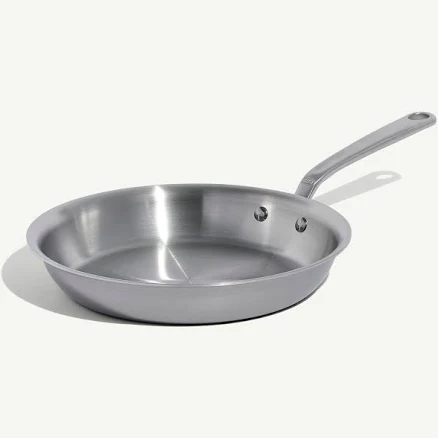
- Stainless steel clad construction, no nonstick coating
- The brand calls it PFAS-free, which we have not verified
- Clad separation or delamination over time
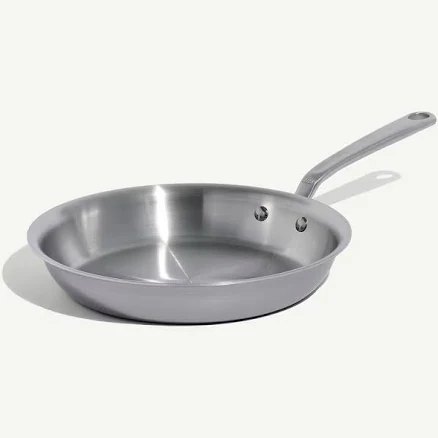
- stainless steel clad construction, no nonstick coating
- The brand calls it PFAS-free, which we have not verified
- Nickel leaching from stainless steel
3 hazards checked on this product, all on its full breakdown.
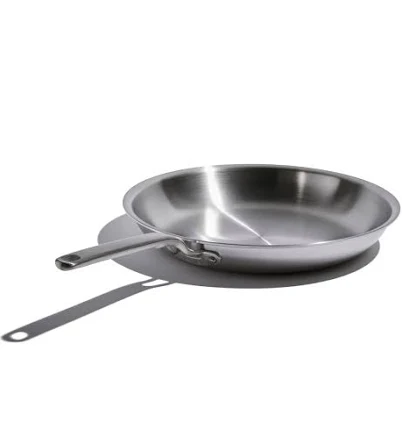
- Clad stainless steel, no coating
- The brand calls it PFAS-free, which we have not verified
- Metal ion release during cooking (iron, nickel, chromium)
More cookware grades
How we score, every product runs through the same public 0-100 rubric based on materials, coatings, brand disclosure, lab findings, and recalls. See the full methodology → Spotted a mistake? Report an error.