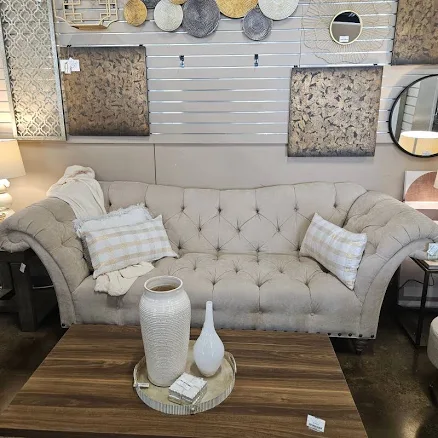
Thomasville Furniture · Upholstered Furniture
Thomasville Ella tufted sofa beige - 98"Wx35"Dx39"H
Lower PFAS risk. Standard upholstery rarely treated with PFAS.
Thomasville Ella is a tufted sofa with no disclosed PFAS treatments or stain-resistance coatings. Typical upholstered furniture carries lower PFAS concern unless marketed with stain protection.
We flunk more products than we pass. This one earned its grade. How we grade
Material
upholstered fabric, likely polyester blend or cotton
Lab data
No public lab test
You may also be interested in
Top-graded picks in the categories readers replace first, every one scored on the same rubric.

- polypropylene filter housing, carbon/sediment cartridge
- We found no PFAS statement from the brand
- Bacterial growth in spent cartridges
3 hazards checked on this product, all on its full breakdown.

Aquasure
Premier Series 75 GPD Under Sink Reverse Osmosis Water Filtration System
- RO membrane, carbon filters, stainless steel housing
- We found no PFAS statement from the brand
- Bacterial and microbial growth in housing and filters
4 hazards checked on this product, all on its full breakdown.

Avocado
Vegan Mattress
- organic cotton, natural latex, coconut coir, recycled steel coils
- The brand calls it PFAS-free, which we have not verified
- Heavy metals
2 hazards checked on this product, all on its full breakdown.
What Thomasville Ella tufted 98"Wx35"Dx39"H is made of, ingredients and materials
The Thomasville Ella is upholstered in a polyester blend or cotton-polyester mix, typical for mid-market residential sofas. Polyester fibers themselves are chemically stable after manufacturing, but the concern lies in what is applied to the fabric during production, dyes, finishes, and flame-retardant treatments. The beige color likely uses acid or disperse dyes, which are generally considered low-hazard once cured, though formaldehyde-based resins may be present in the weave finishing process.
What’s concerning
Category baseline
The starting point for this type of product, before anything specific to this product is counted.
No PFAS disclosure
No public statement from the brand about PFAS in this product.
Formaldehyde / VOCs
Polyester-blend upholstery commonly treated with formaldehyde-based resins to set dyes and improve wrinkle resistance. Off-gassing is typically heaviest in the first 48-72 hours after manufacture and decreases rapidly; Thomasville does not publicly specify whether low-formaldehyde or formaldehyde-free finishes are used on this model.
Source, ATSDR ↗Flame retardants
US furniture regulations (16 CFR 1633 and 1634) require sofas to meet flammability standards, often achieved via chemical flame retardants applied to padding or batting rather than the upholstery itself. No public testing data available for this specific Thomasville model; composition depends on foam supplier and frame manufacturer, not disclosed on product label.
Source, EPA ↗Azo dyes and synthetic colorants
The beige upholstery likely uses disperse or acid dyes; while most suppliers meet safety standards, azo dyes can theoretically release carcinogenic amines under extreme heat or degradation. Risk is low for normal domestic use but present if fabric is damaged, burned, or heavily abraded. Thomasville does not certify supplier dye chemistry.
Dust and fiber shedding from polyester blend
Upholstered furniture naturally sheds fibers and accumulates dust over time; polyester blends shed more than 100% natural fibers. Dust can include residual manufacturing chemicals, dyes, and flame-retardant particles. Regular vacuuming with HEPA filtration mitigates this risk significantly.
Foam core off-gassing (if present in cushions)
The cushioning foam core beneath the upholstery may contain isocyanates, polyols, and fire-blocking chemicals that off-gas after production. This is contained by the fabric barrier but can be released if fabric is torn or during shipping. Thomasville does not disclose foam composition or certifications on this product.
What’s reassuring
Base material not linked to PFAS
The main material recorded for this product is not one associated with PFAS.
How is this PFAS grade calculated?
The brand's record and disclosure
Thomasville is a long-established American furniture brand (owned by Heritage Home Group) with no widely documented recalls or safety controversies specific to upholstery composition. The company does not publicly disclose detailed flame-retardant chemistry or formaldehyde testing results on their website or typical product labels. No third-party certifications (such as Cradle to Cradle or GREENGUARD) appear to be marketed for this model, suggesting standard industry manufacturing without premium environmental oversight.
How it compares in its category
This sofa sits in the mainstream mid-range segment where flame-retardant additives and formaldehyde-releasing resins are commonplace but not typically extreme. Higher-end certified sofas often carry explicit low-VOC or GREENGUARD labeling; budget alternatives may have fewer quality controls. The 98-inch width and tufted design place it in a category where fabric durability and seam integrity matter more than frame composition for long-term safety.
If you buy it
Air out the sofa in a well-ventilated space for 24-48 hours after delivery to allow off-gassing of residual formaldehyde and solvents from manufacturing and shipping. Vacuum regularly with a HEPA filter to reduce dust accumulation, which can concentrate any residual dyes or flame-retardant particles. Avoid prolonged direct sunlight on the beige upholstery, as UV exposure can degrade the fabric and increase shedding. Use a fabric protector sparingly and only products labeled low-VOC; do not use water-based sealants excessively, as moisture can promote mold or mildew in the foam beneath.
What is not known about PFAS in this product?
- Basis
- Model estimate, 62% confidence, not a lab result
- Lab test
- None on record for this exact product
- Brand statement
- Thomasville Furniture has made a specific claim
Formulations change between production runs, so check the current label. How we grade.
More upholstered furniture grades
How we score, every product runs through the same public 0-100 rubric based on materials, coatings, brand disclosure, lab findings, and recalls. See the full methodology → Spotted a mistake? Report an error.