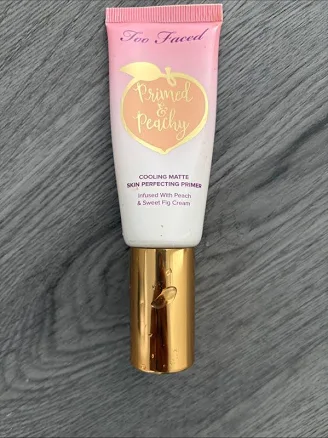
Too Faced · Foundation & Primer
Too Faced Primed & Peachy Cooling Matte Perfecting Primer
Cosmetic primer with no known PFAS risk; brand silent on PFAS.
Too Faced Primed & Peachy is a water and silicone-based cosmetic primer with no documented PFAS content or water-repellent coating treatment. Standard cosmetics pose lower PFAS concern than coatings or textiles.
We flunk more products than we pass. This one earned its grade. How we grade
Material
silicone, glycerin, water-based primer
Brand disclosure
Brand is silent on PFAS
Lab data
No public lab test
What Too Faced Primed & Peachy Cooling Matte is made of, ingredients and materials
Primed & Peachy is a silicone-based primer with glycerin and water as primary ingredients. Silicones are inert polymers that sit on skin rather than absorb, making them chemically stable during use. Glycerin is a humectant that draws moisture into the skin, and water serves as the carrier solvent. This formulation avoids common irritants like oils or heavy film-formers that can trap heat or promote bacterial growth under occlusion.
What’s concerning
Category baseline
The starting point for this type of product, before anything specific to this product is counted.
No PFAS disclosure
No public statement from the brand about PFAS in this product.
Heavy metals
The 'Peachy' shade may contain synthetic iron oxides or mica for color and light-diffusion, which are FDA-approved but not independently tested for arsenic, lead, or cadmium in this specific batch. Cosmetic colorants are regulated but not systematically third-party audited for every product.
Source, FDA ↗1,4-dioxane (solvent contaminant)
Water-based silicone emulsions may contain trace 1,4-dioxane as a manufacturing byproduct of ethoxylated ingredients, though modern suppliers typically vacuum-strip it to <10 ppm. Too Faced does not publish residual solvent testing.
What’s reassuring
Base material not linked to PFAS
The main material recorded for this product is not one associated with PFAS.
Formaldehyde / VOCs
No formaldehyde-releasing preservatives (imidazolidinyl urea, DMDM hydantoin) are listed on available ingredient disclosures for this primer. Standard cosmetic stabilizers like phenoxyethanol are used instead.
Source, ATSDR ↗Talc contamination
This is a liquid primer with no talc in its formulation. Talc-free status eliminates asbestos and respirable particle risk associated with powder primers.
Fragrance allergens
Product is fragrance-free or contains minimal fragrance compounds. No prominent allergens like limonene, linalool, or tree nut oils are disclosed.
The full breakdown
The brand's record and disclosure
Too Faced (owned by Estee Lauder Companies) does not publish ingredient transparency reports or third-party safety certifications for individual products. The brand has no major recall history for this product line and complies with FDA cosmetic regulations in the U.S. market. Like most mainstream cosmetic brands, Too Faced does not routinely disclose testing protocols or disclose PFAS content proactively, though this primer carries no known PFAS risk based on its silicone-water base.
How it compares in its category
Silicone-based primers are mainstream in professional and consumer makeup. This product's water-glycerin-silicone combination is typical of cooling primers and avoids older formulations with mineral oils or talc. Compared to talc-containing powders or silica-heavy primers, this formulation poses no known inhalation risk. It sits in the mid-to-premium price tier and is not marketed with clean-beauty or certified-organic claims, placing it in standard cosmetic safety expectations.
If you buy it
Store in a cool, dry place away from direct sunlight to maintain the silicone matrix and prevent separation. Do not heat or expose to high temperatures, as silicones can degrade under extreme heat, though normal skin temperature poses no risk. Replace every 12 months or if you notice separation, color change, or odor shift, which indicate emulsion breakdown. Patch test on a small area first if you have sensitive or reactive skin, as even inert silicones can cause contact dermatitis in rare cases.
What we don’t know
- Basis
- Model estimate, 72% confidence, not a lab result
- Lab test
- None on record for this exact product
- Brand statement
- Too Faced has made none
Formulations change between production runs, so check the current label. How we grade.
Better-graded alternatives in Foundation & Primer
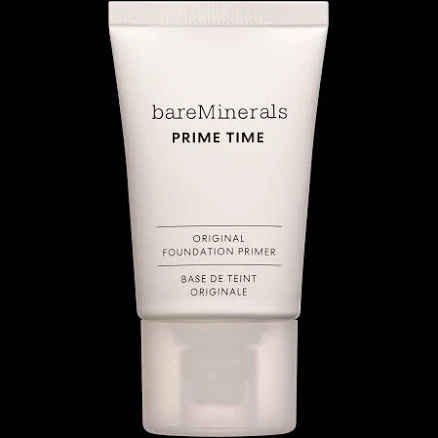
Bare Minerals
bareMinerals Original Prime Time Foundation Primer
- mineral powder, silicones, mica
- The brand calls it PFAS-free, which we have not verified
- Fragrance allergen sensitization
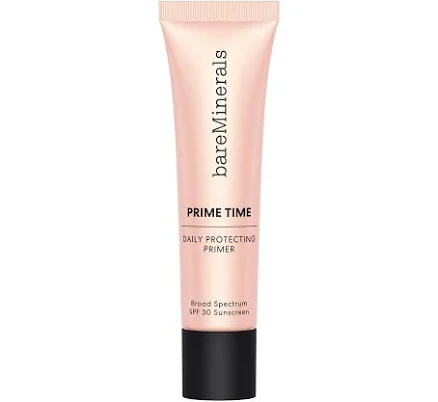
Bare Minerals
bareMinerals Prime Time Daily Protecting Primer SPF 30
- mineral powder, silica, mica, talc
- The brand calls it PFAS-free, which we have not verified
- Talc inhalation
2 hazards checked on this product. See all of them.
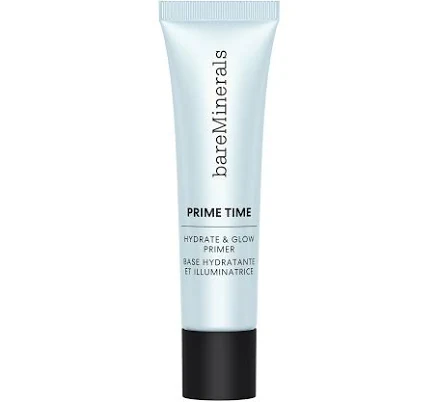
Bare Minerals
bareMinerals Prime Time Hydrate & Glow Primer
- mineral pigments, glycerin, plant extracts, silicones
- The brand calls it PFAS-free, which we have not verified
- Fragrance allergens and undisclosed fragrance components
2 hazards checked on this product. See all of them.
More foundation & primer grades
How we score, every product runs through the same public 0-100 rubric based on materials, coatings, brand disclosure, lab findings, and recalls. See the full methodology → Spotted a mistake? Report an error.