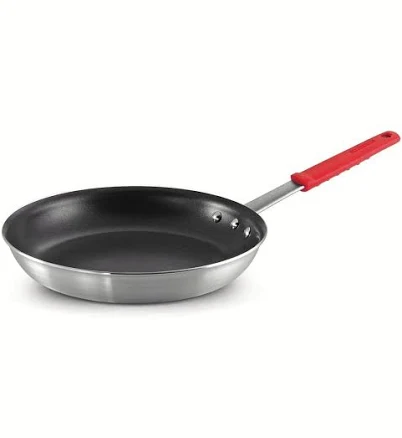
Tramontina Professional Aluminum Nonstick Restaurant Fry Pan
Skip. Nonstick coating composition not disclosed by brand.
Tramontina does not disclose nonstick coating chemistry on this product. Aluminum cookware with unspecified nonstick treatment carries PFAS risk without transparency.
The better-graded swap
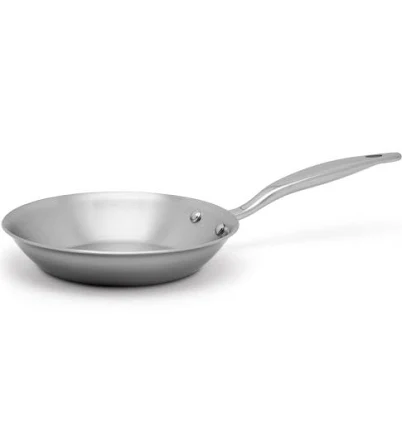
Heritage Steel
Heritage Steel Fry Pan 8.5"
100/100 safety
Same rubric that flunked this product. The swap earned Excellent.
Still want this one anyway? Check the price on Amazon. We’d swap it.
Material
Aluminum with nonstick coating, composition unspecified
Lab data
No public lab test
Is Tramontina Professional Aluminum Nonstick non-toxic? What it is made of
This pan has an aluminum core with an applied nonstick coating of unspecified chemistry. Tramontina does not publicly disclose whether the coating is Teflon-type coating-based (traditional Teflon-type), ceramic, or hybrid. Aluminum itself is generally considered food-safe at normal cooking temperatures, but the nonstick layer is the primary safety variable. Without composition data, you cannot verify whether PFAS-free alternatives like ceramic or newer fluorine-free coatings are used.
What’s concerning
Category baseline
The starting point for this type of product, before anything specific to this product is counted.
No PFAS disclosure
No public statement from the brand about PFAS in this product.
Non-stick, chemistry undisclosed
Marketed as non-stick without stating the coating chemistry.
Teflon-type coating fume risk (inhalation if overheated)
If the coating is Teflon-type coating-based (not confirmed by brand), temperatures above 500F can degrade the polymer and release fumes. Home cooks rarely reach this threshold accidentally, but the risk exists if pan is left unattended on high heat or under a broiler. No specific incident data for this model exists.
Nonstick coating degradation over time
Aluminum nonstick pans show earlier wear and coating failure than hard-anodized or stainless alternatives, especially with daily use and hand washing. Once coating flakes, the underlying aluminum is exposed and the pan is unsafe; replacement rather than repair is necessary. This is a durability rather than acute hazard issue.
Undisclosed chemical composition
Tramontina does not publicly state whether the nonstick layer contains PFOA, PFAS alternatives, or what exact polymer is used. This opacity prevents independent safety assessment and leaves consumers unable to make informed comparisons with competitor brands that do disclose such details.
What’s reassuring
Aluminum leaching into food
Aluminum core is not anodized in this model. Leaching risk is minimal in neutral to slightly acidic foods at typical cooking temperatures, though extended contact with acidic foods (tomato sauce, vinegar) may increase trace aluminum migration. No health studies link typical cookware aluminum exposure to harm.
The full breakdown
The brand's record and disclosure
Tramontina maintains minimal public transparency about nonstick coating chemistry or PFAS content across its product lines. The brand has no published certifications (such as GOTS, Oeko-Tex for textiles, or equivalent for cookware) that would signal third-party verification of low-chemical composition. No major safety recalls specific to this model have been documented, but the lack of disclosure itself is a red flag for informed purchasing.
How it compares in its category
Aluminum nonstick cookware occupies the budget-to-mid-range segment. This pan is cheaper than hard-anodized alternatives (which reduce aluminum leaching risk) and comparable to other aluminum nonstick brands. It lacks the transparency of premium brands that explicitly market Teflon-type coating-free or ceramic coatings, and undercuts cast iron or stainless steel options that eliminate nonstick chemistry concerns entirely.
If you buy it
Use only on medium to medium-high heat; sustained high heat accelerates nonstick coating degradation and increases fume risk. Avoid metal utensils and aggressive scrubbing; hand wash only. Replace the pan immediately if the coating shows flaking, peeling, or visible wear. Never preheat an empty pan, and ensure good ventilation during cooking. If cost is your driver, this is acceptable; if chemical transparency matters, seek brands with published Teflon-type coating-free or ceramic certifications.
What we don’t know
- Basis
- Model estimate, 35% confidence, not a lab result
- Lab test
- None on record for this exact product
- Brand statement
- Tramontina has made a specific claim
Formulations change between production runs, so check the current label. How we grade.
Better-graded alternatives in Cookware
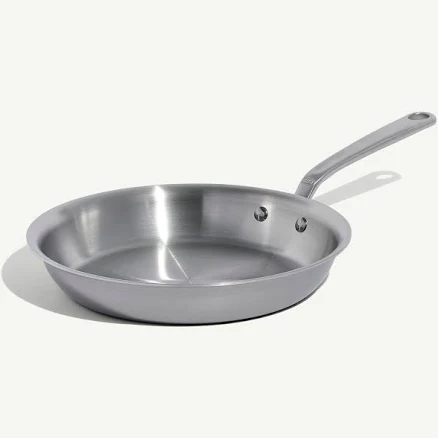
Made In
Stainless Clad Fry Pan
- Stainless steel clad construction, no nonstick coating
- The brand calls it PFAS-free, which we have not verified
- Clad separation or delamination over time
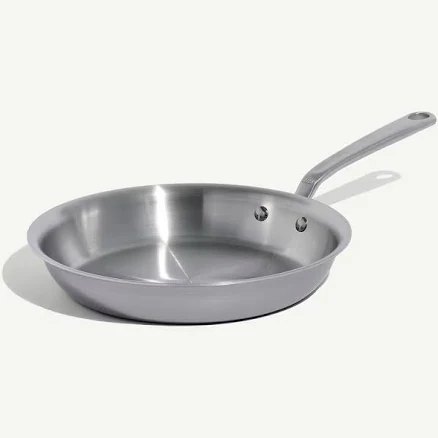
Made In
10' Stainless Clad Frying Pan
- stainless steel clad construction, no nonstick coating
- The brand calls it PFAS-free, which we have not verified
- Nickel leaching from stainless steel
3 hazards checked on this product. See all of them.
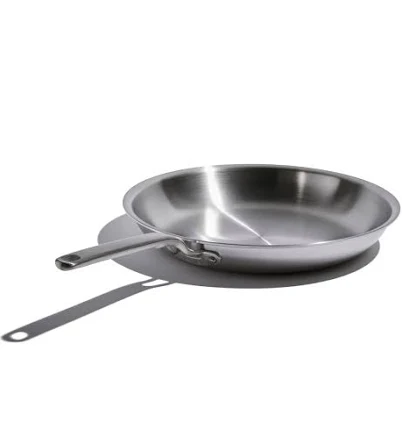
Heritage Steel
Eater Fry Pan
- Clad stainless steel, no coating
- The brand calls it PFAS-free, which we have not verified
- Metal ion release during cooking (iron, nickel, chromium)
More cookware grades
How we score, every product runs through the same public 0-100 rubric based on materials, coatings, brand disclosure, lab findings, and recalls. See the full methodology → Spotted a mistake? Report an error.