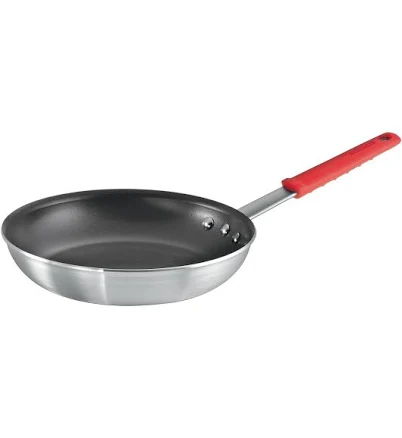
Tramontina Professional Pro Restaurant Fry Pan, Is It Non-Toxic?
Skip until the coating details become public.
This Tramontina pan has stainless steel with an unspecified nonstick surface and no brand disclosure about coating type or PFAS status. Most traditional nonstick coatings historically contained PFAS.
The better-graded swap
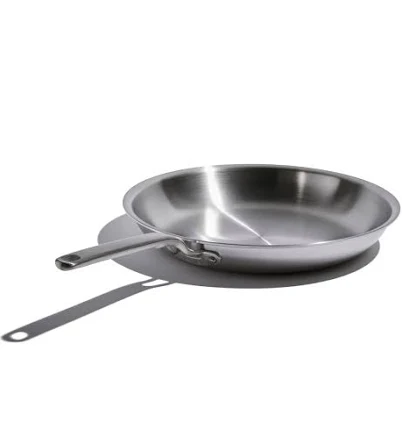
Heritage Steel
Heritage Steel Eater Fry Pan
100/100 safety
Same rubric that flunked this product. The swap earned Excellent.
Still want this one anyway? Check the price on Amazon. We’d swap it.
Material
Stainless steel body with unspecified nonstick coating
Lab data
No public lab test
You may also be interested in
Top-graded picks in the categories readers replace first, every one scored on the same rubric.

- polypropylene filter housing, carbon/sediment cartridge
- We found no PFAS statement from the brand
- Bacterial growth in spent cartridges
3 hazards checked on this product, all on its full breakdown.

Aquasure
Premier Series 75 GPD Under Sink Reverse Osmosis Water Filtration System
- RO membrane, carbon filters, stainless steel housing
- We found no PFAS statement from the brand
- Bacterial and microbial growth in housing and filters
4 hazards checked on this product, all on its full breakdown.

Avocado
Vegan Mattress
- organic cotton, natural latex, coconut coir, recycled steel coils
- The brand calls it PFAS-free, which we have not verified
- Heavy metals
2 hazards checked on this product, all on its full breakdown.
Is Tramontina Professional Pro Fry Pan non-toxic? What it is made of
This pan has a stainless steel body, which is chemically stable and does not leach metals under normal cooking conditions. The nonstick coating material is not specified by Tramontina in publicly available product documentation, which is the critical gap. Stainless steel itself poses no known leaching risk; the hazard depends entirely on what that coating is and whether it contains Teflon-type coating or Teflon-type coating alternatives.
What’s concerning
Category baseline
The starting point for this type of product, before anything specific to this product is counted.
No PFAS disclosure
No public statement from the brand about PFAS in this product.
Non-stick, chemistry undisclosed
Marketed as non-stick without stating the coating chemistry.
Teflon-type coating fume risk (if coating contains Teflon-type coating)
If this pan uses traditional Teflon-type coating nonstick, overheating above 500°F releases polymer fumes. Tramontina does not specify coating type, so Teflon-type coating presence cannot be ruled out. Risk is mitigated by normal stovetop use but real if cookware is left unattended on high heat.
Coating degradation and microplastic release
All nonstick coatings degrade over time with wear and high-heat exposure. Once compromised, coatings can flake into food. This pan's durability and coating formulation are not independently tested in public data; Tramontina's warranty does not typically cover coating wear.
PFAS
Many manufacturers have shifted from Teflon-type coating to PFAS-containing alternatives (GenX, Teflon-type coating alternatives) without disclosure. Tramontina's silence on this pan makes it impossible to assess whether the coating contains emerging PFAS compounds, which carry similar thermal and persistence concerns.
Source, ATSDR ↗What’s reassuring
Stainless steel leaching (chromium/nickel)
Stainless steel cookware does not leach chromium or nickel under normal cooking conditions. This hazard is not a concern for the body material itself, though acidic foods may interact minimally with any exposed steel edges if coating is compromised.
Lead
No recalls or public health reports document lead or cadmium in Tramontina cookware. However, without coating composition disclosure, this cannot be verified as impossible. Modern US-market cookware rarely contains these metals, but transparency is absent here.
Source, ATSDR ↗How is this PFAS grade calculated?
The brand's record and disclosure
Tramontina is a Brazilian kitchenware manufacturer owned by Wesco International and widely sold in North America through retailers like Walmart. The brand has not published detailed coating composition or PFAS commitments for this product line. No recalls or public health controversies have been documented for this specific model, but lack of transparency on nonstick chemistry is a compliance and consumer-trust gap that competitors have begun to address.
How it compares in its category
Professional-grade stainless fry pans in this price range commonly use either Teflon-type coating (Teflon) or ceramic/silicon-based coatings. Tramontina does not differentiate on this pan's listing. Competitors like All-Clad, Calphalon, and Caraway have begun specifying coating chemistry or eliminating Teflon-type coating entirely. Tramontina's silence leaves buyers unable to make an informed choice relative to alternatives with known coatings.
If you buy it
Contact Tramontina or the retailer directly to confirm whether the nonstick coating contains Teflon-type coating, PFOA, or Teflon-type coating alternatives before purchase. If you proceed, avoid overheating (Teflon-type coating degrades above 500°F and releases fumes; most nonstick coatings degrade significantly above 400°F). Hand wash to preserve coating; avoid metal utensils and high-heat stovetop use. Replace if coating begins to peel, flake, or discolor, as degraded coating can become a source of microplastics and coating debris.
What is not known about PFAS in this product?
- Basis
- Model estimate, 35% confidence, not a lab result
- Lab test
- None on record for this exact product
- Brand statement
- Tramontina has made a specific claim
Formulations change between production runs, so check the current label. How we grade.
What are the PFAS-free alternatives to Tramontina Professional Pro Restaurant Fry Pan?
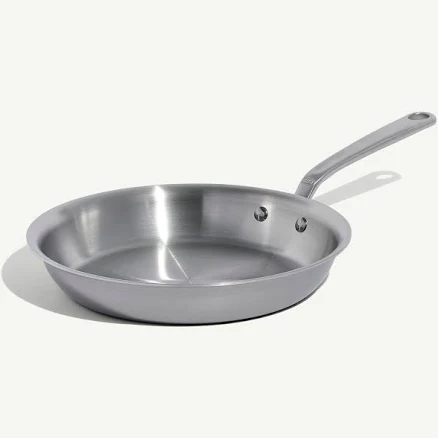
- Stainless steel clad construction, no nonstick coating
- The brand calls it PFAS-free, which we have not verified
- Clad separation or delamination over time
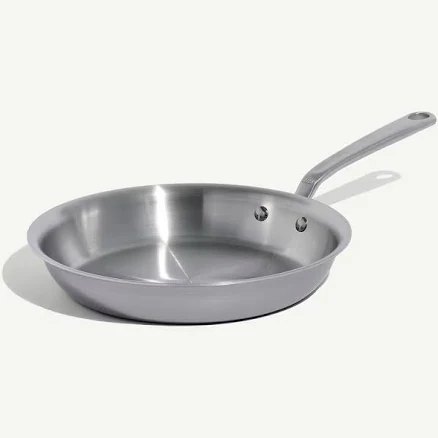
- stainless steel clad construction, no nonstick coating
- The brand calls it PFAS-free, which we have not verified
- Nickel leaching from stainless steel
3 hazards checked on this product, all on its full breakdown.
- Clad stainless steel, no coating
- The brand calls it PFAS-free, which we have not verified
- Metal ion release during cooking (iron, nickel, chromium)
More cookware grades
How we score, every product runs through the same public 0-100 rubric based on materials, coatings, brand disclosure, lab findings, and recalls. See the full methodology → Spotted a mistake? Report an error.