Wrangler · Stain-Resistant Professional Workwear
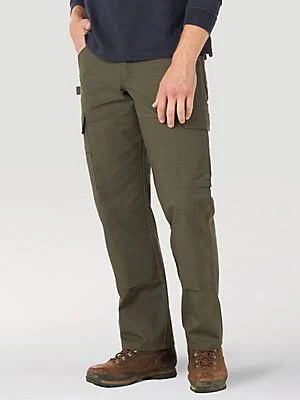
Wrangler Men's Workwear Ranger Cargo Pant
Lower risk since no water-resistant finish shows on standard cargo.
Wrangler workwear cargo is basic cotton or polyester blend with no disclosed water-repellent coating or stain-resistant treatment. No PFAS signals appear, though the brand offers no explicit statement.
Still want this one anyway? Check the price on Amazon. We’d swap it.
Material
cotton/poly blend workwear, untreated
Brand disclosure
Brand is silent on PFAS
Lab data
No public lab test
What Wrangler Men's Workwear Ranger Cargo Pant is made of, ingredients and materials
Wrangler Ranger Cargo Pants are a cotton-polyester blend (typical ratio around 65-35 or similar), which is standard for workwear durability and ease of care. The untreated designation means no water-repellent chemical coatings have been applied, eliminating the main source of PFAS and other persistent finish chemicals in work pants. Polyester contributes synthetic fiber properties but does not inherently leach hazardous chemicals when used as apparel without special finishes.
What’s concerning
Category baseline
The starting point for this type of product, before anything specific to this product is counted.
No PFAS disclosure
No public statement from the brand about PFAS in this product.
Azo dyes and dye residues
Standard workwear uses conventional azo dyes; some may not be fully fixed during manufacturing. Pre-wash in cool water before skin contact reduces this risk. No specific recalls or contamination data exist for Wrangler cargo pants.
Formaldehyde / VOCs
Even 'untreated' workwear may contain trace formaldehyde from non-durable press finishing or fabric stabilization during production. Levels in basic cargo pants are typically low; airing or washing before wear further reduces exposure.
Source, ATSDR ↗What’s reassuring
Base material not linked to PFAS
The main material recorded for this product is not one associated with PFAS.
Heavy metals
No documented issues reported for Wrangler basic cargo pants. Standard dyes used in cotton-poly blends are generally compliant with textile regulations in the US and EU, which restrict lead and cadmium in colorants.
Source, FDA ↗Antimony in polyester fiber
Antimony is used as a catalyst in polyester synthesis but remains bound in the polymer structure and does not migrate into skin contact under normal wear. No evidence of leaching from Wrangler workwear.
Flame retardants
Untreated cargo pants are not treated with flame retardants. Polyester fibers are naturally flame-resistant due to their melting behavior, not chemical treatment.
Source, EPA ↗The full breakdown
The brand's record and disclosure
Wrangler (VF Corporation-owned) does not publicly emphasize chemical transparency or restricted substance lists for basic workwear lines, though the parent company has made limited commitments to phasing out certain chemicals in apparel. No major recalls or documented chemical contamination issues are on record for standard Wrangler cargo pants. The brand's silence on PFAS and dye chemistry is consistent with conventional workwear marketing rather than a specific red flag.
How it compares in its category
Basic untreated cotton-poly cargo pants occupy the low-hazard end of workwear; they avoid the PFAS and stain-resistance chemicals found in premium water-resistant work trousers. Competitors like Carhartt and Dickies offer similar untreated blends at comparable risk levels. The main trade-off is durability and stain resistance, not chemical safety.
If you buy it
Wash new pants before wearing to remove residual dyes and finish chemicals from manufacturing. Use standard detergent and warm water; no special handling required. Expect normal wear patterns typical of blended workwear (polyester seams may outlast cotton fabric). Replace when fabric integrity declines or seams separate, not due to chemical degradation.
What we don’t know
- Basis
- Model estimate, 72% confidence, not a lab result
- Lab test
- None on record for this exact product
- Brand statement
- Wrangler has made none
Formulations change between production runs, so check the current label. How we grade.
More stain-resistant professional workwear grades
How we score, every product runs through the same public 0-100 rubric based on materials, coatings, brand disclosure, lab findings, and recalls. See the full methodology → Spotted a mistake? Report an error.