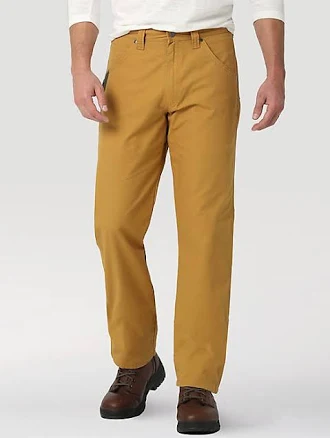
Wrangler · Stain-Resistant Professional Workwear
Wrangler Men's Workwear Technician Pant
Stain-resistant treatment chemistry not disclosed, raising historical PFAS concern.
This cotton twill work pant has a water-repellent coating finish applied, but Wrangler has not disclosed the coating chemistry or PFAS content. The brand has no PFAS statement on record.
Still want this one anyway? Check the price on Amazon. We’d swap it.
Material
Cotton twill with stain/water-resistant water-repellent coating treatment
Brand disclosure
Brand is silent on PFAS
Lab data
No public lab test
What Wrangler Men's Workwear Technician Pant is made of, ingredients and materials
Wrangler Technician Pants are cotton twill with a water-repellent coating (water-repellent coating) finish. Cotton twill itself is low-risk, but the water-repellent coating is the critical component. Most workwear water-repellent coating treatments use fluorinated compounds (PFAS-family chemicals) to achieve stain and water repellency. Without Wrangler's explicit disclosure, the specific chemistry is unknown, but fluorinated water-repellent coating is industry-standard for this price point and performance tier.
What’s concerning
Category baseline
The starting point for this type of product, before anything specific to this product is counted.
No PFAS disclosure
No public statement from the brand about PFAS in this product.
Waterproof / stain-resistant treatment
Water-repellent coating treatments have historically used PFAS.
water-repellent coating (water-repellent coating) coating chemistry
Cotton twill water-repellent coating finishes typically use fluorinated compounds (C6 or legacy C8 PFAS). Wrangler has not disclosed treatment type. Risk occurs during manufacturing (worker exposure) and laundering (environmental release); direct wearer skin contact is low under normal use.
water-repellent coating degradation and reapplication products
Over time, water-repellent coating finish wears off and wearer may purchase aftermarket water-repellent coating sprays (often fluorinated or silicone-based). If reapplying with commercial water-repellent coating products indoors without ventilation, inhalation of aerosol can occur; manufacturer instructions should be followed strictly.
What’s reassuring
Formaldehyde / VOCs
No formaldehyde-release recalls or warnings specific to Wrangler workwear twill are on record. Cotton twill typically requires minimal formaldehyde-based finishing compared to synthetic blends, though trace residues from manufacturing are possible.
Source, ATSDR ↗Azo dyes and textile colorants
Wrangler does not disclose dye chemistry for this pant line. Azo dye restrictions exist in EU and some US retailers, but no safety incidents or non-compliance reports are documented for Wrangler workwear colorants.
Antimony in synthetic fiber blends
This product is 100% cotton; antimony contamination from polyester copolymers does not apply.
The full breakdown
The brand's record and disclosure
Wrangler has not publicly disclosed water-repellent coating chemistry or committed to PFAS phase-out on workwear lines. The brand does not advertise third-party certifications like Bluesign or GOTS for this product line. No recalls or established chemical safety controversies are on record for Wrangler workwear textiles. Their silence on water-repellent coating treatment composition is typical for mainstream workwear but leaves end-users without confidence on fluorinated additive use.
How it compares in its category
Standard workwear water-repellent coating finishes across Carhartt, Dickies, and similar brands share the same PFAS uncertainty. Cotton twill base material has lower concern than polyester blends, which carry antimony risk. This product sits mid-market on transparency; budget workwear rarely discloses; premium outdoor brands increasingly offer PFAS-free alternatives, though at higher cost. For typical worksite use, water-repellent coating durability tradeoffs are real against PFAS concerns.
If you buy it
Wash separately on cold cycles to minimize water-repellent coating leaching into household water. Avoid high heat drying (air dry preferred) as heat can stress the finish and risk off-gassing. Replace when water repellency visibly degrades (typically 30-50 washes), as worn coating offers no water barrier benefit. If heavy pesticide or industrial chemical contact is routine, consider requesting PFAS-free water-repellent coating alternatives from Wrangler or switching to untreated cotton workwear for those applications.
What we don’t know
- Basis
- Model estimate, 45% confidence, not a lab result
- Lab test
- None on record for this exact product
- Brand statement
- Wrangler has made none
Formulations change between production runs, so check the current label. How we grade.
Better-graded alternatives in Stain-Resistant Professional Workwear

Banana Republic
Women's High-Rise Straight Stretch Linen-Viscose Utility Pants
- linen-viscose blend, no water-resistant finish
- We found no PFAS statement from the brand
- Formaldehyde / VOCs
3 hazards checked on this product. See all of them.
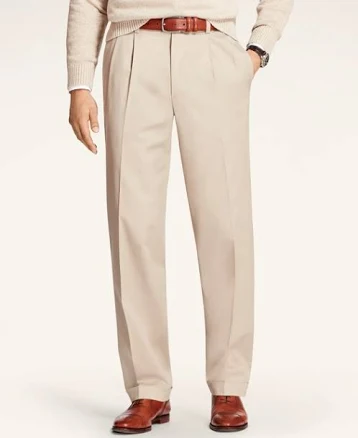
Brooks Brothers
Men's Pleated Cotton Chino Pants
- 100% cotton, pleated, no stated treatment
- We found no PFAS statement from the brand
- Residual azo dyes and synthetic dye intermediates
2 hazards checked on this product. See all of them.
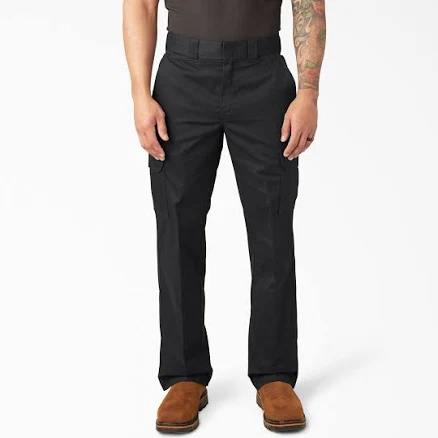
Dickies
Men's Relaxed Fit Straight Leg Cargo Work Pants
- 100% cotton twill, no water-resistant treatment
- We found no PFAS statement from the brand
- Azo dyes and residual finishing agents
2 hazards checked on this product. See all of them.
More stain-resistant professional workwear grades
How we score, every product runs through the same public 0-100 rubric based on materials, coatings, brand disclosure, lab findings, and recalls. See the full methodology → Spotted a mistake? Report an error.