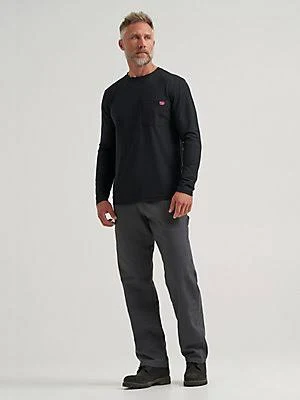
Wrangler · Stain-Resistant Professional Workwear
Wrangler Workwear Surveyor Pants
Avoid since water-repellent coating likely contains legacy PFAS and Wrangler stays silent.
These workwear pants with stain and water resistance finishes typically use water-repellent coating treatments containing PFAS. Wrangler provides no public disclosure about PFAS content or alternatives.
Still want this one anyway? Check the price on Amazon. We’d swap it.
Material
cotton/polyester blend with water-repellent coating finish
Brand disclosure
Brand is silent on PFAS
Lab data
No public lab test
What Wrangler Workwear Surveyor Pants is made of, ingredients and materials
Wrangler Surveyor pants are a cotton-polyester blend (typical 65-35 or 60-40 ratio) finished with water-repellent coating (water-repellent coating) coating. The polyester contributes antimony as a catalyst during production, though residual levels in finished fabric are generally low. The water-repellent coating finish is the primary concern, most legacy water-repellent coating treatments on workwear use long-chain PFOA or PFOS compounds, though exact chemistry varies by production batch and year. No public testing or certification (like Bluesign or GOTS) is available for this specific SKU.
What’s concerning
Category baseline
The starting point for this type of product, before anything specific to this product is counted.
No PFAS disclosure
No public statement from the brand about PFAS in this product.
Waterproof / stain-resistant treatment
Water-repellent coating treatments have historically used PFAS.
Antimony in polyester
Antimony trioxide is used as a catalyst in polyester production. Residual antimony in finished fabric is typically <100 ppm and not considered a skin contact hazard, but not independently tested for this product.
Color bleeding and skin irritation
Dark indigo and drab dyes on workwear can bleed in early washes, especially in warm water, and may irritate sensitive skin. Pre-washing mitigates this. No specific allergic reactions documented for this product.
What’s reassuring
Azo dyes
No public record of restricted azo dyes (those cleaving to carcinogenic amines) in Wrangler Surveyor pants. Industry standard for indigo and tan dyes on workwear is compliant, though not certified for this SKU.
Formaldehyde / VOCs
Water-repellent coating finishes and dye-setting may involve formaldehyde-based resins, but no specific disclosure or testing available. Cotton-poly blends typically carry lower formaldehyde load than 100% cotton, and off-gassing diminishes after 3-5 washes.
Source, ATSDR ↗Flame retardants
Surveyor pants are utility workwear, not treated as sleepwear or furniture, so flame retardants are not typically applied. No evidence of brominated or chlorinated flame retardants in this product.
Source, EPA ↗The full breakdown
The brand's record and disclosure
Wrangler (Kontoor Brands) does not publicly disclose water-repellent coating chemistry or commit to PFAS-free finishing on its workwear lines. The brand has made no notable commitments to restrict legacy PFAS in apparel, unlike some competitors (e.g., Patagonia, Arc'teryx). Wrangler's silence on this issue is standard for heritage workwear brands, but reflects lack of transparency rather than safety confirmation. No recalls or safety violations specific to Surveyor pants are documented.
How it compares in its category
Most affordable durable workwear uses legacy water-repellent coating finishes; Surveyor pants are typical in this regard. Premium alternatives (Carhartt, some Dickies lines) also use standard water-repellent coating without disclosure. True PFAS-free alternatives exist (e.g., fjallraven, some organic cotton brands) but cost more and sacrifice water repellency. For mid-range workwear, Surveyor pants do not stand out as worse or better on chemical safety.
If you buy it
Wash new pants separately in cool water before first wear to reduce loose water-repellent coating residue transfer. Launder in cool water and air-dry; heat (dryer, hot water) can increase PFAS mobilization and dye bleeding. Replace when waistband frays or crotch seams fail (typical 18-36 months of heavy use), not primarily for chemical degradation. Avoid dry cleaning, which may use perchloroethylene solvents that interact poorly with fluorinated finishes.
What we don’t know
- Basis
- Model estimate, 35% confidence, not a lab result
- Lab test
- None on record for this exact product
- Brand statement
- Wrangler has made none
Formulations change between production runs, so check the current label. How we grade.
Better-graded alternatives in Stain-Resistant Professional Workwear

Banana Republic
Women's High-Rise Straight Stretch Linen-Viscose Utility Pants
- linen-viscose blend, no water-resistant finish
- We found no PFAS statement from the brand
- Formaldehyde / VOCs
3 hazards checked on this product. See all of them.
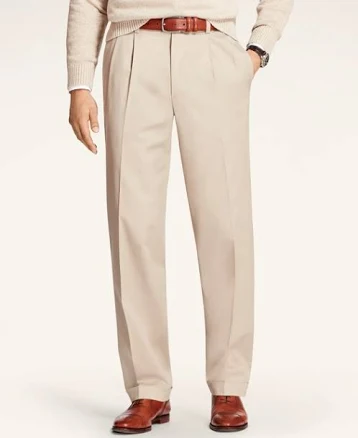
Brooks Brothers
Men's Pleated Cotton Chino Pants
- 100% cotton, pleated, no stated treatment
- We found no PFAS statement from the brand
- Residual azo dyes and synthetic dye intermediates
2 hazards checked on this product. See all of them.
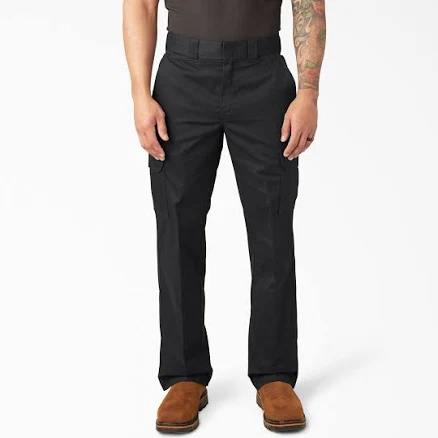
Dickies
Men's Relaxed Fit Straight Leg Cargo Work Pants
- 100% cotton twill, no water-resistant treatment
- We found no PFAS statement from the brand
- Azo dyes and residual finishing agents
2 hazards checked on this product. See all of them.
More stain-resistant professional workwear grades
How we score, every product runs through the same public 0-100 rubric based on materials, coatings, brand disclosure, lab findings, and recalls. See the full methodology → Spotted a mistake? Report an error.