By PFAS Authority · Updated September 20, 2026
Top grades to buy

Aisle
Super Hipster
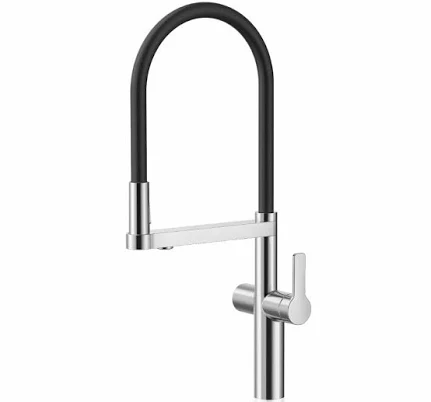
APEC Water Systems
APEC 2-in-1 Pull-Down Kitchen Faucet

Aquasure
Premier Series 75 GPD Under Sink Reverse Osmosis Water Filtration System
Model-based grades, not lab tests. We flunk more than we pass. How grading works
PFAS in Tents, 316 Graded and Every One Scores 20
Every tent currently indexed in the PFAS Authority database, all 316 of them, tops out at a score of 20 or below on our 100-point materials model. That means backpacking tents, family cabin tents, and pop-up canopies from budget brands to premium outdoor labels all land in the same high-concern band, mostly because of the durable water repellent (DWR) coatings and seam-sealing tapes that make a tent shed rain in the first place. Based on available materials and public disclosure data, we found no tent in our current dataset that earns a passing grade, and that is the headline finding of this guide.
Because there is no tent we can point to as a clear winner, the practical winner here is informed shopping. Before you buy or re-treat a tent, run the exact model through our product finder to see how it scores, and treat any single-digit or 20-range grade as a prompt to look closely at the fly and floor coatings rather than a reason to panic. While tents themselves have a long way to go, we do have a growing list of camp-adjacent gear, bottles, filters, food canisters, and cookware, that scores at the opposite end of our scale. Pairing a lower-scoring tent with higher-scoring gear elsewhere in your kit is a reasonable harm-reduction strategy while the tent category catches up.
Summary comparison
| Product | PFAS grade (model estimate) | Verdict |
|---|---|---|
| Tents, category average (316 listings) | 20 or below out of 100 | High concern across the board, based on available materials and disclosure data |
| Hydro Flask Hydro Flask Micro Hydro Mini Bottle | Excellent, 100/100 | Lower concern for a compact hydration option to pack alongside a tent |
| LifeStraw Home 7-Cup Glass Water Filter Pitcher | Excellent, 100/100 | Lower concern, useful for basecamp water prep before a trip |
| Klean Kanteen Double Wall Vacuum Insulated Food Canister | Excellent, 100/100 | Lower concern for camp food storage |
| Clearly Filtered 32oz Stainless Bottle Cap and Straw | Excellent, 100/100 | Lower concern, filtration plus a stainless body |
| S'well Traveler | Excellent, 100/100 | Lower concern for a durable travel bottle |
| Made In 10 Inch Stainless Clad Frying Pan | Excellent, 100/100 | Lower concern for camp or cabin cooking |
All grades above are our model-based estimates from materials and public disclosure, not lab tests. A 100/100 score means our review of publicly available materials and brand disclosures turned up no evidence of PFAS in reviewed sources, not a certified lab result and not a guarantee. Where a brand makes its own PFAS-free claim, we call that out as brand-stated below, separate from anything independently verified by a third party.
Why the entire tent category scores this low
Tents rely on a handful of PFAS-linked technologies that have been standard in the outdoor industry for decades. The rainfly and floor typically get a DWR finish to bead water, and older or budget DWR formulas are frequently long-chain or short-chain fluorocarbon chemistry, both of which fall under the PFAS umbrella. Seam tape, the strips bonded over stitching to stop leaks, has historically used PU or PE film with fluorinated additives for extra water resistance. Floor coatings on the tent bottom, where puddling and abrasion are most likely, are another common place manufacturers reach for fluorochemical treatments.
Some brands have shifted marketing language toward "PFC-free" or "fluorine-free" DWR, and a handful have published third-party test summaries to back that up. Based on available materials and data, those newer formulations may represent a genuine improvement over older long-chain PFOA-based treatments, but our model still treats undocumented or vaguely worded claims cautiously, and most tent listings in our database simply do not publish enough material-level detail to move the needle above a 20. This is a disclosure problem as much as a chemistry problem, many tent spec sheets list "ripstop nylon with DWR" and stop there, with no fluorine content statement one way or the other.
What to avoid
- Any tent marketed as "waterproof" or "storm-ready" with no ingredient or coating disclosure at all. Silence on chemistry is a red flag in our model, not a neutral.
- Rainfly and floor fabrics described only as having a generic "DWR finish" with no fluorine-free or PFC-free statement from the brand.
- Aftermarket waterproofing sprays and seam sealants bought separately to re-treat an old tent. Many of these consumer sprays still use fluorocarbon chemistry even when the tent itself has moved on.
- Vague brand language like "eco-friendly coating" that does not specify whether the coating is fluorine-based, silicone-based, or a wax formulation.
- Bundled tent and footprint sets where only the tent body's fabric is disclosed and the separate groundsheet or footprint material is not mentioned at all.
If you already own a tent that falls into any of these categories, the health implications are not settled science. Some research has linked certain PFAS compounds to health effects in the general population, but that research shows association, not proven individual causation, and it typically studies chronic, high-level exposure rather than occasional outdoor gear contact. Treat a low tent score as a reason to ventilate a new tent outdoors before first use and to wash your hands after handling a heavily treated rainfly, not as a reason to assume harm has occurred.
Camp gear that scored well, product by product
None of the items below are tents, but they are the kind of gear that ends up in the same duffel bag, and every one of them earned our top model grade based on the materials and disclosures we reviewed.
Hydro Flask Hydro Flask Micro Hydro Mini Bottle
Materials, per available product documentation, center on 18/8 stainless steel with a powder-coated exterior. Hydro Flask states its bottles are free of BPA and, in newer lines, free of intentionally added PFAS in the body construction. That is a brand-stated claim; we did not find an independent lab certificate attached to this specific listing. Pros, compact size for a daypack, stainless body resists odor retention better than plastic. Cons, no filtration, so it is a carry vessel rather than a water treatment solution for backcountry use. See the full listing at Hydro Flask Hydro Flask Micro Hydro Mini Bottle.
LifeStraw Home 7-Cup Glass Water Filter Pitcher
This pitcher pairs a glass carafe with a silicone base and a replaceable filter cartridge. LifeStraw states the filter media is tested to reduce lead, microplastics, and certain other contaminants, and the brand has published third-party test summaries for some of its filter claims, though we recommend checking the current certificate on LifeStraw's own site since documentation changes over product generations. Pros, glass avoids the leaching questions that come with some plastic pitchers, and it is a sensible basecamp or cabin companion before a trip. Cons, not something you pack into a backpack, and it is bulkier than a straw-style filter. Full details at LifeStraw Home 7-Cup Glass Water Filter Pitcher.
Klean Kanteen Double Wall Vacuum Insulated Food Canister
Built from stainless steel with a double-wall vacuum design and a leak-proof lid, this canister is aimed at keeping camp meals hot or cold rather than treating water. Klean Kanteen markets its steel canisters as free of BPA and, on newer lines, free of intentionally added PFAS. Pros, rugged for car camping, holds temperature well, easy to clean. Cons, heavier than a plastic container, and the lid gasket material is not always itemized in public spec sheets, which limits how far our model can verify the seal component specifically. Listing here Klean Kanteen Double Wall Vacuum Insulated Food Canister.
Clearly Filtered 32oz Stainless Bottle Cap and Straw
This bottle combines a stainless body with a multi-stage filter straw. Clearly Filtered states its filter media is independently tested for a broad list of contaminants, and the brand publishes lab summaries on its own site that go further than many competitors in this space, though we still classify that as brand-published rather than fully independent third-party verification unless a named lab report is attached to this exact SKU. Pros, filtration plus a durable body in one unit, genuinely useful for trailhead refills. Cons, filter cartridges need periodic replacement, adding an ongoing cost. See Clearly Filtered 32oz Stainless Bottle Cap and Straw.
S'well Traveler
A double-wall stainless travel bottle aimed at commuters and campers alike, with S'well stating its steel bottles contain no BPA, BPS, or phthalates. Pros, strong insulation performance for hot drinks at a cold campsite, wide range of finishes. Cons, like most bottles on this list, the brand's PFAS-free language applies to the bottle body and has not been paired, in the material we reviewed, with a named third-party PFAS lab certificate. Full listing at S'well Traveler.
Made In 10 Inch Stainless Clad Frying Pan
For car camping or cabin cooking, this is a five-ply stainless clad pan with no nonstick coating at all, which sidesteps the PFAS-in-nonstick-cookware question entirely rather than relying on a "PFOA-free" nonstick claim. Pros, no coating to wear off or scratch, oven-safe, built for long-term use. Cons, heavier than a nonstick camp pan and requires more attention to prevent sticking, which some campers will find less convenient than a treated pan. See Made In 10 Inch Stainless Clad Frying Pan.
How this connects to the rest of your gear closet
Tents are not the only outdoor category where fluorochemical waterproofing shows up. If you are auditing a whole camping and hiking kit, it is worth also checking your waterproof boots, since boot membranes and treatments share much of the same DWR chemistry as tent flies. Rain jackets, packs, and other treated outerwear generally fall under our broader clothing coverage, and if you carry a phone or camera into wet conditions, our waterproof camera and lens protection cases guide covers a related but distinct set of sealed-case materials rather than fabric coatings. None of these categories automatically inherit the tent category's grade, since the underlying materials and constructions differ, so it is worth checking each one individually through the product finder rather than assuming a pattern.
Our pick
We are not naming a "best tent" in this guide, because based on available materials and data, no tent in our 316-listing database currently clears a passing grade, and naming a winner in a category that tops out at 20 would overstate what the evidence supports. Our actual pick is a process, not a product, check the specific tent model you are considering through our finder, favor listings where the brand explicitly states a fluorine-free or PFC-free DWR formulation over ones that stay silent on chemistry, and avoid aftermarket waterproofing sprays unless they are specifically labeled fluorocarbon-free. Pair whatever tent you choose with lower-concern camp gear like the stainless bottles, filter pitchers, and coated-free cookware listed above, since those categories currently offer far more high-scoring, well-documented options than tents do.
Frequently asked questions
Does a low PFAS score mean a tent is dangerous to use?
No. A low score reflects our model's read of the materials and disclosures publicly available for that product category, not a determination that using the tent causes harm. Some research has associated certain PFAS compounds with health effects in populations with chronic, high-level exposure, but that is association, not proof that occasional recreational use of a treated tent causes a specific outcome in any individual. Ventilating a new tent before first use and washing hands after extended handling of heavily coated fabric are reasonable precautions rather than evidence-based fixes for a proven risk.
Are brands that say "PFC-free" or "fluorine-free" telling the truth?
Some are working from genuine reformulations and have published test summaries to support the claim, while others use the language loosely without attaching verifiable documentation. We treat these as brand-stated claims unless a named third-party lab report is tied to the specific product, and we recommend checking a brand's own technical pages for the most current certificate before assuming a blanket "PFC-free" label applies to every fabric component of a given tent, including the floor and seam tape.
Why do water bottles and filters score so much higher than tents in your database?
Bottles, filters, and stainless cookware are simpler constructions, often a single metal or glass body with a small number of documented components, which makes it easier for our model to confirm the absence of PFAS in the materials and disclosures we reviewed. Tents combine fabric, coatings, seam tape, and sometimes separate footprints from multiple suppliers, and disclosure for each layer is inconsistent across the industry, which is the main reason the entire category currently caps out around 20 rather than reaching higher grades.
Now check your own stuff
See every product we’ve graded in this category, best-graded first.
Get the graded list, free.
The products we score each week, and the best-graded alternative in every category.
No spam. Unsubscribe anytime.