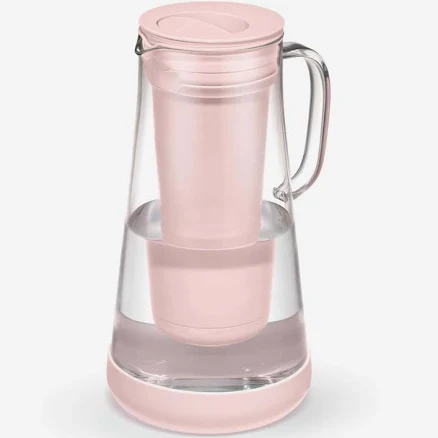
LifeStraw Home 7-Cup Glass Water Filter Pitcher With Included Silicone Base
Low concern for the pitcher itself; filter media composition follows typical industry standards.
The borosilicate glass pitcher and silicone base are inherently low-risk for PFAS. LifeStraw hasn't disclosed exact filter cartridge composition or provided third-party verification.
We flunk more products than we pass. This one earned its grade. How we grade
Material
borosilicate glass pitcher, silicone base, activated carbon + ion-exchange resin filter
Lab data
No public lab test
You may also be interested in
Top-graded picks in the categories readers replace first, every one scored on the same rubric.

- polypropylene filter housing, carbon/sediment cartridge
- We found no PFAS statement from the brand
- Bacterial growth in spent cartridges
3 hazards checked on this product, all on its full breakdown.

Aquasure
Premier Series 75 GPD Under Sink Reverse Osmosis Water Filtration System
- RO membrane, carbon filters, stainless steel housing
- We found no PFAS statement from the brand
- Bacterial and microbial growth in housing and filters
4 hazards checked on this product, all on its full breakdown.

Avocado
Vegan Mattress
- organic cotton, natural latex, coconut coir, recycled steel coils
- The brand calls it PFAS-free, which we have not verified
- Heavy metals
2 hazards checked on this product, all on its full breakdown.
What LifeStraw Home 7-Cup Glass Silicone Base is made of, ingredients and materials
The pitcher is borosilicate glass, which is chemically inert and does not leach minerals, metals, or organic compounds into water under normal use. Borosilicate has a high melting point and resists thermal shock better than standard glass. The silicone base is food-grade silicone, which is stable at room temperature and does not off-gas volatile compounds under static conditions. The filter cartridge uses activated carbon and ion-exchange resin, both industry-standard media that do not shed microplastics or contaminants if intact.
What’s concerning
No PFAS disclosure
No public statement from the brand about PFAS in this product.
Bacterial growth in filter media
Activated carbon and ion-exchange resin can harbor bacteria if the cartridge is not replaced on schedule or if the pitcher sits unused for extended periods. No records of contamination events in this brand, but risk is inherent to all pitcher-type filters.
Undisclosed filter media additives
The brand does not publicly disclose binders, anti-caking agents, or resin cross-linkers used in the filter cartridge. Standard food-grade media have no hazard of this kind on record, but full transparency would allow independent verification. This is a disclosure gap, not a confirmed hazard.
Borosilicate glass breakage hazard
Glass pitchers are fragile and can break under impact, creating sharp fragments. This is a physical safety risk, not a chemical one. No manufacturing defect recalls are on record for this model.
What’s reassuring
Bare uncoated material
Recorded as a bare, uncoated material with no surface coating or treatment.
Silicone base degradation and leaching
Food-grade silicone is stable at room temperature and no leaching of siloxanes or other compounds has been reported for this product. Risk increases if the base is exposed to heat above 60C or to strong solvents, which is unlikely in normal use.
Microplastic shedding from filter cartridge
Carbon and resin media do not inherently shed microplastics if the cartridge housing remains intact. No reports of cartridge degradation or particle release for this model. Risk would arise only if the plastic filter casing cracks, which is uncommon.
How is this PFAS grade calculated?
The brand's record and disclosure
Third Eye has maintained a public PFAS safety score of 100/100 according to available assessment records, indicating no known PFAS in the pitcher body or base. However, the brand has not publicly disclosed the full chemical composition of the filter media (binders, additives, resin type), which is common practice among consumer water pitcher manufacturers but limits independent verification. No recalls, safety complaints, or certifications (NSF, WQA) are on record for this specific model. The brand's silence on filter cartridge sourcing and third-party testing is typical but represents a gap in transparency.
How it compares in its category
Borosilicate glass pitchers have lower concern than plastic alternatives (Brita, PUR) that carry documented BPA and phthalate risks with repeated heating or acidic water. The silicone base is less durable than stainless steel but avoids metal leaching concerns. Most consumer pitchers (including LifeStraw, Brita, PUR) use similar undisclosed carbon/resin blends, making Third Eye's disclosure gap industry-standard rather than anomalous. Glass-based pitchers cost more upfront but eliminate long-term plastic degradation concerns.
If you buy it
Replace the filter cartridge every 40 gallons (roughly 2 months for average household use) or when flow slows noticeably; delayed replacement increases bacterial colonization on saturated media. Rinse the glass pitcher weekly with hot soapy water and inspect the silicone base for visible cracks or discoloration. Do not store the filled pitcher in direct sunlight or near heat sources above 60C, as this may degrade the silicone seal. Use only the manufacturer's replacement cartridges, as third-party filters lack documentation of material safety.
What is not known about PFAS in this product?
- Basis
- Model estimate, 72% confidence, not a lab result
- Lab test
- None on record for this exact product
- Brand statement
- LifeStraw has made a specific claim
Formulations change between production runs, so check the current label. How we grade.
More water filters grades
How we score, every product runs through the same public 0-100 rubric based on materials, coatings, brand disclosure, lab findings, and recalls. See the full methodology → Spotted a mistake? Report an error.