By PFAS Authority · Updated October 2, 2026
Top grades to buy

Aisle
Super Hipster
APEC Water Systems
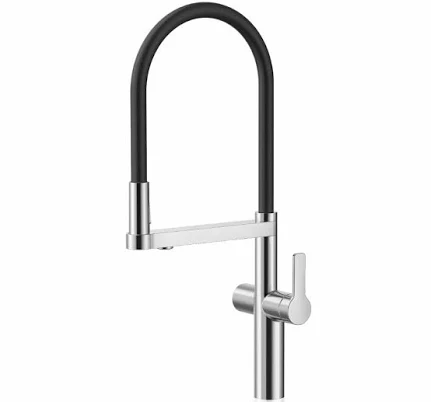
APEC 2-in-1 Pull-Down Kitchen Faucet

Aquasure
Premier Series 75 GPD Under Sink Reverse Osmosis Water Filtration System
Model-based grades, not lab tests. We flunk more than we pass. How grading works
Can New PFAS Destruction Tech Finally Clean Up Forever Chemicals in 2026?
Colorado School of Mines announced on May 6, 2026 that it is launching a $7 million research center dedicated to evaluating technologies that destroy PFAS, the family of "forever chemicals" linked to a growing list of health concerns, according to Mines Newsroom. The center aims to help industry validate, scale and deploy destruction methods that actually work, rather than just move the problem from one place to another.
For consumers, this is a big deal. While most PFAS news focuses on where these chemicals show up, in drinking water, food packaging, and everyday gear, this project tackles something harder, how to permanently break down PFAS molecules instead of just filtering or burying them. PFAS Authority's own scoring of 11,144 products shows that 41% fail our PFAS and toxin screen, underscoring how widespread the problem remains while destruction science races to catch up.
What Did Colorado School of Mines Announce?
According to Mines Newsroom, the new center will bring together researchers, engineers and industry partners to rigorously test PFAS destruction technologies, methods designed to break the extremely strong carbon-fluorine bonds that make these chemicals so persistent in the environment and in human bodies. The $7 million investment will fund work to validate which technologies genuinely destroy PFAS at scale, and which fall short, Mines reports.
This matters because PFAS destruction is notoriously difficult. The same chemical stability that makes PFAS useful in nonstick cookware, waterproof fabrics and firefighting foam also makes it resistant to standard treatment methods like incineration or filtration. Some approaches simply concentrate PFAS waste without eliminating it, according to researchers studying the field. Mines' center is positioned to independently evaluate competing technologies with data-driven rigor, helping separate proven solutions from unproven claims.
Who Is Affected by This Research?
The center's work has ripple effects well beyond the lab. Water utilities, manufacturers, and waste management companies that are under increasing regulatory pressure to remove PFAS from their systems stand to benefit from validated destruction methods. Communities near contaminated sites, including those affected by firefighting foam runoff or industrial discharge, could eventually see more effective remediation options.
Consumers are affected indirectly but significantly. Right now, many PFAS "removal" technologies on the market remove the chemicals from water but don't destroy them, leaving behind concentrated waste that still needs disposal. If Mines' center succeeds in validating true destruction technologies, it could accelerate cleanup timelines for contaminated water supplies and reduce the long-term liability that keeps some manufacturers using PFAS in consumer products in the first place.
Why Does PFAS Destruction Matter for Everyday Health?
PFAS exposure has been associated with a range of health concerns in scientific studies, including changes in cholesterol levels, immune system effects, and other outcomes under continued research by agencies such as the Environmental Protection Agency and the Agency for Toxic Substances and Disease Registry. These are associations observed in population studies, not proven causation in every individual case, but the weight of evidence has pushed regulators to tighten drinking water limits and pressure manufacturers to phase out certain PFAS compounds.
The challenge is that PFAS doesn't break down naturally, which is why it's called a "forever chemical." Without effective destruction technology, PFAS removed from water or soil often ends up stored, transported, or redistributed rather than eliminated. A validated destruction method could change that equation, turning "forever" into "finite."
Meanwhile, PFAS continues to enter consumer products at a troubling rate. Our own screening of outdoor gear found entire categories where PFAS use is essentially universal, camping tents and tarps (100% failing of 316 scored), rain jackets (100% failing of 74 scored), cycling rain jackets (100% failing of 72 scored), sleeping bags (100% failing of 15 scored), and softshell jackets (100% failing of 15 scored). These scores come from reviewing published ingredients, materials, certifications and manufacturer disclosures, not laboratory testing, so they reflect what brands report or fail to report about their products' PFAS content.
Some major brands disclose little to nothing about PFAS in their products, based on our research, including Cuisinart, The North Face, MAC, Calphalon, T-fal, Nike, Columbia and All-Clad. That lack of transparency makes it harder for shoppers to make informed choices while destruction technology is still being developed.
What Should Consumers Do Right Now?
While Mines' research center works through its multi-year evaluation process, there are practical steps consumers can take today.
- Check products before buying using a tool like our PFAS product finder, which screens items based on published disclosures and certifications.
- Ask brands directly whether their products are PFAS-free, especially in categories like outdoor gear and cookware where failure rates are high.
- Look for third-party certifications that specifically exclude PFAS, rather than relying on vague "eco-friendly" marketing claims.
- Stay informed on local water quality reports, since municipal utilities are increasingly required to test and disclose PFAS levels.
For a full explanation of how we evaluate products, visit our methodology page, which details how we score items based on ingredients, materials, certifications and disclosures rather than independent lab testing.
Bottom Line
Colorado School of Mines' new $7 million research center represents a meaningful step toward solving one of the hardest parts of the PFAS problem, permanently destroying these chemicals rather than just relocating them. But this is early-stage research, and real-world deployment of validated destruction technology could take years. In the meantime, PFAS remains common in everyday products, our data shows entire gear categories with 100% failure rates, so consumers should keep using available tools to make lower-concern choices rather than waiting for a future fix.
Frequently Asked Questions
Does this research mean PFAS will disappear from products soon?
No. Mines' center focuses on destroying PFAS already released into the environment or waste streams, according to Mines Newsroom. It does not directly address PFAS still being added to new consumer products, which remains a separate manufacturing and regulatory issue.
Is PFAS destruction technology proven to work?
Not yet at full scale. That's precisely why Mines is building a center to validate these technologies with rigorous data before industry adopts them widely, per the Mines Newsroom announcement.
How can I tell if a product I own contains PFAS?
Manufacturers aren't always required to disclose PFAS use, and many don't. You can check our product finder, which compiles published ingredients, materials, certifications and disclosures to help flag higher-concern items.
What else we were tracking around this
- Oct 3, 2026Is Philadelphia's New Murphy Rec Center Turf Field Actually PFAS-Free in 2024?
- Oct 2, 2026PFAS Remediation in 2026, What It Costs, Who Pays, and What It Means for Your Water and Gear
- Oct 2, 2026Can New Cleanup Technology From Parsons Finally Get PFAS Out of the Environment in 2026?
- Oct 1, 2026Europe's 25 ppb PFHxA Rule in 2026, What It Means for Your Rain Jacket and Outdoor Gear
The latest PFAS news is updated daily.
Now check your own stuff
Search anything you own and get its PFAS grade in seconds.
Get the graded list, free
The products we score each week, and the best-graded alternative in every category.
No spam. Unsubscribe anytime.