By PFAS Authority · Updated October 1, 2026
Top grades to buy

Aisle
Super Hipster
APEC Water Systems
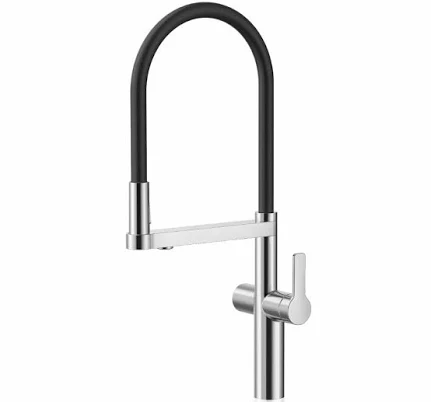
APEC 2-in-1 Pull-Down Kitchen Faucet

Aquasure
Premier Series 75 GPD Under Sink Reverse Osmosis Water Filtration System
Model-based grades, not lab tests. We flunk more than we pass. How grading works
Europe's 25 ppb PFHxA Rule in 2026, What It Means for Your Rain Jacket and Outdoor Gear
Starting in October 2026, a widely used "forever chemical" called PFHxA (undecafluorohexanoic acid, sometimes shortened from its longer chemical name) will be restricted in the European Union to no more than 25 parts per billion in many consumer textiles, according to Fibre2Fashion. That sounds like a small, technical change. It isn't. It's one of the reasons entire sectors of the outdoor and apparel industry are scrambling to reformulate how they make water-repellent fabric.
PFAS Authority's own scoring of 11,125 products found that 41% fail our PFAS and toxin screen, and in categories like rain jackets, camping tents and tarps, cycling rain jackets, sleeping bags, and softshell jackets, our data shows 100% failure rates. We built that picture by reviewing published ingredient lists, materials disclosures, and third-party certifications, not by running lab tests on every item, and you can see the full method at our methodology page or search specific products at the PFAS Authority product finder.
What is PFHxA, and what actually happened?
PFHxA is part of the broader PFAS family, the group of fluorinated chemicals prized for making fabric resist water, oil, and stains. For years, PFHxA was marketed as a "safer" replacement for older long-chain PFAS chemicals like PFOA and PFOS, which were phased out after mounting health and environmental concerns. But regulators have since concluded that short-chain PFAS like PFHxA share many of the same worrying traits, they persist in the environment, move easily through water and soil, and accumulate in the body over time, according to European chemical safety assessments cited by Fibre2Fashion.
The new EU rule sets a strict limit of 25 parts per billion for PFHxA (and related substances) in textiles, including the kind of durable water repellent, or DWR, finishes used on jackets, tents, and workwear. Once the restriction takes effect, products exceeding that threshold generally cannot be sold in the EU market.
Who and what does this affect?
This isn't limited to a niche product. PFHxA-based finishes have been common across.
- Rain jackets and softshell jackets
- Camping tents, tarps, and sleeping bag shells
- Cycling rain gear and other performance outerwear
- Workwear, upholstery, and some children's outdoor apparel
Any brand selling into the EU, and by extension, many global brands that manufacture to a single international standard, has an incentive to reformulate. That ripple effect is a big part of why Fibre2Fashion frames this as a trigger for the textile industry's broader shift toward PFAS-free finishing, not just a regional compliance footnote.
It's worth noting that not every brand is equally transparent about where it stands. PFAS Authority has found that companies including Cuisinart, The North Face, MAC, Calphalon, T-fal, Nike, Columbia, and All-Clad disclose nothing publicly about PFAS use in their product lines, which makes it harder for shoppers to know whether a specific item is already compliant or still relies on older chemistry.
Why does this matter to consumers right now?
Health researchers have linked exposure to various PFAS chemicals, as a class, to associations with effects on the immune system, cholesterol levels, liver function, and certain hormone-related outcomes, according to findings summarized by agencies such as the U.S. EPA and European health bodies. These are associations observed in population studies, not proof that any single product or exposure causes a specific health outcome in an individual. Still, the fact that regulators are tightening limits on PFHxA specifically, a chemical once pitched as the "safe" alternative, is a signal that caution is warranted even with newer-generation PFAS.
For consumers, the practical issue is this, a jacket or tent bought today, before the rule takes effect, may have been treated with PFHxA-based DWR finishing that would not meet the 2026 standard. That doesn't necessarily mean the product is dangerous to own or use, but it does mean the water-repellent coating is part of the same chemical family regulators are moving away from.
What should you actually do about it?
You don't need to throw out your existing gear, but a few practical steps can help going forward.
- Check labels and brand disclosures. Look for terms like "PFAS-free," "fluorine-free DWR," or specific chemical names rather than vague marketing claims like "eco-friendly."
- Favor brands that publish ingredient or chemistry information. Transparency itself is a useful screening tool, since brands with nothing to disclose make independent verification difficult.
- Use independent scoring tools. You can check how specific rain jackets, tents, and sleeping bags score using the PFAS Authority finder, which draws on published disclosures and certifications.
- Reproof with non-fluorinated sprays. If your current rainwear has lost its water resistance, several fluorine-free reproofing products are now on the market as alternatives to traditional PFAS-based sprays.
Bottom Line
Europe's 25 ppb PFHxA limit, taking effect in October 2026, is pushing the textile industry toward PFAS-free water-repellent finishes because regulators now view PFHxA as sharing the same persistence and health-association concerns as the long-chain PFAS it was meant to replace. Given that PFAS Authority's scoring found 100% of scored rain jackets, tents, sleeping bags, and softshell jackets failing its PFAS and toxin screen, consumers shopping for outdoor gear have real reason to look closer, favor brands with clear disclosures, and treat water-repellent gear bought before this transition as an item of lower concern only once verified, rather than assuming it's automatically fine.
FAQ
Is PFHxA the same as the PFAS chemicals already banned, like PFOA?
No. PFHxA is a shorter-chain PFAS chemical that was introduced partly as a replacement for long-chain chemicals like PFOA and PFOS. Regulators now say it shares some of the same persistence and bioaccumulation traits, which is why it's being restricted separately, according to EU chemical safety assessments.
Does this EU rule apply to products sold outside Europe?
Not directly, but many global brands manufacture to a single formulation standard to simplify production, so the EU restriction is expected to influence product chemistry worldwide, per industry reporting from Fibre2Fashion.
How can I tell if a jacket or tent I own contains PFHxA?
Check the manufacturer's product page or care label for chemistry disclosures, contact the brand directly, or compare it against independently scored products using the PFAS Authority finder, which is based on published ingredients, materials, and certifications rather than laboratory testing.
What else we were tracking around this
- Oct 2, 2026Can New PFAS Destruction Tech Finally Clean Up Forever Chemicals in 2026?
- Oct 2, 2026Can New Cleanup Technology From Parsons Finally Get PFAS Out of the Environment in 2026?
- Oct 1, 2026Can the EU's REACH Regulation Finally Stop Forever Chemicals in 2026?
- Oct 1, 2026Is Europe Finally Cracking Down on PFAS in 2026, And What Does It Mean for Your Shopping Cart?
The latest PFAS news is updated daily.
Now check your own stuff
Search anything you own and get its PFAS grade in seconds.
Get the graded list, free
The products we score each week, and the best-graded alternative in every category.
No spam. Unsubscribe anytime.