By PFAS Authority · Updated October 1, 2026
Top grades to buy

Aisle
Super Hipster
APEC Water Systems
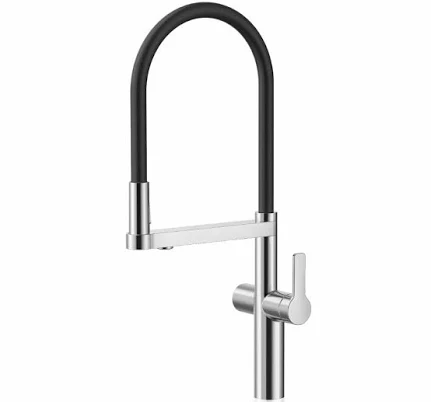
APEC 2-in-1 Pull-Down Kitchen Faucet

Aquasure
Premier Series 75 GPD Under Sink Reverse Osmosis Water Filtration System
Model-based grades, not lab tests. We flunk more than we pass. How grading works
Can the EU's REACH Regulation Finally Stop Forever Chemicals in 2026?
Europe's chemical rulebook is tightening around PFAS, and the ripple effects are reaching store shelves far beyond the EU. A new explainer from Innovation News Network (Aug 5, 2026) breaks down how REACH, the EU's Registration, Evaluation, Authorisation and Restriction of Chemicals framework, is becoming one of the world's most aggressive tools for pushing "forever chemicals" out of consumer products.
Here at home, the problem is already visible in the data. PFAS Authority's own scoring of 11,125 products found that 41% fail our PFAS and toxin screen, and in some categories, the failure rate is total. You can see how specific products score using our product finder, and the scoring approach is explained on our methodology page.
What Did the EU Actually Do?
According to Innovation News Network, REACH is the EU's central regulation for managing the risks of chemical substances, requiring manufacturers and importers to register chemicals they place on the market and demonstrate they can be used safely. PFAS, a family of thousands of synthetic chemicals prized for water-, stain-, and grease-resistance, have become a top target under this framework because of their persistence in the environment and bodies.
The European Chemicals Agency (ECHA), which administers REACH, has been evaluating a sweeping proposal to restrict PFAS as a class rather than regulating them one substance at a time, as reported by Innovation News Network. That "whole-class" approach is a significant departure from how chemicals have traditionally been regulated, and it's designed to close a loophole long used by manufacturers, swapping one restricted PFAS chemical for a nearly identical but technically unregulated cousin.
Who Is Affected by These Changes?
The restrictions, as described in the source article, touch an enormous swath of everyday goods, textiles, cookware, food packaging, cosmetics, firefighting foam, and electronics among them. Manufacturers selling into the EU market face new registration, disclosure, and in some cases phase-out requirements. Because many companies sell the same product lines globally, EU rules often end up shaping what's available in the US, UK, and elsewhere, a pattern consumer advocates sometimes call the "Brussels effect."
For everyday shoppers, that means the clothing, cookware, and gear you buy may already be subject to reformulation pressure, even if you've never heard of REACH. But the pace of change varies enormously by product category and by brand.
Why Does This Matter for Your Health?
Health agencies including the U.S. EPA and the European Food Safety Authority have linked PFAS exposure to a range of health associations, including effects on cholesterol levels, immune response, liver function, and certain cancers, though researchers caution these are observed associations in population studies, not proof that PFAS causes any specific illness in an individual. PFAS are nicknamed "forever chemicals" because they break down extremely slowly, building up in soil, water, and human blood over time, as Innovation News Network notes.
That slow-motion accumulation is exactly why regulators like ECHA argue for restricting entire chemical classes rather than waiting for proof of harm from each individual compound, by the time harm is firmly established, exposure may have already been widespread for decades.
What Does Our Data Show About the Market Today?
While EU regulators work through the restriction process, PFAS Authority's scoring shows how uneven PFAS disclosure and avoidance still is across everyday products. Our scoring is based on published ingredients, materials, certifications, and manufacturer disclosures, not independent laboratory testing, but it reveals stark patterns.
- Camping Tents & Tarps, 100% failing (316 products scored)
- Rain Jackets, 100% failing (74 products scored)
- Cycling Rain Jackets, 100% failing (72 products scored)
- Sleeping Bags, 100% failing (15 products scored)
- Softshell Jackets, 100% failing (15 products scored)
Weatherproof gear stands out because PFAS chemistry is still the default for durable water repellency in much of the outdoor industry. We also found that several major brands, Cuisinart, The North Face, MAC, Calphalon, T-fal, Nike, Columbia, and All-Clad, currently disclose nothing about PFAS use in their products, making it difficult for shoppers to tell what they're buying.
What Should You Do Right Now?
You don't need to wait for EU regulation to filter into your local store to make more informed choices today.
- Check before you buy. Use a tool like our product finder to see how specific items score before adding them to your cart.
- Be skeptical of vague marketing terms. "PFC-free" or "eco-friendly" labels don't always mean PFAS-free; look for specific certifications.
- Prioritize high-exposure categories. Outdoor gear, nonstick cookware, and food packaging are categories where PFAS use remains common.
- Air out and wash new gear. It won't eliminate PFAS treatments, but reducing off-gassing and surface residue is a reasonable precaution.
- Ask brands directly. Companies that don't disclose PFAS use may respond to direct customer inquiries, and consumer pressure has historically moved manufacturers faster than regulation alone.
Bottom Line
The EU's REACH Regulation represents one of the most serious global efforts to restrict PFAS as a chemical class, and its influence is likely to shape product formulations well beyond Europe's borders, according to Innovation News Network. But regulatory change is slow, and in the meantime, our own data shows entire product categories, especially outdoor and rain gear, still carrying a high likelihood of PFAS use, with many major brands offering little to no transparency. Products that currently use less PFAS-associated chemistry should be considered lower concern, not guaranteed free of all forever chemicals, until disclosure and testing standards catch up with the regulation.
Frequently Asked Questions
Does REACH ban PFAS outright?
Not yet, as of the Innovation News Network report. ECHA has been evaluating a proposal to restrict PFAS as a broad class, but implementation involves phased timelines, exemptions for certain uses, and ongoing regulatory review.
Will EU PFAS rules affect products sold in the US?
Often, yes. Global brands frequently reformulate products to meet the strictest market's requirements, so EU restrictions can indirectly influence what's available elsewhere, though this isn't guaranteed for every product line.
How can I tell if a product I own contains PFAS?
Manufacturer disclosures, ingredient lists, and third-party certifications are the main sources of information, since most PFAS aren't disclosed on packaging. PFAS Authority scores products based on these published sources, see our methodology , and you can look up specific items via our finder.
What else we were tracking around this
- Oct 2, 2026Can New Cleanup Technology From Parsons Finally Get PFAS Out of the Environment in 2026?
- Oct 1, 2026Europe's 25 ppb PFHxA Rule in 2026, What It Means for Your Rain Jacket and Outdoor Gear
- Oct 1, 2026Is Europe Finally Cracking Down on PFAS in 2026, And What Does It Mean for Your Shopping Cart?
- Sep 30, 2026Is Your Outdoor Gear Still Full of PFAS in 2026?
The latest PFAS news is updated daily.
Now check your own stuff
Search anything you own and get its PFAS grade in seconds.
Get the graded list, free
The products we score each week, and the best-graded alternative in every category.
No spam. Unsubscribe anytime.