By PFAS Authority · Updated September 22, 2026
Top grades to buy

Aisle
Super Hipster
APEC Water Systems
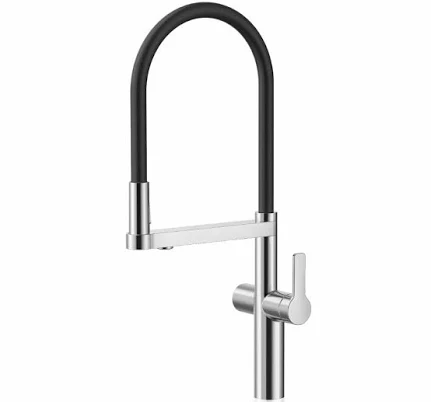
APEC 2-in-1 Pull-Down Kitchen Faucet

Aquasure
Premier Series 75 GPD Under Sink Reverse Osmosis Water Filtration System
Model-based grades, not lab tests. We flunk more than we pass. How grading works
How Can You Lower Your PFAS Exposure in 2026?
Michigan is marking the first-ever PFAS Awareness Week this month, and state officials are using the occasion to remind residents that "forever chemicals" remain a everyday concern, not just in drinking water, but in the products people bring into their homes. According to the State of Michigan, the Michigan PFAS Action Response Team's Citizen Advisory Workgroup championed the awareness campaign, offering four practical steps residents can take to reduce their exposure.
PFAS Authority's own scoring of 11,156 products found that 41% fail its PFAS and toxin screen, a reminder that the problem extends well beyond water pipes and into closets, kitchens, and camping gear. You can check how specific products score using our product finder.
What Did Michigan Announce?
The Michigan Department of Environment, Great Lakes, and Energy (EGLE) says PFAS Awareness Week is intended to help residents understand what per- and polyfluoroalkyl substances are, where they show up, and how to reduce contact with them. The state's guidance boils down to four consumer-facing actions, know your water quality, read product labels carefully, choose PFAS-free alternatives when available, and stay informed about ongoing regulatory action, per the agency's announcement.
EGLE emphasizes that PFAS are a large class of thousands of synthetic chemicals used for decades in nonstick, waterproof, and stain-resistant products because of their resistance to heat, water, and oil. That same chemical stability is why they persist in the environment and, according to researchers, in the human body, earning them the "forever chemicals" nickname.
Who Is Affected?
Essentially everyone. PFAS have been detected in public water systems, food packaging, cookware, textiles, and outdoor gear across the country. Michigan's campaign is aimed at all residents, but the underlying exposure pathways, water, food contact materials, and consumer products, are national, not state-specific.
Certain product categories carry a higher likelihood of PFAS treatment because of the performance they're expected to deliver, water resistance, stain resistance, or nonstick surfaces. That's borne out in PFAS Authority's own scoring, 100% of the 316 camping tents and tarps evaluated failed, along with 100% of 74 rain jackets, 100% of 72 cycling rain jackets, 100% of 15 sleeping bags, and 100% of 15 softshell jackets. It's worth noting these scores are based on published ingredients, materials, certifications, and disclosures, not laboratory testing, so they reflect what brands do or don't say about their products rather than a chemical assay. You can read more about that approach on our methodology page.
Some well-known brands provide little to no public information about PFAS use in their products, which limits how much confidence outside groups can have either way. PFAS Authority's tracking has found this pattern among brands including Cuisinart, The North Face, MAC, Calphalon, T-fal, Nike, Columbia, and Adidas. The absence of disclosure doesn't necessarily mean a product contains PFAS, but it does mean consumers currently have no way to confirm it doesn't.
Why Does This Matter?
Health researchers have linked certain PFAS compounds to a range of associations, including changes in cholesterol levels, immune response, and other outcomes, though scientists caution these are observed associations in population studies, not proof that PFAS exposure directly causes any specific illness in an individual. The Environmental Protection Agency and state agencies like EGLE have nonetheless moved to regulate certain PFAS in drinking water because of the weight of the evidence and the chemicals' persistence.
That persistence is part of what makes consumer choices meaningful. Unlike chemicals that break down relatively quickly, many PFAS accumulate over time, in soil, water, and reportedly in the human body, which is why public health advocates argue that reducing ongoing exposure, even in small increments, is a reasonable precaution.
What Can You Do About It?
Following Michigan's framework, here are four practical steps.
- Check your water. Contact your local water utility or, if you're on a private well, consider testing for PFAS. EGLE and many state environmental agencies publish testing results and guidance online.
- Read labels and marketing claims skeptically. Terms like "stain-resistant," "waterproof," or "nonstick" are often signals that a product may have been treated with PFAS or similar fluorinated compounds, according to consumer advocates.
- Look for lower-concern alternatives. Products certified PFAS-free by credible third parties, or brands that publish clear ingredient and materials disclosures, generally allow for more informed decisions. Use tools like our product finder to compare options before buying.
- Stay informed on regulation. PFAS rules are evolving quickly at both state and federal levels. Following your state environmental agency's updates can help you stay current on which products or water systems are affected.
Bottom Line
PFAS Awareness Week is a reminder that forever chemicals aren't confined to contaminated water supplies, they show up in everyday gear, especially items marketed as water- or stain-resistant. No product should be flatly labeled "safe," but consumers can meaningfully lower their exposure by checking their water, scrutinizing labels, favoring brands with transparent disclosures, and using independent tools to compare products before buying.
Frequently Asked Questions
Does a "PFAS-free" label guarantee a product has zero forever chemicals?
Not necessarily. Labeling standards vary, and enforcement differs by state and country. A PFAS-free claim is a useful signal, especially from brands with transparent disclosure practices, but it isn't an absolute guarantee absent independent verification.
If a brand doesn't disclose PFAS use, does that mean its products contain PFAS?
No. Non-disclosure means there isn't enough public information to know either way. PFAS Authority flags this gap so consumers can factor it into their decisions, rather than assuming either outcome.
Is PFAS exposure from consumer products as significant as exposure from drinking water?
Researchers generally consider contaminated drinking water a major exposure route, but products like textiles, cookware, and packaging can also contribute. Agencies like EGLE recommend addressing both water quality and product choices as part of a broader exposure-reduction strategy.
What else we were tracking around this
- Sep 23, 2026Do Forever Chemicals in Tap Water Affect Fertility in 2026?
- Sep 22, 2026PFAS at Pease, Will the Air Force Finally Act on New Hampshire's Contamination?
- Sep 22, 2026Is Your Drinking Water Safe from PFAS in 2026? What EPA's New Proposals Mean for You
- Sep 21, 2026Are Baby Wipes Safe from PFAS in 2026? What Consumer Reports' Testing Found
The latest PFAS news is updated daily.
Now check your own stuff
Search anything you own and get its PFAS grade in seconds.
Get the graded list, free
The products we score each week, and the best-graded alternative in every category.
No spam. Unsubscribe anytime.