By PFAS Authority · Updated September 16, 2026
Top grades to buy

Aisle
Super Hipster
APEC Water Systems
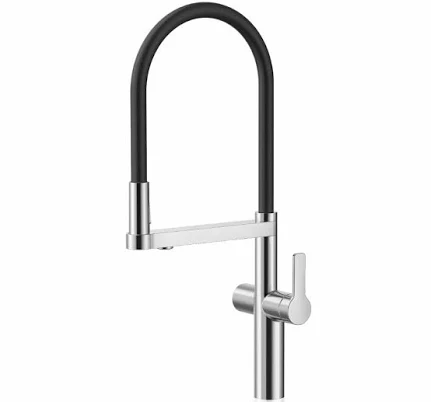
APEC 2-in-1 Pull-Down Kitchen Faucet

Aquasure
Premier Series 75 GPD Under Sink Reverse Osmosis Water Filtration System
Model-based grades, not lab tests. We flunk more than we pass. How grading works
Is Your Peoria-Area Water Affected by PFAS in 2026? What Illinois EPA's Notice Means for You
If you get your water from a community water system in Peoria County, you may be hearing about "forever chemicals" this week. The Illinois EPA has begun notifying owners and operators of local community water systems that PFAS were detected in samples of raw, untreated water, according to a report from WEEK | 25 News Now. Here's what that means, who it affects, and what you can actually do about it right now.
What Happened, According to Illinois EPA?
Illinois EPA is notifying operators of various community water systems in Peoria County that testing found PFAS ("per- and polyfluoroalkyl substances") in samples of raw, untreated water, meaning water pulled from the source before it goes through any treatment process, per the report. This is a notification about source water testing, not necessarily a finding that finished tap water delivered to homes exceeds a health-based limit. Raw water and treated tap water can have very different PFAS levels depending on the treatment technology a system uses.
The report does not name every affected system or specify exact PFAS concentrations found. Consumers who want system-specific details should watch for direct communication from their water provider or contact Illinois EPA directly.
Who Is Affected?
The notification applies to owners and operators of community water systems in Peoria County, Illinois. Community water systems are the public systems that regularly serve the same population year-round, think municipal water utilities, not private wells (though nearby private well owners may want to ask questions too, since groundwater sources can be shared). If your household water bill comes from a local utility in the Peoria area, this notice is relevant to you, even though it was formally addressed to the system operators rather than individual customers.
Why Does This Matter?
PFAS are a large family of manufactured chemicals used for decades in nonstick, waterproof, and stain-resistant products. They're persistent in the environment and in the human body, and scientific studies have found associations between elevated PFAS exposure and a range of health concerns, including effects on cholesterol levels, immune response, and certain cancers, though researchers caution these are statistical associations, not proof that PFAS causes any individual case of illness. Regulators have been ratcheting up scrutiny of PFAS in drinking water nationwide, and detections like this one are part of a broader pattern of states testing source water more aggressively as detection technology improves.
Drinking water is only one exposure pathway. PFAS Authority's own scoring of 10,673 products finds that 48% fail its PFAS and toxin screen, with entire categories like camping tents and tarps, rain jackets, cycling rain jackets, waterproof boots, and snow pants scoring 100% failing across every product tested in those categories. That means water isn't the only place these chemicals show up in daily life, many of the "waterproof" and "stain-resistant" goods people buy every day may be contributing to household PFAS exposure as well. You can check how specific products score using PFAS Authority's product finder.
It's worth noting how these product scores are generated, PFAS Authority scores products based on published ingredients, materials, certifications, and manufacturer disclosures, not laboratory testing of each item. That approach is explained in detail on the methodology page, and it's also why disclosure matters so much. Brands including Cuisinart, The North Face, Calphalon, MAC, T-fal, Nike, Columbia, and Patagonia currently disclose nothing about PFAS in their products, which limits how much consumers, or organizations like ours, can verify about what's actually inside the things they buy.
What Should Peoria-Area Residents Do Right Now?
- Watch for a direct notice from your water utility. Community water systems are typically required to pass along consumer notifications when contaminants are detected. If you haven't received anything yet, check your utility's website or call customer service directly.
- Ask whether the detection was in raw water only, or also in treated tap water. This distinction matters a lot for your actual exposure, since treatment processes like granular activated carbon or reverse osmosis can remove significant amounts of PFAS.
- Consider a home water filter if you're concerned. Look for filters independently certified to reduce PFAS (such as NSF/ANSI 53 or 58 certification for PFOA/PFOS reduction), and replace cartridges on schedule, a saturated filter won't help.
- Look beyond your tap. Since PFAS also show up heavily in waterproof apparel, nonstick cookware, and outdoor gear, it's reasonable to look at product labels and disclosures too. PFAS Authority's finder tool can help you compare options before you buy.
- Stay tuned for Illinois EPA updates. As more testing data becomes available, the agency may issue further guidance specific to individual water systems.
Bottom Line
Illinois EPA has flagged PFAS in raw, untreated water samples tied to community water systems in Peoria County, an early-stage notification that source water contains detectable PFAS, not necessarily confirmation that tap water violates a health standard. Residents should watch for utility-specific communication, ask questions about treatment, and consider a certified home filter if concerned. Because PFAS exposure isn't limited to drinking water, it's also worth checking everyday products, PFAS Authority's own scoring of 10,673 products found 48% fail its PFAS and toxin screen, so a little label-reading goes a long way.
FAQ
Does this mean my tap water is unsafe?
Not necessarily. The detections described by Illinois EPA were in raw, untreated water, the source before treatment, according to the report. Whether finished tap water contains PFAS above health-based levels depends on the treatment methods your local system uses. Rather than call any tap water flatly "safe," it's more accurate to say exposure risk is lower where effective treatment and low source concentrations combine.
How would I find out if my specific water system is affected?
Contact your local water utility directly or watch for a formal consumer notice, since Illinois EPA's notification was directed to system owners and operators in Peoria County, who are typically responsible for informing customers.
Can a home filter remove PFAS from drinking water?
Certain filters certified under standards like NSF/ANSI 53 or 58 for PFOA/PFOS reduction can meaningfully lower PFAS levels in tap water, though performance varies by filter type, PFAS compound, and maintenance schedule.
What else we were tracking around this
- Sep 17, 2026Can Cutting Plastics and PFAS From Your Home Really Boost Fertility in 2026?
- Sep 17, 2026Could a Common Forever Chemical Be Undermining Early Pregnancy in 2026?
- Sep 16, 2026Chemours & DuPont's $600 Million PFAS Settlement, What Does It Mean for North Carolina Families in 2024?
- Sep 16, 2026Can Delaware Residents Get Free PFAS Testing for Their Well Water?
The latest PFAS news is updated daily.
Now check your own stuff
Search anything you own and get its PFAS grade in seconds.
Get the graded list, free
The products we score each week, and the best-graded alternative in every category.
No spam. Unsubscribe anytime.